
Screen Free Activities

Screen free activities sound wholesome until your kid looks at you like you’ve suggested churning butter for fun. Or until you, a fully grown adult with bills and opinions about dishwasher loading, reach for your phone after 47 seconds of silence. The good news: going screen free does not mean becoming a woodland monk, banning joy, or staring at a wall while whispering “digital wellness.” It means having a menu of actually enjoyable things to do when screens are off the throne.
This guide is packed with practical screen free activities for kids, teens, families, students, and mildly crispy adults who need a break from the scroll goblin. We’ll cover indoor ideas, outdoor games, creative projects, routines, boredom-proof strategies, and ways to make unplugging easier without turning your home into a productivity boot camp. And yes, if distracting websites keep ambushing your noble intentions, tools like BlockChamp can help you knock out the browser temptations while you do something better with your time. Long live your focus. Long live snacks that are not eaten over a keyboard.
Quick Answers
Why Screen Free Activities Matter More Than Ever
Let’s start with the obvious: screens are not evil. Screens help us learn, work, connect, navigate, create, and watch videos of raccoons stealing cat food like tiny masked criminals. The problem is not screens existing. The problem is when screens become the default answer to every tiny flicker of boredom.
Research keeps pointing to the same royal decree: too much recreational screen time can crowd out sleep, movement, face-to-face connection, and focused play. The CDC recommends children and adolescents get regular physical activity, yet sedentary screen habits often compete with that. The American Academy of Pediatrics encourages families to create healthy media plans rather than relying on vague “less screen time” guilt. Translation: don’t just yell “OFF THE TABLET” and hope a symphony starts. Build alternatives.
Screen free activities help kids develop skills that apps often simulate but do not fully replace: patience, imagination, coordination, emotional regulation, negotiation, problem-solving, and the sacred art of being bored without combusting. For adults, screen-free time supports deeper focus, better boundaries, and fewer “How did I spend 38 minutes reading comments from strangers named SoupWizard?” moments.
If you want the bigger picture on why unplugging helps, BlockChamp has a deeper breakdown of the benefits of screen-free time. But today we’re getting tactical. Ideas. Steps. Things you can actually do before someone reopens YouTube “just to check one thing.” Bold words, champ.
Start With a Screen Free Setup, Not a Sudden Royal Ban
The fastest way to make screen free activities fail is to announce them like a punishment. “No screens for three hours!” sounds less like family bonding and more like exile. Instead, create a setup that makes offline activities easy, visible, and mildly irresistible.
Think of it like preparing a snack tray for attention. If the only visible option is a device, the device wins. If there are markers, puzzles, balls, books, recipe cards, blankets, dice, and craft supplies within arm’s reach, the kingdom has options.
Build a screen free activity station
Use a basket, shelf, drawer, or rolling cart. Stock it with simple supplies that do not require a parent to become an unpaid cruise director every 12 minutes.
- Colored pencils, crayons, markers, paper, sticky notes, and index cards
- Playing cards, dice, dominoes, or compact board games
- Building toys, magnetic tiles, blocks, or craft sticks
- Puzzle books, joke books, comics, or age-appropriate novels
- Jump ropes, chalk, bubbles, beanbags, or small sports gear
- Recipe cards for simple snacks kids can help make
For adults and teens, create your own “offline reset box”: a notebook, pen, paperback, sketchpad, resistance band, tea bags, playing cards, and one hobby item that makes you feel less like a browser tab with legs.
Use friction like a productivity wizard
Make screens slightly harder to access and screen free activities easier to start. Put chargers outside bedrooms. Keep tablets in a common area. Use a basket for phones during meals. On computers, block the usual rabbit holes during focus or family time. This is where BlockChamp is genuinely useful: you can block specific websites, entire distraction categories like Social Media or Video & Streaming, and let The King stare you down if you try to sneak into the digital snack cupboard. Shame? No. Comedy-powered accountability? Absolutely.
If mornings are the danger zone, read this guide to building screen-free mornings. A calmer morning routine can prevent the day from starting in “scroll first, exist later” mode.
Indoor Screen Free Activities for Rainy Days, Sick Days, and “Nobody Touch Me” Days
Indoor screen free activities are essential because weather has opinions. Also because sometimes everyone is tired, the floor is lava, and leaving the house feels like planning a moon landing.
1. The 20-minute build challenge
Give kids blocks, LEGO, cardboard boxes, paper cups, or recycled containers. Set a timer for 20 minutes and announce a challenge:
- Build the tallest tower that can stand for 10 seconds.
- Create a bridge that holds three books.
- Design a tiny house for a stuffed animal.
- Build a marble run from tubes, tape, and cereal boxes.
This activity works because it has structure without being suffocating. Kids get a clear goal, time pressure, and permission to make a glorious mess. Adults can play too, especially if they enjoy losing engineering contests to a seven-year-old with a shoebox.
2. Kitchen science without the lab coat drama
Kitchen experiments are screen free, educational, and usually cheap. Try baking soda volcanoes, homemade slime, growing beans in a jar, making butter by shaking cream, or testing what sinks and floats. Ask kids to predict what will happen before the experiment. This tiny step turns “messing around” into scientific thinking. Fancy.
For older kids, try blind taste tests. Can they identify apple varieties? Different crackers? Mystery spices by smell? Keep it safe, obviously. Nobody needs a cinnamon challenge reboot. We have evolved.
3. Board game remix night
Classic board games are great, but remixing them adds novelty. Play Monopoly with a 30-minute timer. Play Scrabble where made-up words are allowed if the player can define them convincingly. Play charades with only household objects. Play Uno where the winner chooses tomorrow’s dinner side dish. Tiny stakes. Big drama.
Board games build turn-taking, strategy, emotional control, and the ability to lose without melting into a dramatic floor puddle. Adults may also need practice here. The King sees your competitive Connect Four rage.
4. Living room obstacle course
Use pillows, tape lines, chairs, blankets, and laundry baskets. Create stations: crawl under the table, balance on a tape line, toss socks into a basket, hop over cushions, crab-walk to the finish. Time each person or make it cooperative: the whole family must complete the course before the timer ends.
This is especially useful when kids need movement but outdoor time is not happening. According to the World Health Organization, regular physical activity supports physical and mental health across age groups. Translation: move the body, calm the gremlin.
Outdoor Screen Free Activities: Touch Grass, but Make It Fun
“Go outside” is technically advice, but it’s also what people say when they have no plan. Better: offer specific outdoor screen free activities that feel like missions, games, or adventures. Touch grass, yes. But touch it with purpose, champ.
1. Neighborhood scavenger hunt
Create a list based on your area. Kids can search for a red door, a bird, a bicycle, a smooth rock, a yellow flower, a dog, a mailbox number with a 7, or a cloud shaped like something ridiculous. For teens or adults, make it a photo-free observation hunt: no phone, just memory and a notebook.
Scavenger hunts sharpen attention. Instead of walking while mentally refreshing notifications, you notice the world. Shocking development: the offline world has surprisingly high resolution.
2. Chalk kingdom games
Sidewalk chalk is a low-cost miracle. Draw hopscotch, mazes, target circles, obstacle paths, race tracks, or giant board games. Create a “chalk city” with roads, stores, houses, and parks. Use rocks or toy cars as game pieces.
You can also draw a giant “focus crown” or “distraction monster” and let kids toss beanbags at targets. Yes, it’s silly. Silly works. The brain remembers silly better than lectures delivered in the voice of a tax document.
3. Backyard Olympics
Set up events that match the space you have:
- Sock-ball shot put
- Paper plate discus
- Jump rope sprint
- Water cup relay
- Long jump from a chalk line
- Balance challenge with a spoon and ball
Make medals from paper or stickers. Let kids invent their own event. Adults should participate and be willing to look ridiculous. This is important. Children bond deeply when adults stop acting like polished LinkedIn profiles and start hopping across the yard holding a spoon.
4. Nature journaling
Bring a notebook outside and draw or describe what you see. Leaves, insects, clouds, birds, textures, shadows, weird sticks that look like wizard fingers. Nature journaling slows attention and creates a calm alternative to the dopamine cannon of short-form video.
For younger kids, use prompts: “Draw three things that are green,” “Find something rough,” “What made the loudest sound?” For older kids and adults, try a 10-minute silent observation. No phone. No music. Just the wild sound of your own thoughts entering the room wearing tap shoes.
Creative Screen Free Activities for Kids Who Say “I’m Bored” Like It’s a Legal Case
Boredom is not a crisis. It is often the doorway to creativity. Unfortunately, it sounds like whining, so we panic and hand over a screen. The trick is not to eliminate boredom instantly. The trick is to teach kids how to move through it.
1. The boredom jar
Write activity ideas on slips of paper and put them in a jar. When someone says “I’m bored,” they draw one. The rule: try it for 10 minutes before declaring it legally deceased.
Include a mix of easy, active, creative, and helpful ideas:
- Draw a comic about a superhero potato.
- Build a fort and read inside it.
- Make a treasure map of the house.
- Write a letter to a grandparent or friend.
- Create a dance routine to perform later.
- Sort toys and choose three to donate.
- Make a paper airplane and test designs.
The 10-minute rule matters because starting is the hardest part. Once the brain engages, resistance often drops. Not always. Sometimes the potato superhero is rejected. We respect the process.
2. Story dice or story cards
Use dice, cards, or random objects to build stories. Roll a die to determine the number of characters. Pull three objects from a bag: a spoon, a sock, a toy dinosaur. Now make a story involving all three. Add twists: the villain is allergic to glitter; the hero can only whisper; the setting is a grocery store on the moon.
This builds language, imagination, flexible thinking, and comedic timing. Also, it is deeply satisfying to hear a child invent a plot more coherent than half the movies on streaming platforms.
3. Make a family newspaper
Give everyone a role: reporter, illustrator, editor, advice columnist, weather person, sports correspondent covering the latest couch cushion obstacle race. Staple pages together and publish the “Sunday Sofa Times.”
Older kids can interview family members, write reviews of meals, create comics, or report breaking news like “Dad Lost Keys Again, Nation Unshaken.” This activity combines writing, art, humor, and memory-making without a single glowing rectangle.
Screen Free Activities for Teens and Students Who Are Allergic to “Family Fun”
Teens do not always want puppet shows, scavenger hunts, or your extremely enthusiastic suggestion to “try pottery!” Fair. They need screen free activities that respect autonomy, identity, and the fact that their social life may genuinely exist partly online.
Give teens a menu, not a mandate
Offer options and let them choose. Better yet, ask them to design their own offline block of time. A teen is more likely to participate if they have control over the format.
- Workout, walk, bike ride, or shoot hoops
- Learn guitar, keyboard, drawing, cooking, or photography with a non-screen guidebook
- Read graphic novels, fiction, biographies, or magazines
- Journal, plan goals, or write lyrics
- Meet a friend for coffee, sports, or a board game café
- Do a room reset with music only, if music is allowed
- Volunteer locally or help with a neighborhood project
For students, screen free breaks are especially useful between study blocks. Attention is not infinite. The brain is not a vending machine where you insert caffeine and receive flawless calculus. Short offline breaks can reduce mental fatigue and help studying feel less like being trapped in a spreadsheet dungeon.
If studying gets derailed by websites, BlockChamp can act like a funny royal bouncer. Block YouTube, Reddit, TikTok, news, shopping, or AI distractions during study sessions. The free version lets users block up to three sites and two categories, while Champion unlocks unlimited sites, all categories, keyword blocking, schedules, and Hardcore Lockdown. That means your “quick research break” cannot casually mutate into a 90-minute documentary about medieval soup spoons.

Build Screen Free Routines That Actually Stick
One heroic screen-free afternoon is nice. A repeatable routine is better. Habits stick when they are simple, predictable, and tied to moments that already exist in your day.
Try these screen free anchors
- First 30 minutes after waking: Get dressed, eat, stretch, read, or walk before screens enter the kingdom.
- Meal times: Phones away. Conversation, questions, music, or blessed silence.
- After-school reset: Snack, outdoor movement, chores, or reading before entertainment screens.
- Homework blocks: Use screens only for required work; block entertainment sites during the session.
- One hour before bed: Dim lights, books, puzzles, drawing, bath, journaling, or calm play.
- Weekend adventure block: A recurring outing, craft, hike, sports session, cooking project, or family game.
Sleep deserves special mention because screens can bully bedtime like a tiny glowing tyrant. The Sleep Foundation explains how electronics can affect sleep, including through light exposure and mental stimulation. In human terms: your brain does not appreciate being blasted with memes, messages, and “one more episode” right before you demand unconsciousness.
If you want to reduce screens without starting a household rebellion, check out BlockChamp’s guide on how to reduce screen time without stress. The goal is consistency, not becoming the Count of No-Fun Manor.
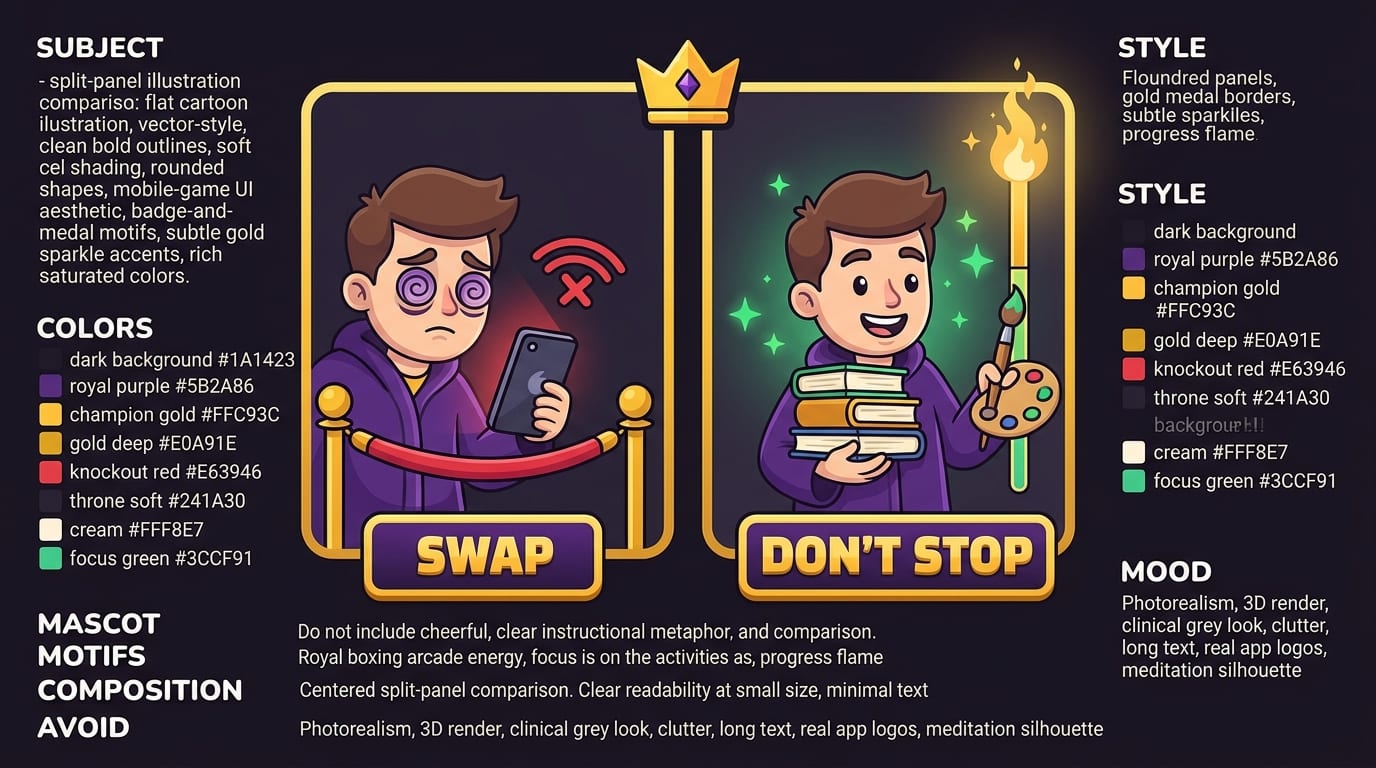
Make Unplugging Easier With the “Swap, Don’t Stop” Method
The phrase “stop using screens” leaves a vacuum. And vacuums get filled by the nearest app with a red notification badge. Instead, use the swap method: identify what the screen is providing, then choose an offline activity that meets the same need.
Match the need to the activity
- Need: stimulation. Try obstacle courses, sports, dance, cooking, building challenges, or timed games.
- Need: relaxation. Try reading, baths, puzzles, drawing, nature walks, stretching, or music.
- Need: social connection. Try board games, shared cooking, calling a relative, neighborhood play, or a family challenge.
- Need: novelty. Try mystery boxes, scavenger hunts, rotating craft supplies, new recipes, or library trips.
- Need: control. Let kids choose the activity, set the rules, or lead the family game.
This is why simply removing devices often causes friction. The screen was doing a job. Maybe it was calming a tired kid, entertaining a bored teen, or helping an adult avoid stress. No judgment. The scroll is sneaky because it works in the short term. But better swaps work longer and don’t leave your attention feeling like a dropped lasagna.
For adults, pairing swaps with website blocking can be powerful. If your goal is a screen-free evening, block the websites that usually pull you back in: social media, streaming, news, shopping, gaming, or whatever your personal distraction dragon happens to be. BlockChamp’s gamified system helps because you earn XP, keep a reign, and survive Stare-Downs when you almost slip. It turns “I failed because I wanted Reddit” into “I resisted and gained points.” Much more regal.
A Step-by-Step Screen Free Afternoon Plan
Need a ready-made plan? Behold: a practical screen free activities schedule for a three-hour afternoon. Adjust ages, weather, snacks, and chaos levels as needed.
- Minute 0-10: Device landing zone. Put phones, tablets, controllers, and laptops in a shared spot. If using computers for work, activate website blocks first. The King stands guard.
- Minute 10-30: Movement reset. Go outside, do a living room obstacle course, stretch, walk the dog, or play a quick ball game.
- Minute 30-60: Creative build. Choose a building challenge, drawing prompt, craft, or kitchen experiment.
- Minute 60-75: Snack and chat. Make a snack together. Ask weird questions: “What animal would be the worst boss?” “What invention should exist?”
- Minute 75-120: Deep activity. Board game, reading fort, nature journaling, longer craft, model building, baking, or pretend play.
- Minute 120-150: Helpful mission. Tidy one room, sort toys, prep dinner, fold laundry while telling stories, or organize a drawer. Glamorous? No. Useful? Yes.
- Minute 150-180: Choice block. Everyone picks from the boredom jar or activity station. End with something calm.
The secret is variety: movement, creativity, food, connection, responsibility, choice. This prevents the afternoon from becoming one endless craft project where someone cries because the glue stick “looked at them wrong.”
How to Handle Resistance Without Becoming the Screen Police
Resistance is normal. Screens are convenient, rewarding, and designed by very smart people whose job is to make you stay. According to Pew Research Center data on mobile technology use, digital devices are deeply embedded in daily life. So if unplugging feels hard, congratulations: you are a human in the attention economy, not a weak peasant.
Use calm boundaries
Try saying: “Screens are done until after dinner. You can choose outside, crafts, reading, or helping me cook.” This keeps the boundary firm but gives choice inside it. Avoid debating every complaint like you are in a courtroom drama titled Law & Order: Tablet Unit.
Start smaller than you think
If your household currently runs on heavy screen use, begin with 15 or 30 minutes. Success builds trust. Then expand. A sudden all-day digital detox may sound noble, but if everyone ends up furious and chewing the furniture, the kingdom has not prospered.
Model the behavior
Kids notice when adults say “no screens” while checking email under the table like a raccoon with a finance job. Join the offline block when possible. Read, cook, walk, stretch, draw, or just sit without performing busyness. Modeling beats lecturing. It is annoyingly effective.
If you want more awareness before changing habits, this guide on how to monitor screen time usage can help you understand where the time is going. You cannot defend the throne if you do not know which invader keeps using the side door.
Quick List: 50 Screen Free Activities When Your Brain Says “Uh… Now What?”
Save this list for emergencies, rainy days, travel, after school, weekends, and moments when the Wi-Fi goes down and everyone acts like civilization has collapsed.
- Build a blanket fort
- Make paper airplanes and test distance
- Create a comic strip
- Play hide and seek
- Cook a simple recipe
- Have a picnic outside or indoors
- Do a puzzle
- Play cards
- Write a short story
- Make friendship bracelets
- Paint rocks
- Start a nature journal
- Play hopscotch
- Build with blocks
- Invent a board game
- Make a treasure map
- Do yoga or stretching
- Play charades
- Make homemade playdough
- Wash the car or bikes
- Organize a drawer
- Plant herbs or flowers
- Write letters or postcards
- Make a family newspaper
- Host a backyard Olympics
- Learn a magic trick
- Have a dance party
- Make a bird feeder
- Play catch
- Go on a listening walk
- Draw portraits of each other
- Make a time capsule
- Do a blind taste test
- Create an obstacle course
- Read aloud together
- Make sock puppets
- Practice origami
- Build a cardboard city
- Play “Would you rather?”
- Try jump rope tricks
- Make a collage
- Sort books or toys to donate
- Learn knots
- Play dominoes
- Make a comic about your pet
- Try cloud watching
- Do kitchen science
- Create a family trivia game
- Go to the library
- Sit outside and eat something crunchy like a victorious squirrel
Final Thoughts: Screen Free Does Not Mean Fun Free
The best screen free activities are not punishments dressed as virtue. They are better defaults. They give kids and adults something real to do with their hands, bodies, brains, and people. They create memories that are not buried under autoplay. They make boredom survivable. Sometimes they even make chores tolerable, which is basically wizardry.
Start small. Build an activity station. Create repeatable routines. Use swaps instead of vague bans. Give kids choices. Give teens respect. Give yourself some grace, because the internet is designed like a carnival built by attention vampires.
And when the browser temptations start whispering, “Just one little scroll, champ,” bring in backup. BlockChamp helps you block distracting websites on Chrome, earn XP for focus time, build a reign, and survive The King’s gloriously judgmental Stare-Down when you try to wander into distraction territory. It is not about hating screens. It is about making your time yours again.
Pick one screen free activity from this guide and try it today. Not tomorrow. Today. The crown is waiting, the scroll goblin is nervous, and your offline life has snacks.
Related posts

Finding Focus For Fiction Writing

Learning To Focus In A Digital World As A Creative

Finding Focus For Personal Growth
