
Finding Focus For Fiction Writing

Finding focus for fiction writing is a noble quest, right up there with slaying dragons, surviving awkward family group chats, and not opening YouTube “for research” only to emerge 47 minutes later watching a raccoon wash grapes. Fiction asks for a weird kind of attention: dreamy enough to imagine a world, disciplined enough to put words on the page, and stubborn enough to keep going when your inner critic starts wearing a tiny judge wig.
The problem is not that you lack imagination. The problem is that modern life is basically a distraction buffet with unlimited refills. Social media, news, streaming, email, AI tools, shopping tabs, and “quick” searches all nibble away at the same mental energy you need for characters, plot, dialogue, and emotional truth. Your novel does not stand a chance if every writing session begins with “I’ll just check one thing.” That sentence has buried more chapters than writer’s block ever could.
This guide gives you practical strategies and daily routines for finding focus for fiction writing without becoming a joyless productivity goblin. We’ll cover goals, writing sprints, distraction control, environment design, mindset shifts, and how tools like BlockChamp can help you defend the throne when the scroll goblins come knocking.
Quick Answers
Why Fiction Focus Feels So Slippery, Like a Greased Plot Ferret
Fiction writing is cognitively demanding because you are doing several jobs at once. You are architect, actor, psychologist, historian, poet, continuity manager, and occasionally unpaid therapist to imaginary people. Unlike answering email or filling out a spreadsheet, fiction requires sustained imaginative immersion. You need enough uninterrupted time to sink into the fictional dream.
That immersion is fragile. A notification does not just steal ten seconds; it can break the mental scene you were building. Research summarized by the American Psychological Association on multitasking shows that task-switching carries cognitive costs. In plain writer language: every time you hop from your manuscript to Instagram to your manuscript to a news headline about a celebrity’s breakfast smoothie, your brain pays a toll. Eventually, your focus wallet is empty.
Fiction also triggers resistance because the work is emotionally exposed. A messy draft can feel like proof that you are secretly three raccoons in a trench coat pretending to be an author. So the brain looks for relief. Conveniently, the internet offers relief in the form of infinite novelty. According to Pew Research Center’s social media usage data, a large majority of adults use social platforms, and many use multiple platforms. That means temptation is not theoretical. It is sitting in your browser wearing sunglasses and whispering, “Just one scroll, champ.”
Finding focus for fiction writing starts with accepting that focus is not a personality trait you either have or lack. It is a condition you create. You do not wait for focus to descend from the heavens carrying a quill. You build a small kingdom where focus is more likely to show up, remove the obvious enemies, and put a tiny royal boxer at the gate if necessary.
Define the Writing Target Before You Enter the Arena
A vague writing session is an invitation to drift. “Work on novel” sounds noble, but it is too squishy. Your brain needs a target it can punch. Before each session, decide exactly what success looks like.
Good fiction-writing goals are specific, controllable, and small enough to finish in one sitting. Instead of “write chapter five,” try “draft the argument scene between Mara and the captain” or “revise the opening three pages to clarify the narrator’s motive.” Instead of “fix plot,” try “list three possible reasons the villain delays the reveal.” Tiny targets win wars.
Use Three Types of Fiction Goals
- Word-count goals: Great for drafting momentum. Example: write 600 words before lunch.
- Scene goals: Better for story progress. Example: draft the scene where the detective finds the missing photograph.
- Problem-solving goals: Useful for revision and plotting. Example: identify why chapter eight feels flat and propose two fixes.
If you are drafting, word counts can be motivating. If you are revising, word counts can become nonsense math with a cape. You might spend an hour cutting 500 words and make the story dramatically stronger. That counts. The crown approves.
For bigger creative projects, it helps to zoom out once a week and map your current stage. Are you generating ideas, drafting, revising, polishing, or submitting? Each stage needs a different kind of focus. If you want a deeper breakdown of managing large creative workloads, read this guide to finding focus for writing projects. It pairs nicely with coffee and mild existential dread.
Build a Pre-Writing Ritual That Tells Your Brain: “We Write Now, Peasant”
Brains love cues. A reliable pre-writing ritual reduces the friction of starting because it turns writing into a repeated pattern rather than a daily debate. You do not want to negotiate with yourself every morning like a tiny parliament of procrastination gremlins. You want a simple sequence that says: the session has begun.
Your ritual does not need to be dramatic. No need to light thirteen candles and whisper to a portrait of Hemingway unless that genuinely helps, in which case, carry on, spooky monarch. A good ritual is short, repeatable, and attached to the kind of work you want to do.
A Five-Minute Fiction Focus Ritual
- Open your manuscript or writing app before opening anything else.
- Write down the session target in one sentence.
- Read the last 300–500 words you wrote, but do not edit heavily.
- Set a timer for your first sprint.
- Start with an intentionally easy sentence, even a bad one. Especially a bad one. Bad sentences are clay. Blank pages are haunted.
Rituals work best when paired with environmental consistency. Same chair, same playlist, same beverage, same ridiculous “writing socks” if you have them. The point is not superstition; it is association. Over time, these cues tell your brain that this is not random laptop time. This is story time. Crown on. Gloves up.
If you write remotely, in cafes, libraries, hotel rooms, or chaotic kitchen-table kingdoms, you may need portable focus cues. Noise-canceling headphones, a specific instrumental playlist, or a physical notebook can help recreate the writing chamber wherever you are. For more on staying focused outside a traditional workspace, check out finding focus for remote writing and reporting.
Use Writing Sprints to Sneak Past the Inner Critic
Long, open-ended writing sessions sound romantic until you spend two hours adjusting one sentence and googling “can ghosts legally own property.” Writing sprints give your attention a container. They create urgency without requiring panic. A sprint says: for this short period, we write; afterward, we breathe, stretch, and maybe stop clenching our jaw like a Victorian villain.
The classic method is Pomodoro-style work: 25 minutes of focus, 5 minutes of break. The Pomodoro Technique overview from Todoist explains how timed focus intervals can make large tasks feel less intimidating. Fiction writers can adapt this beautifully.
Try These Fiction Sprint Formats
- 15-minute warm-up sprint: Best for starting when you feel rusty, tired, or personally attacked by the blank page.
- 25-minute drafting sprint: Ideal for steady daily word count.
- 45-minute deep scene sprint: Useful when you know the scene and want to stay immersed longer.
- 10-minute fix-it sprint: Great for solving one specific revision problem without falling into the swamp.
During a sprint, the rule is simple: no internet, no rereading beyond what is necessary, no polishing until the sentence shines like a knight’s helmet. Draft forward. Use brackets when needed: “[better insult here],” “[research train schedules later],” “[make dragon emotionally complicated].” Brackets are magic trapdoors. They let you keep moving instead of vanishing into a research cave.
At the end of each sprint, record what you accomplished. Not just word count. Track scene progress, discoveries, questions, and momentum. This builds evidence that you are writing even when it feels messy. Fiction progress is often invisible until suddenly there is a chapter sitting there like, “Hello, I exist.”

Control Digital Distractions Before They Control Your Plot
Let us speak plainly: if your writing browser contains your manuscript, email, Reddit, YouTube, TikTok, breaking news, shopping tabs, and seventeen “research” pages, you are not writing in a workspace. You are writing in a carnival during a pie fight.
Digital distraction control is one of the fastest wins for finding focus for fiction writing. You do not need heroic willpower if the distractions are simply not available during writing time. This is where a website blocker becomes less of a productivity accessory and more of a bouncer for your imagination nightclub.
BlockChamp is built for exactly this kind of battle. It is a gamified website blocker for Chrome that lets you block distracting sites, keywords, and categories. For fiction writers, that can mean blocking social media, video platforms, news sites, shopping, gaming, or even AI distraction tools during drafting sessions. The goal is not to punish yourself. The goal is to protect the fragile little story bubble before the algorithm barges in wearing muddy boots.
A Practical Block List for Fiction Writers
- Social platforms you “check for five minutes” and leave two business days later.
- Video and streaming sites that turn research into raccoon documentaries.
- News sites if current events hijack your emotional bandwidth.
- Shopping sites if you suddenly need the perfect notebook instead of using the twelve you own.
- AI chat tools during first-draft sprints if they tempt you to outsource decisions instead of writing through uncertainty.
BlockChamp’s Master Focus Toggle lets you put your blocks “On Guard” when writing begins. If you try to visit a blocked site, you get The Stare-Down: a full-screen royal judgment scene with The King staring at you like you just betrayed the realm for a meme. It is funny, slightly embarrassing, and surprisingly effective. Each survived stare-down earns XP, because apparently the human brain enjoys being rewarded for not self-sabotaging. Delightful little goblin machine.
For heavier temptation days, BlockChamp’s Champion plan includes Hardcore Lockdown, where turning focus off requires a cooldown timer or a boxing-riddle mini-game. That extra friction can save a writing session when your impulse control is wearing flip-flops.
Separate Research From Drafting, or Be Devoured by the Wiki Beast
Research is important. Research is also where fiction focus goes to wear a fake mustache and disappear. One minute you are checking what trees grow in northern Scotland; the next you are reading about medieval cheese tariffs. Fascinating? Yes. Necessary for chapter two? Absolutely not, your honor.
The fix is to separate research from drafting. Treat them as different modes with different rules. Drafting mode is for generating story. Research mode is for answering questions. Mixing them too freely creates constant context switching, which drains attention and breaks narrative flow.
The Bracket Method for Research Temptation
When you hit a missing detail, write a bracketed placeholder and continue:
- “The carriage crossed the [name of river] at dawn.”
- “She loaded the pistol with [correct ammunition].”
- “He quoted [poem about grief] badly, because he was drunk.”
Then keep a running research list at the bottom of your document or in a separate note. After the drafting session, batch those questions into a dedicated research block. This protects momentum and prevents your writing session from becoming a trivia expedition with no survivors.
You can even use BlockChamp’s keyword blocking if certain rabbit holes keep ambushing you. If you are drafting a fantasy novel and keep spiraling into armor forums, block specific keywords during writing hours. If you write historical fiction and “just one source” becomes a three-hour archive dive, schedule research separately. The King does not hate research. The King hates cowardly research pretending to be writing. Big difference.

Design a Daily Fiction Writing Routine You Can Actually Keep
The best writing routine is not the most glamorous one. It is the one you can repeat when life is rude, laundry is multiplying, and your motivation has crawled under the couch. Consistency beats intensity. A sustainable routine keeps your story warm, even if you cannot write for three perfect hours every day in a sunlit cabin with artisanal fog.
Start by identifying your highest-energy writing window. Some writers are morning goblins. Some are night owls. Some are lunch-break ninjas. Do not copy another writer’s routine just because it sounds impressive. If you are dead inside at 5 a.m., waking early to write may simply produce 300 words of keyboard drool.
A Simple Daily Routine for Fiction Focus
- Plan tomorrow’s target tonight. Decide the next scene or revision task before you stop. Future You deserves a map.
- Start with one protected sprint. Even 25 minutes counts. Especially on chaotic days.
- Block your top distractions. Put social, video, and news sites behind a wall before the session begins.
- End with a breadcrumb. Write a note about what happens next so re-entry is easier.
- Track the streak, not perfection. Missed a day? Return the next day. No dramatic throne abdication required.
BlockChamp’s focus calendar and reign system are useful here because they make consistency visible. Every focused day adds to the feeling that you are building something. You are not merely “trying to write.” You are defending a reign. Ridiculous? Slightly. Effective? Often.
If your fiction practice is also part of a bigger identity shift—becoming more disciplined, more creative, more confident—this overlaps with personal development. You may enjoy finding focus for personal growth, which explores how attention habits shape the person you are becoming. Spoiler: hopefully not the person who opens six tabs about celebrity refrigerators during a writing sprint.
Train Your Mindset: Draft Badly, Revise Bravely, Continue Anyway
Many focus problems are secretly fear problems wearing a fake nose. You avoid the manuscript because the scene might not work. You check your phone because your character’s motivation is muddy. You reorganize your desk because the plot twist feels dumb. Congratulations, you are a writer. This is the job.
Finding focus for fiction writing requires a mindset that allows imperfect work. Drafting is not performing. Drafting is discovering. If you demand brilliance from every sentence, your brain will choose avoidance because avoidance is safer than visible imperfection.
Adopt the “draft badly on purpose” rule. Not permanently, obviously. We are not publishing goblin sludge. But during first drafts, your job is to create material. You can revise a clumsy paragraph. You cannot revise a paragraph you never wrote because you were busy comparing yourself to award-winning novelists and then stress-cleaning a drawer.
Useful Mindset Shifts for Fiction Writers
- From “Is this good?” to “What is this trying to become?”
- From “I need inspiration” to “I need a starting cue.”
- From “I failed today” to “What is the smallest next move?”
- From “I must finish the whole book” to “I must write the next honest scene.”
Creative attention also improves when you stop treating every wobble as a moral failure. The Mindful.org guide to focusing a wandering mind explains that noticing distraction and returning attention is part of the practice, not proof that you are broken. Writers need this reminder hourly. Sometimes minutely. Occasionally every eight seconds, depending on caffeine levels.
When your mind wanders, do not launch a courtroom drama against yourself. Just return. Back to the sentence. Back to the scene. Back to the emotional problem. The crown is not awarded to the writer who never drifts. It is awarded to the writer who comes back.
Use Community Without Letting It Become Fancy Procrastination
Writing can be lonely, and lonely work is harder to sustain. A good writing community can provide accountability, encouragement, feedback, and the blessed relief of hearing someone else say, “Yes, my protagonist also refuses to follow the outline.”
But community has a shadow side. Forums, Discord servers, social feeds, writing groups, critique swaps, and craft videos can become “writerly procrastination.” You feel close to writing because you are talking about writing. Meanwhile, your manuscript sits in the corner like a neglected houseplant with plot issues.
The trick is to use community as a support structure, not a substitute. Schedule community time outside your protected writing blocks. Join sprint rooms, accountability threads, or check-in groups that encourage actual production. Share goals before a session and results after. Avoid endless debate during the time you promised to draft.
If you want to build a healthier relationship with writing groups, read finding focus through writing communities. The short version: find people who help you write more, not people who help you avoid writing in a more literary outfit.
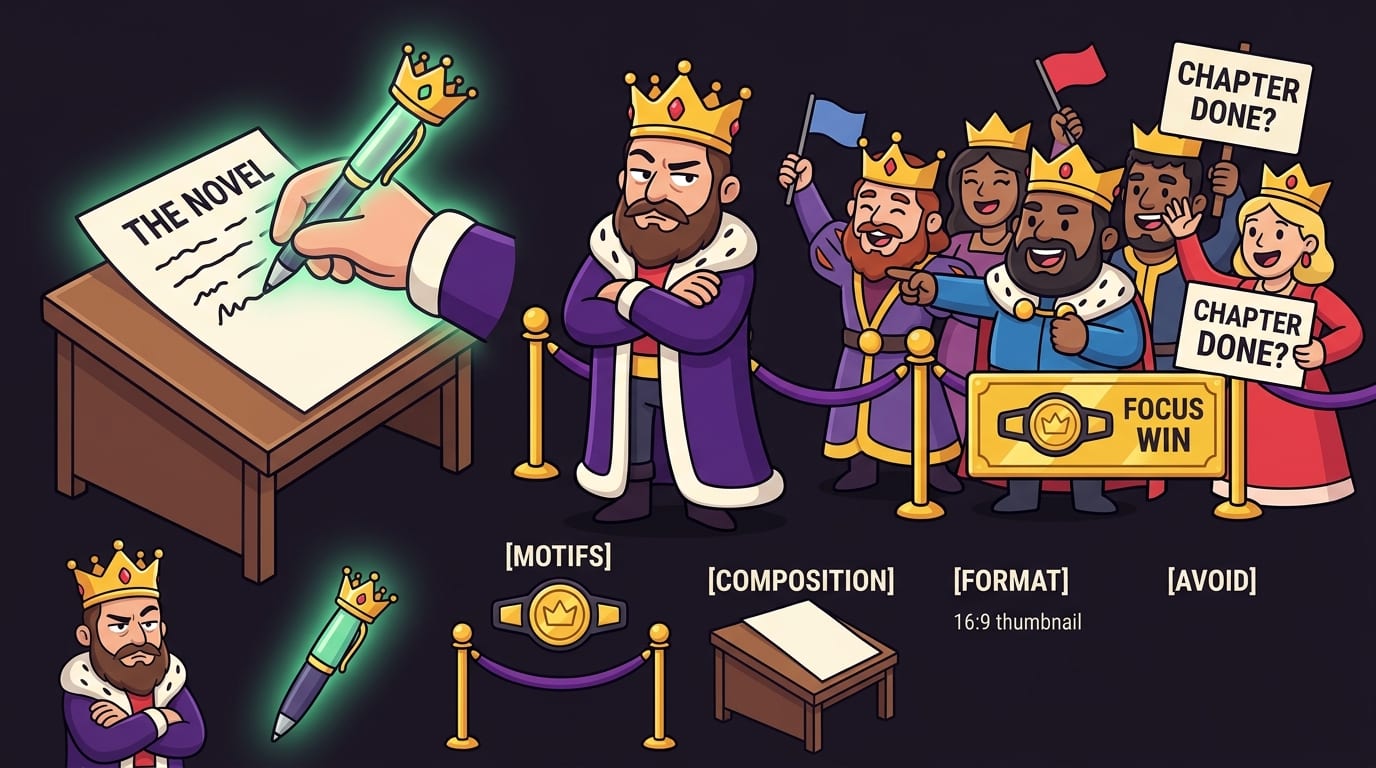
Create a Focus-Friendly Writing Environment, Even If Your Desk Is Chaos Royalty
Your environment nudges your behavior constantly. If your phone is face-up beside your keyboard, it is not “nearby.” It is auditioning to become your co-author, and its prose is terrible. If your browser opens to distractions, your writing session begins in enemy territory. If your desk is buried under bills, snacks, cables, and one mysterious spoon, your attention has to fight through visual noise before it even reaches the story.
Focus-friendly does not mean minimalist perfection. You do not need a monk cell with one pencil and a bowl of morally serious oats. You need fewer obvious triggers.
Quick Environment Fixes
- Put your phone in another room, or at least out of arm’s reach.
- Use full-screen mode in your writing app.
- Close every tab except what the session requires.
- Keep a notebook nearby for intrusive tasks: “pay bill,” “buy soap,” “look up whether ravens can hold grudges.” Capture and return.
- Use instrumental music or ambient sound if silence makes your brain start narrating doom.
The broader creative environment matters too. Rest, movement, reading, and boredom all feed fiction. If every spare moment is filled with scrolling, your imagination has less compost. Yes, compost. Stories grow from weird mental leftovers. Protect your boredom like a tiny dragon egg.
For a wider look at protecting attention across artistic work, see finding focus for creative work. Fiction is one kingdom inside the larger empire of making things while the internet throws confetti grenades at your face.
Track Progress Like a Champion, Not a Spreadsheet Goblin
Tracking helps because fiction projects are long, messy, and emotionally suspicious. Without visible progress, it is easy to feel like nothing is happening. But tracking can also become its own procrastination sport. Beware the writer who has seven dashboards, color-coded charts, and no new pages. The spreadsheet goblin is charming but dangerous.
Track only what encourages you to return. Useful metrics include:
- Writing days completed
- Minutes focused
- Words drafted
- Scenes completed
- Revision passes finished
- Distractions resisted
Notice that “distractions resisted” matters. Every time you do not open a blocked site, you protect the session. BlockChamp turns that into XP, badges, levels, reigns, and leaderboard progress. That sounds playful because it is. But play is not trivial. Gamification can make abstract progress feel concrete. Instead of merely hoping you become more focused, you see focus hours accumulate. You survive stare-downs. You level up. Your writing routine gets a little arcade sparkle, minus the sticky floor.
According to Atlassian’s roundup of productivity statistics, distractions and interruptions remain major workplace productivity drains. Writers are not immune just because our workplace sometimes includes pajamas. If anything, fiction writers need stronger boundaries because nobody is standing over us demanding chapter twelve by 3 p.m. We must become our own benevolent tyrants.

A Sample Seven-Day Focus Plan for Fiction Writers
If you want to put this into practice, here is a simple one-week plan. Adjust the times and word counts to your life. The goal is not to become a productivity influencer with a suspiciously clean desk. The goal is to build repeatable focus.
Day 1: Set the Kingdom
Choose your writing time for the week. Pick the project, define your current stage, and list your top three digital distractions. Install or configure your blocker. In BlockChamp, enable categories like Social Media, Video & Streaming, and News if those are your usual villains. Write one clear target for tomorrow.
Day 2: Sprint, Don’t Spiral
Do two 25-minute drafting sprints. Use brackets for missing details. At the end, write a breadcrumb for the next session. Track your words or scene progress.
Day 3: Protect the Door
Repeat the sprint routine, but focus on resisting mid-session checking. If you hit a blocked site and The King judges you, laugh, accept the roast, and return to the manuscript. That return is the rep that builds focus.
Day 4: Research Batch
Spend one session answering only the bracketed questions from earlier. Set a timer. Research is a tool, not a vacation home.
Day 5: Longer Immersion
Try one 45-minute scene sprint. Before starting, reread only the previous scene. Your goal is deeper continuity, not perfect prose.
Day 6: Revision Pass
Revise one scene for one element only: desire, conflict, setting, dialogue, or pacing. Do not fix everything. Multi-purpose revision often becomes soup.
Day 7: Review and Reset
Look at what you completed. Celebrate like a reasonable monarch. Then choose next week’s focus. What worked? What distracted you? What needs a stronger boundary?
Run this plan for four weeks and you will learn more about your real writing process than you will from waiting for the perfect mood. The perfect mood is a diva. Do not build your novel around its touring schedule.
Conclusion: Guard the Story, Win the Reign
Finding focus for fiction writing is not about becoming a flawless machine who produces perfect chapters while glowing gently in the dawn. That person is either fictional or selling a course. Real focus is built through clear goals, repeatable rituals, timed sprints, protected environments, smart research boundaries, supportive community, and the willingness to return after distraction.
Your story deserves a defended space. Not a perfect space. A defended one. Put the phone away. Close the tabs. Set the sprint. Write the next scene badly if you must, bravely if you can, consistently either way. The page does not need you to be majestic. It needs you to show up.
And when the internet starts rattling the castle gates? Put The King on guard. BlockChamp can help you block the sites that steal your writing time, earn XP for staying focused, survive royal stare-downs, and turn your daily writing habit into a reign worth defending. Knock out your distractions, champ. Your characters are waiting, and frankly, they have been unsupervised long enough.
Related posts

Learning To Focus In A Digital World As A Creative

Finding Focus For Personal Growth

Nature Sounds Vs White Noise For Focus
