
Observational Learning Habits

Observational learning habits are the sneaky productivity superpower nobody talks about enough. You watch someone do something well, steal the useful bits like a tiny academic raccoon, practice them, and suddenly your brain has upgraded without needing a dramatic montage. Whether you’re learning to study better, write faster, code cleaner, present confidently, or stop opening YouTube “for research” and waking up in a documentary about medieval cheese, observational learning can help you improve by modeling what works.
But here’s the catch: watching is not the same as learning. If it were, everyone who watched cooking shows would be a Michelin-starred wizard instead of someone burning toast with confidence. Effective observational learning habits require attention, structure, practice, reflection, and transfer. In other words: observe like a scientist, imitate like an apprentice, and adjust like a champion defending the throne.
In this guide, we’ll break down how observational learning works, why it matters, and how to build a practical system you can use daily. We’ll also talk about how to protect your attention while learning, because trying to observe a master at work while 14 tabs scream “LOOK AT ME” is not a learning strategy. It is a browser-based circus.
Quick Answers
What Are Observational Learning Habits?
Observational learning habits are repeated behaviors that help you learn by watching others perform a skill, noticing what they do, and then applying those patterns yourself. The concept is rooted in social learning theory, most famously associated with psychologist Albert Bandura. His research showed that people can learn behaviors by observing models, not just through direct instruction or personal trial and error.
In plain English: your brain is very good at copying. Sometimes too good. That’s why you can pick up a friend’s catchphrase, a coworker’s meeting style, or a YouTuber’s weird hand gestures without signing a formal apprenticeship agreement.
According to the overview of Bandura’s social learning theory from Simply Psychology, observational learning involves attention, retention, reproduction, and motivation. These four steps are the backbone of effective modeling. You first pay attention to the person doing the thing, remember what you saw, attempt to reproduce it, and stay motivated enough to keep practicing.
That means observational learning habits are not passive. They are active. You are not just consuming content. You are training your attention to spot methods, choices, sequences, mistakes, shortcuts, and decision-making patterns.
Examples of observational learning habits include:
- Watching how a top student annotates a textbook, then trying the same system during your next reading session.
- Observing how a senior designer explains visual choices, then practicing that explanation style in your own portfolio review.
- Studying how a productive coworker structures their morning, then copying one small routine for a week.
- Watching a skilled programmer debug code, pausing to predict their next move, then applying the same troubleshooting process.
- Noticing how someone handles conflict calmly, then practicing their phrasing in your next awkward human interaction. Good luck, brave knight.
The habit part matters because one great observation session won’t transform you. You need repeated cycles: watch, practice, reflect, adjust. That’s how borrowed behavior becomes your own skill.
Why Observational Learning Works: Your Brain Loves a Good Demo
Humans are built to learn socially. Long before online courses, textbooks, and productivity podcasts with suspiciously intense intro music, people learned by watching other people. Hunt like this. Cook like that. Don’t poke the angry animal. Ancient wisdom, extremely practical.
Modern neuroscience supports the idea that observing actions can activate brain systems involved in performing those actions. Research around mirror neurons and imitation is complex, and scientists debate exactly how far the concept applies, but the practical takeaway is solid: watching skilled behavior can help prepare your brain to perform similar behavior. The National Library of Medicine discusses mirror neuron systems and observational learning in relation to action understanding and imitation.
Observational learning works especially well because it gives you more than instructions. It gives you context. A written tip might say, “Ask better questions in meetings.” Useful, but vague. Watching someone ask better questions shows you the timing, tone, body language, follow-up, and confidence. That’s the good stuff. That’s where the skill lives.
It also reduces wasted trial and error. You still need practice, obviously. Nobody becomes great by watching 900 videos and then announcing, “I have absorbed excellence.” But observation helps you avoid common beginner mistakes. You see what works before you reinvent the wheel, the axle, and accidentally invent a square tire.
Observational learning habits are especially powerful for skills that involve judgment, sequencing, and nuance:
- Studying: how to break down material, test yourself, and manage attention.
- Writing: how experts structure arguments, transitions, examples, and revisions.
- Communication: how confident speakers pause, simplify, and respond.
- Creative work: how professionals generate ideas, critique drafts, and finish projects.
- Productivity: how focused people protect time, handle distractions, and recover from interruptions.
If you’re building better learning routines, you might also enjoy BlockChamp’s guide to replacing social media with productive learning habits. Because yes, your brain can become addicted to learning instead of doomscrolling. We support this noble rebellion.
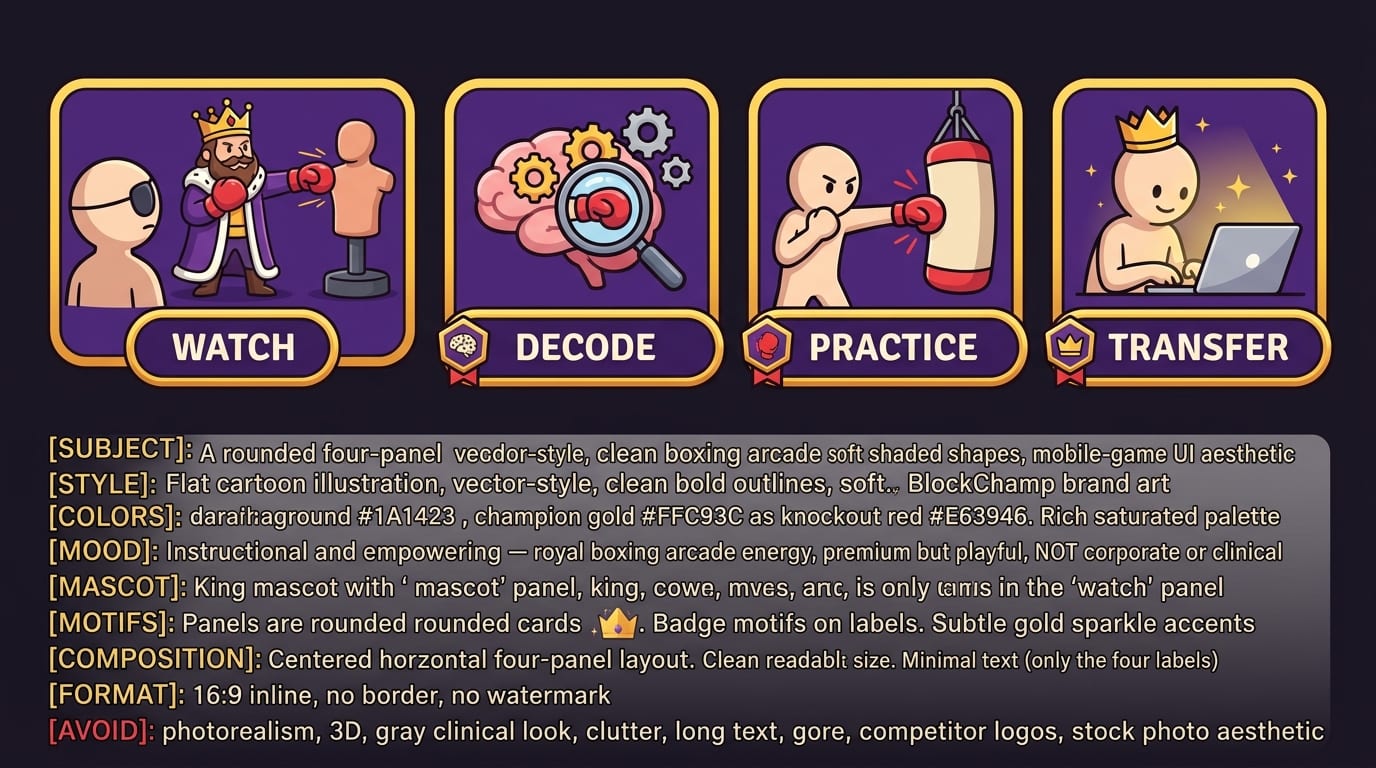
The Four-Step Framework: Watch, Decode, Practice, Transfer
To turn observational learning into a repeatable habit, use a simple four-step framework: watch, decode, practice, transfer. This keeps you from falling into the classic trap of “I watched a masterclass, therefore I am now spiritually productive.” Cute. False. The King would raise one eyebrow.
1. Watch with a Purpose
Before observing someone, decide what you’re looking for. “I want to get better at studying” is too broad. “I want to see how this student reviews lecture notes before an exam” is useful. Purpose turns watching into targeted learning.
Ask yourself:
- What specific skill am I trying to improve?
- Who already does this well?
- What part of their process can I observe?
- What outcome am I trying to replicate?
For example, if your goal is better writing, don’t just read a great essay and vibe near it. Watch how it opens, how it transitions, how each paragraph earns its rent, and how the conclusion lands the plane without exploding in cliché confetti.
2. Decode the Invisible Decisions
Experts make many decisions automatically. Your job is to slow the tape down and decode what they might be doing. If you’re watching a great presenter, don’t only notice that they seem confident. Notice how they use pauses, gestures, examples, slides, and audience questions.
Use this question: “What is the model doing that I wouldn’t have thought to do?” That question is a tiny crowbar for opening hidden expertise.
3. Practice Immediately
Observation without practice fades fast. After watching, copy one specific behavior as soon as possible. Not ten behaviors. One. Don’t try to become an entirely new person by Thursday. That’s how you end up buying color-coded notebooks, rearranging your desk, and accomplishing nothing except a very organized breakdown.
If you observed someone using active recall while studying, try it for one chapter. If you watched a designer critique a layout, critique one of your own designs using the same checklist. Immediate practice turns observation into memory.
4. Transfer the Skill to a New Situation
Transfer is the real prize. It means you can apply what you learned beyond the exact situation where you observed it. If you watched someone explain a math concept clearly, can you use the same explanation structure for a history topic? If you observed a focused work routine, can you adapt it for studying, writing, or business tasks?
Transfer turns imitation into ownership. That’s when you stop being a copycat and start becoming a craftsperson. A royal craftsperson, obviously. Crown optional but encouraged.
How to Choose the Right Models Without Worshipping Productivity Goblins
Not every person worth observing is famous, polished, or wearing a headset microphone in a thumbnail. In fact, the best models are often close to you: a classmate who studies consistently, a coworker who never seems frantic, a friend who reads deeply, a creator who ships work regularly, or a manager who gives unusually clear feedback.
Good models have three qualities: they get results, their process is visible, and their behavior is realistic for your life. That last one matters. If your model wakes at 4:00 a.m., cold plunges into a glacier, journals in Latin, and runs three companies before breakfast, perhaps admire from a distance. Do not build your entire identity around a productivity goblin with perfect lighting.
Choose models in layers:
- Near-peer models: people slightly ahead of you. Their habits feel achievable.
- Expert models: people with deep mastery. Their thinking stretches you.
- Negative models: people whose mistakes teach you what to avoid. Painful, but educational. Like touching a hot stove, but with meetings.
- Environment models: spaces and systems that encourage good behavior, such as libraries, study groups, focused teams, or distraction-free desks.
For students, this might mean observing how top performers prepare for exams instead of only asking what they scored. For remote workers, it might mean noticing how a colleague blocks deep work time and communicates availability. For creators, it might mean studying how consistent creators plan, batch, and publish without waiting for inspiration to descend from the clouds wearing a tiny cape.
If your learning environment is currently chaotic, noisy, and powered by emergency caffeine, read this guide on building a productive learning environment. Your surroundings are not just decoration. They are silent coaches. Sometimes helpful. Sometimes yelling “open TikTok” through the walls.
Build a Daily Observational Learning Routine
The best observational learning habits fit into your actual day. They should not require a retreat, a ceremonial robe, or three uninterrupted hours while the moon is in productivity alignment. Start small and repeat often.
Here’s a simple 20-minute routine:
- Pick one micro-skill: Choose something narrow, like “write stronger introductions,” “review notes more effectively,” or “ask clearer questions.”
- Find one model: Select a video, article, classmate, coworker, tutorial, or example that demonstrates the skill.
- Observe for 10 minutes: Take notes on actions, decisions, sequences, and language.
- Extract one rule: Turn what you observed into a simple principle. Example: “Start essays with a tension or problem, not a generic definition.”
- Practice for 5 minutes: Apply the rule immediately.
- Reflect for 2 minutes: Write what worked, what felt awkward, and what you’ll adjust tomorrow.
This routine works because it avoids the swamp of passive consumption. It also creates a feedback loop. You are not just learning about learning. You are learning, practicing, and improving before your brain can wander off to investigate whether penguins have knees. They do, by the way. Focus, champ.
You can also use a weekly rhythm:
- Monday: observe a model and identify one behavior.
- Tuesday: copy the behavior in a low-pressure situation.
- Wednesday: compare your attempt to the model.
- Thursday: adjust and try again.
- Friday: transfer the behavior to a different task.
This structure is especially useful for study habits. If academic performance is your kingdom to conquer, BlockChamp has a related guide on study habits for academic success that pairs nicely with observational learning. Read it, apply it, and let your future self send you a thank-you note with better grades.
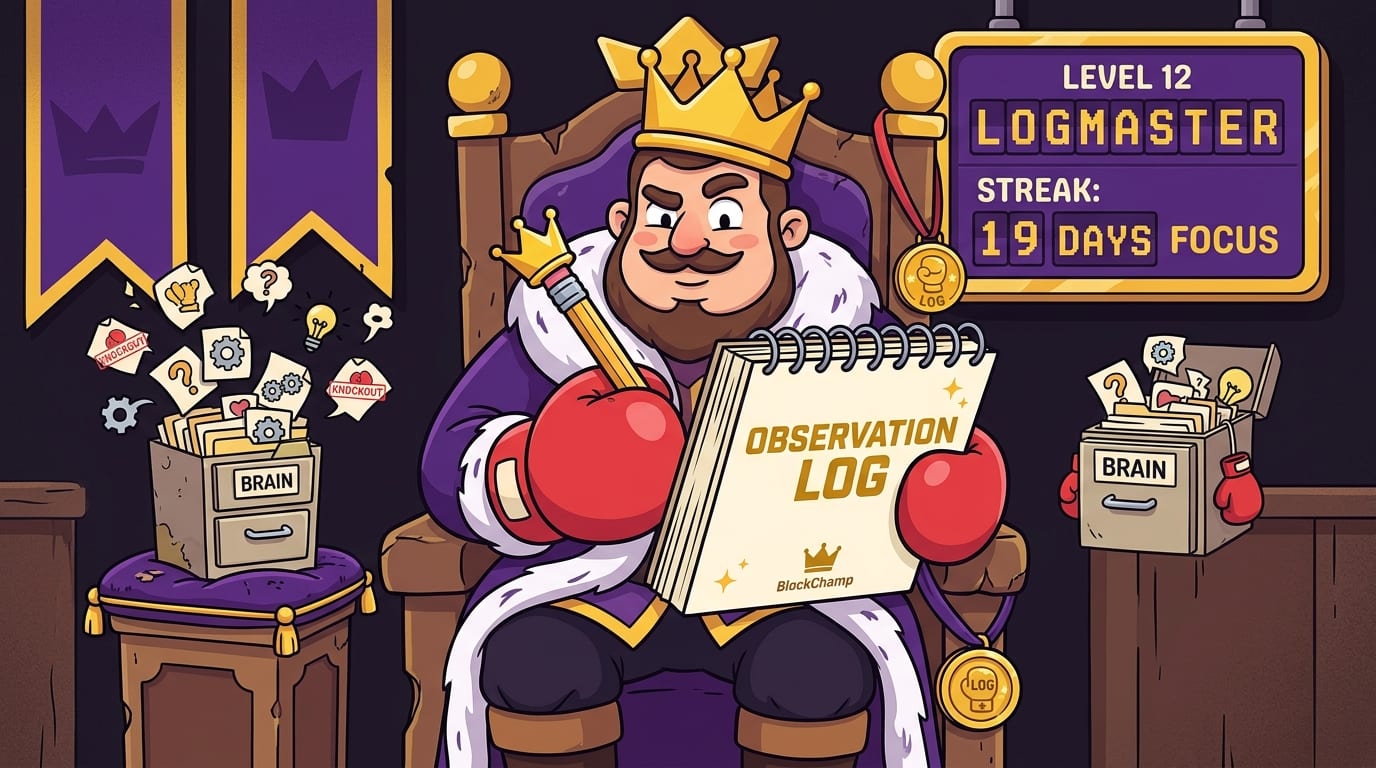
Use an Observation Log: Because Your Brain Is Not a Filing Cabinet
If you want observational learning habits to stick, keep an observation log. It can be a notebook, spreadsheet, Notion page, Google Doc, or the back of a receipt if you enjoy living dangerously. The point is to capture what you noticed and what you did with it.
A useful observation log has five columns:
- Skill: What are you trying to learn?
- Model: Who or what did you observe?
- Behavior noticed: What did they do specifically?
- Practice attempt: How did you try it?
- Reflection: What happened, and what will you change?
Here’s an example:
- Skill: Better exam review.
- Model: Classmate who consistently scores high.
- Behavior noticed: They test themselves before rereading notes.
- Practice attempt: Created 12 recall questions before reviewing chapter 4.
- Reflection: Harder than rereading, but I remembered more. Tomorrow I’ll do questions earlier.
This tiny system keeps you honest. It prevents vague learning fog. “I watched a helpful video” becomes “I observed a specific behavior, practiced it, and improved it.” That is the difference between being a spectator and becoming a contender.
For added power, review your log once a week. Look for patterns. Are you repeatedly observing but not practicing? Are you copying too many things at once? Are certain models more useful than others? The log turns your learning process into data, minus the soul-crushing spreadsheet energy if you keep it simple.
Research on deliberate practice also supports the importance of focused effort and feedback. The classic paper by Ericsson, Krampe, and Tesch-Römer on deliberate practice argued that expert performance develops through structured practice over time. Observation helps you choose what to practice; deliberate effort helps you actually improve.
Protect Your Attention While Observing: The Scroll Goblin Is Watching
Here is the great betrayal of modern learning: many of the best models live on the same platforms as the worst distractions. You go to YouTube to watch a tutorial on calculus, and 17 minutes later you’re watching a man restore a rusty waffle iron from 1912. Educational? Maybe. Relevant? Absolutely not, Your Majesty.
This is where attention protection matters. Observational learning habits require focused attention, and focused attention needs boundaries. The internet is not evil, but it is very talented at turning your curiosity into a 90-minute detour through chaos.
Studies and reports continue to show that digital distraction is a major challenge. The American Psychological Association’s Stress in America report on technology and social media found that constant technology use is associated with higher stress for many people. Meanwhile, workplace research from Gloria Mark and colleagues at UC Irvine has shown how interruptions can affect attention and task switching. Translation: your brain is not a browser with infinite tabs. It is a squishy monarch with limits.
Before an observation session, create a distraction shield:
- Close unrelated tabs.
- Put your phone across the room or in another room if it has been especially naughty.
- Write the exact skill you’re observing on a sticky note.
- Use a timer so the session has a clear start and end.
- Block known distraction sites during your learning window.
This is where BlockChamp is genuinely useful. It’s a gamified website blocker for Chrome that lets you block distracting sites, keywords, and categories while you focus. If your observational learning session requires YouTube but not Reddit, shopping, news, gambling, TikTok, or “just one quick AI rabbit hole,” you can set boundaries and keep the throne guarded.
BlockChamp is especially handy because it makes focus feel like a game instead of a punishment. You earn XP for focus time, build a reign streak, unlock badges, and if you try to visit a blocked site, The King gives you a full-screen Stare-Down. He is disappointed, but theatrically. Sometimes he even roasts you out loud. It’s accountability with a crown and boxing gloves. Honestly, more education should involve royal judgment.
Turn Observation Into Practice Without Becoming a Weird Clone
One danger of observational learning is over-copying. You do not need to become a discount version of your model. If you copy someone’s entire personality, schedule, voice, desk setup, and protein shake, please stop. That is not learning. That is productivity cosplay.
The goal is to extract principles, not impersonate people. If a top student uses flashcards, the principle might be active recall. You can apply that with flashcards, practice tests, whiteboard explanations, or teaching the concept to your confused houseplant. If a great speaker tells stories, the principle might be concrete examples. You can use that in presentations, emails, essays, or awkward wedding toasts. Please keep those under three minutes.
Use this three-question filter after observing:
- What is the underlying principle behind this behavior?
- How can I adapt it to my personality, schedule, and goals?
- What is the smallest version I can practice today?
For example, suppose you observe a remote worker who protects 9:00–11:00 a.m. for deep work. You may not control your mornings. Fine. The principle is protected focus time. You can create a 45-minute version after lunch, block distractions with BlockChamp, and tell your team when you’ll respond. Same idea, different kingdom.
Or suppose you observe a creator who publishes every weekday. That may be unrealistic for you. The principle might be consistent output. You could publish once a week, draft daily for 20 minutes, or create a “Friday ship list.” The point is not to match their pace. The point is to adopt the mechanism that drives progress.
If you’re helping teens or students develop better routines, this guide to study habits tools for teens has practical ideas for supporting focus without turning into the Homework Police. Nobody wants that badge.
Common Mistakes That Ruin Observational Learning Habits
Observational learning is powerful, but it can go sideways. Here are the usual suspects, wearing tiny villain capes.
Mistake 1: Watching Too Much, Practicing Too Little
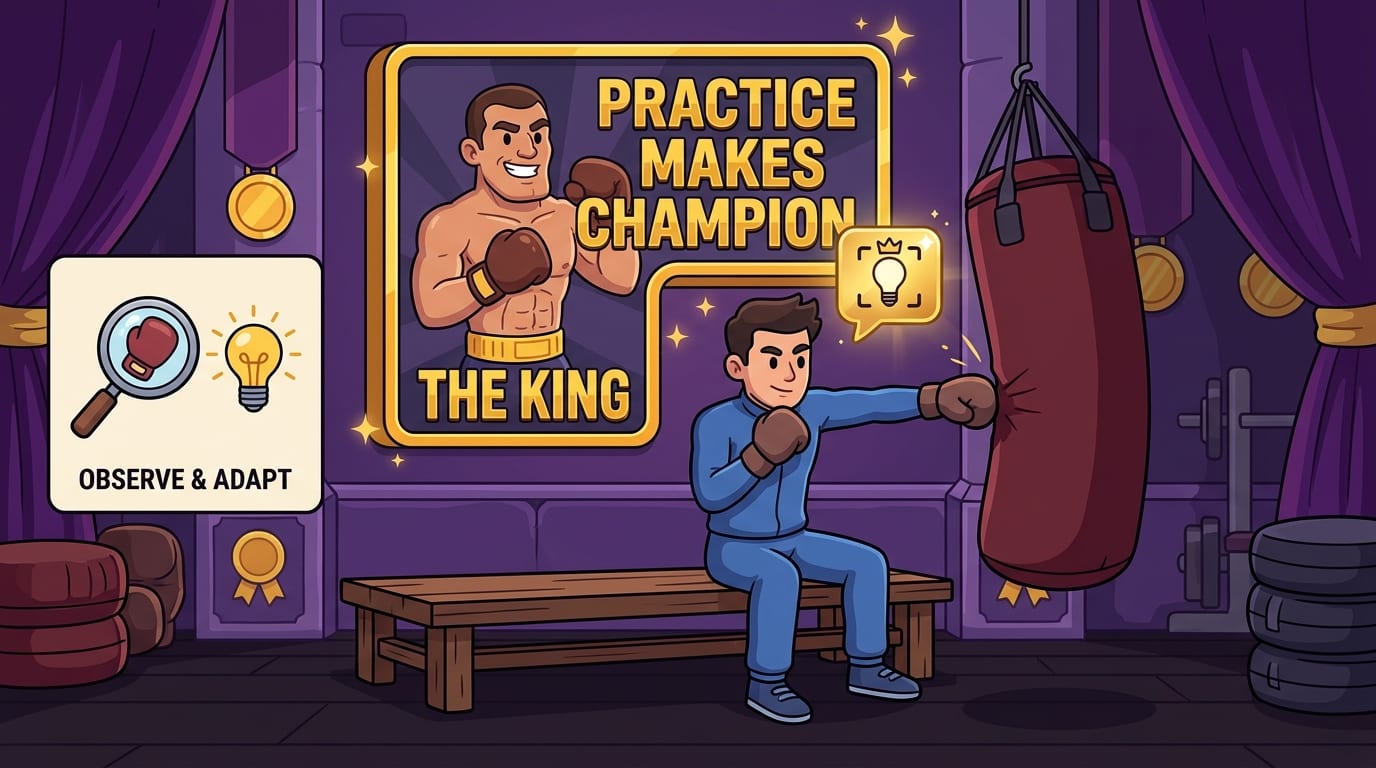
This is the big one. Learning content can feel productive even when it becomes procrastination in a fancy hat. If your ratio is 90% watching and 10% doing, flip it. A good rule: for every 10 minutes of observation, do at least 10 minutes of practice.
Mistake 2: Choosing Models Who Are Too Far Ahead
Experts are inspiring, but they can also be confusing because they skip steps beginners need. Mix expert models with near-peer models. Watch the master, yes, but also watch someone who just learned the skill last year and still remembers where the potholes are.
Mistake 3: Copying Outcomes Instead of Processes
Don’t just admire the finished essay, polished presentation, or perfect project. Ask how it got there. What drafts happened? What feedback? What schedule? What mistakes? The process is where the treasure is buried. Bring a shovel.
Mistake 4: Ignoring Context
A habit that works for a full-time creator may not work for a student with exams, a part-time job, and a roommate who plays drums at midnight. Adapt everything. Your life is not a lab simulation. It has laundry.
Mistake 5: Forgetting Reflection
If you don’t reflect, you can repeat the same weak imitation forever. Reflection turns experience into improvement. Ask: What did I try? What happened? What will I change? Short answers are fine. This is not a royal dissertation.
For broader digital wellbeing support, BlockChamp’s post on healthy technology habits for connection can help you balance learning online with actual human life. A shocking concept, we know.
A Step-by-Step Plan for the Next 7 Days
Ready to build observational learning habits instead of merely admiring them from the couch? Here is a one-week plan. Simple. Practical. Crown-compatible.
- Day 1: Pick one skill. Choose a specific skill you want to improve. Make it narrow: “take better notes from lectures,” not “become a genius.”
- Day 2: Choose two models. Pick one near-peer and one expert. This gives you both realistic steps and aspirational direction.
- Day 3: Observe actively. Watch, listen, or study the model for 15–20 minutes. Write down specific behaviors, not vague compliments.
- Day 4: Extract one principle. Turn your notes into one clear rule. Example: “After reading, close the book and write what I remember.”
- Day 5: Practice the smallest version. Apply the principle in a short session. Use BlockChamp or another focus boundary to keep distractions out of the arena.
- Day 6: Compare and adjust. Look back at the model. What did they do differently? What can you tweak?
- Day 7: Transfer it. Use the same principle in a new context. If you learned active recall for biology, try it for history, coding, or a work training module.
At the end of the week, review your observation log. Decide whether to continue with the same skill or choose a new micro-skill. This is how improvement compounds. Not with dramatic reinvention. With tiny, repeated upgrades. Like leveling up, but without needing to defeat a lava dragon. Unless your math exam counts. It might.
If you want to make the routine stick, pair it with cues and rewards. For example: after breakfast, observe one model for 10 minutes; then practice for 10 minutes; then mark your log and enjoy coffee like a victorious duke. Habits form more easily when they attach to existing routines, a point popularized in behavior design discussions such as James Clear’s writing on habit formation.
How BlockChamp Supports Observational Learning Habits
BlockChamp is not an observational learning app in the traditional sense. It will not sit beside you wearing spectacles and whisper, “Notice the expert’s use of spacing.” That would be weird. But it does solve one of the biggest problems that destroys observational learning habits: distraction.
When you sit down to observe, practice, and reflect, BlockChamp helps you defend the session. You can block specific sites like Reddit, TikTok, X/Twitter, or YouTube if YouTube is not part of the lesson. You can also block categories like Social Media, Video & Streaming, News, Shopping, Gaming, Gambling, Adult, and AI Distractions. Champion users can use keyword blocking and schedules, which is excellent if your learning sessions happen at predictable times.
The gamification matters too. Observational learning habits improve through consistency, not heroic one-day bursts. BlockChamp rewards every focused minute with XP, tracks your reign, shows your focus history on a calendar, and lets you unlock badges. That turns “I should practice” into “I’m defending my streak, peasant.” Motivation is weird. Use the weird.
And if you try to bail mid-session? The Stare-Down block page catches you. The King appears, unimpressed, reminding you not to throw away your reign for a little scroll snack. This is surprisingly useful for observational learning because the moment of temptation often happens between watching and practicing. You finish the tutorial, feel a flicker of effort resistance, and your hand drifts toward social media. BlockChamp steps in like a royal bouncer: “Not in this kingdom.”
For serious focus, Champion users can enable Hardcore Lockdown, which adds a cooldown timer or a boxing-riddle mini-game before turning focus off. Is it slightly ridiculous? Yes. Does ridiculous work better than another gray productivity dashboard? Also yes. The human brain loves friction when the alternative is sabotaging itself with memes.
Conclusion: Watch Like a Student, Practice Like a Champ
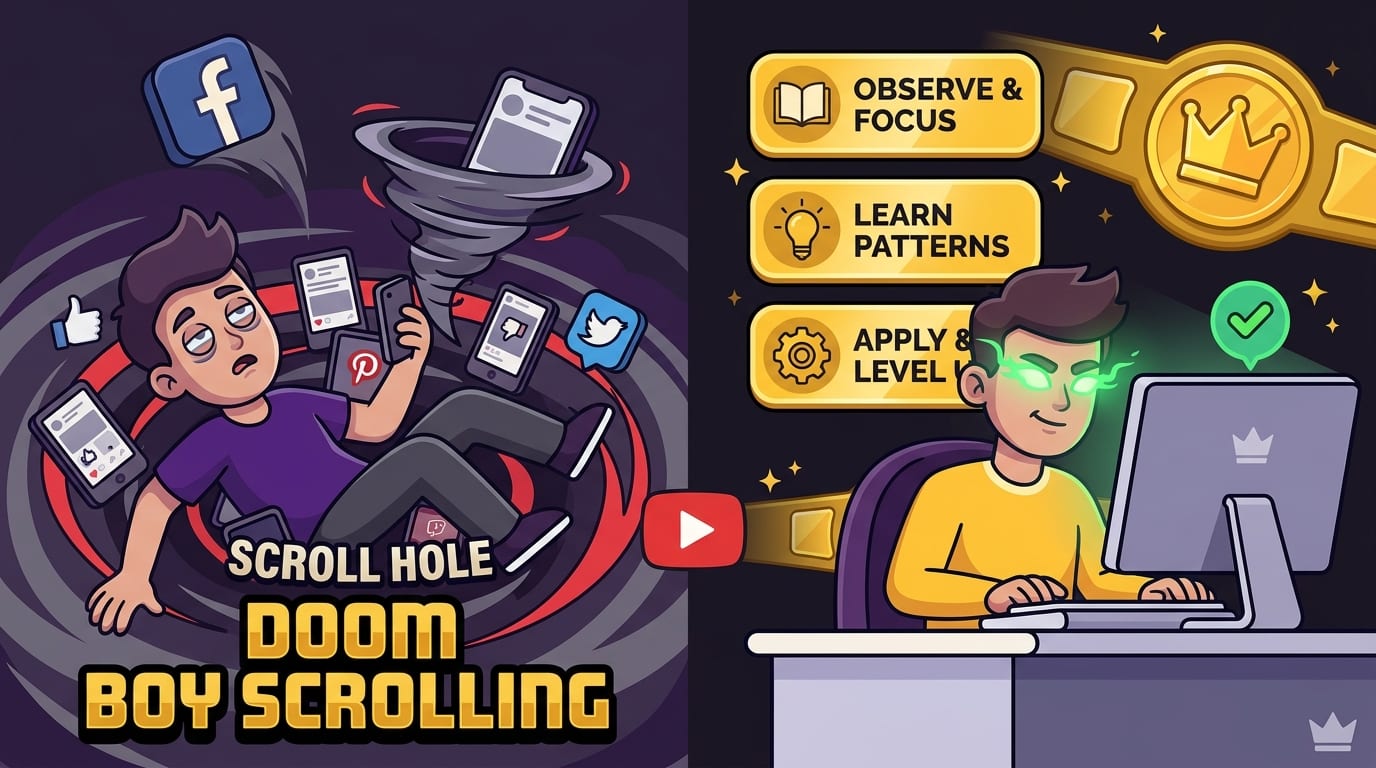
Observational learning habits help you improve faster by turning other people’s skill into your starting point. You watch with purpose, decode hidden decisions, practice immediately, reflect honestly, and transfer the skill to new situations. That’s the loop. That’s the crown jewel. That’s how you stop being a passive consumer and start becoming someone who actually gets better.
The key is to keep it active. Don’t just watch. Don’t just highlight. Don’t just collect tutorials like digital dragon treasure. Pick one behavior, try it, adjust it, and repeat. Small cycles beat massive intentions. Every time.
And because attention is the royal treasury of learning, guard it. Close the tabs. Set the timer. Block the scroll traps. If you want a focus tool with personality, XP, badges, reigns, and a cartoon king who will absolutely judge your attempt to open Reddit during practice, try BlockChamp for Chrome. Knock out your distractions, build better observational learning habits, and become king of your time.
Now go observe something useful, practice it badly once, practice it better tomorrow, and defend the throne. Long live your focus.
Related posts

Writing Sprint Tips For Focused Output

Paper Or Digital Planner

Generative Ai And Staying Focused At Work
