
Finding Freedom From Constant Distraction

Finding freedom from constant distraction sounds dramatic, like you need to climb a mountain, throw your phone into a lake, and return wearing linen. Good news: you probably do not need a monastery. Bad news: your browser tabs are currently holding a tiny circus in your brain, and the clown has Wi-Fi.
Distraction is no longer just “I got sidetracked.” It is an entire ecosystem built to tug your sleeve every 11 seconds: social feeds, breaking news, streaming autoplay, group chats, shopping deals, AI rabbit holes, and that suspiciously urgent desire to research “best medieval helmet for a goose” during work hours. The goal is not to become a productivity robot who drinks cold brew and alphabetizes feelings. The goal is simpler: build a life where your attention belongs to you again.
This guide gives you practical routines, mindset shifts, and digital boundaries for finding freedom from constant distraction without turning your life into a joyless spreadsheet. We will talk about why distraction feels so sticky, how to design your environment, how to protect deep work, and how tools like BlockChamp can help you defend the throne when willpower shows up wearing flip-flops.
Quick Answers
Why Constant Distraction Feels Like Losing a Boxing Match to a Slot Machine
Distraction is not a character flaw. It is a design feature of modern technology. Apps and websites compete for attention because attention turns into ad impressions, clicks, watch time, purchases, and engagement metrics. In other words: your focus is the prize pig at the algorithm county fair.
Researchers have been warning about this for years. The American Psychological Association has covered how constant digital interruptions can strain attention and productivity, especially when people switch rapidly between tasks. You can read more about the mental cost of multitasking from the American Psychological Association’s multitasking research overview. The short version: switching tasks feels efficient, but your brain pays a toll every time. Tiny toll booth. Big traffic jam.
Then there is the sheer volume of digital temptation. According to DataReportal’s Digital 2024 Global Overview Report, people spend hours per day online across devices, with social media taking a major slice of that time. That does not mean the internet is evil. The internet gave us maps, medical information, and videos of raccoons washing grapes. But it does mean your attention is constantly walking through a carnival of hooks.
Finding freedom from constant distraction starts with one important truth: you cannot out-discipline an environment engineered to interrupt you. You need systems. You need friction. You need boundaries. And occasionally, yes, you need a cartoon royal boxer to stare you down when you try to open YouTube “for research.”
The First Step: Stop Treating Focus Like a Personality Trait
Some people talk about focus like it is a magical gift bestowed at birth. “I’m just not a focused person,” they say, as if babies arrive wearing tiny labels: Focused, Distracted, Likely to Open 47 Tabs.
Focus is not a fixed personality trait. It is a state you create. More specifically, it is the result of matching your intention, environment, energy, and habits. If those four things are fighting each other, your attention gets dragged into the mud like a knight who forgot leg day.
Instead of asking, “Why am I so distracted?” ask better questions:
- What am I trying to focus on, exactly?
- What usually interrupts me?
- When during the day do I have the best energy?
- What websites, apps, or habits repeatedly hijack my attention?
- What boundary would make distraction harder and focus easier?
This is important because vague goals collapse fast. “Be more productive” is a fog machine. “Write 800 words before checking messages” is a target. “Study chapter three from 7:00 to 8:30 with TikTok blocked” is a battle plan. The King approves. Probably with unnecessary confetti.
If you want a deeper look at how distraction affects creative work, check out finding creativity in the absence of distraction. Creativity does not need chaos. It needs room to breathe without a notification doing jazz hands in the corner.
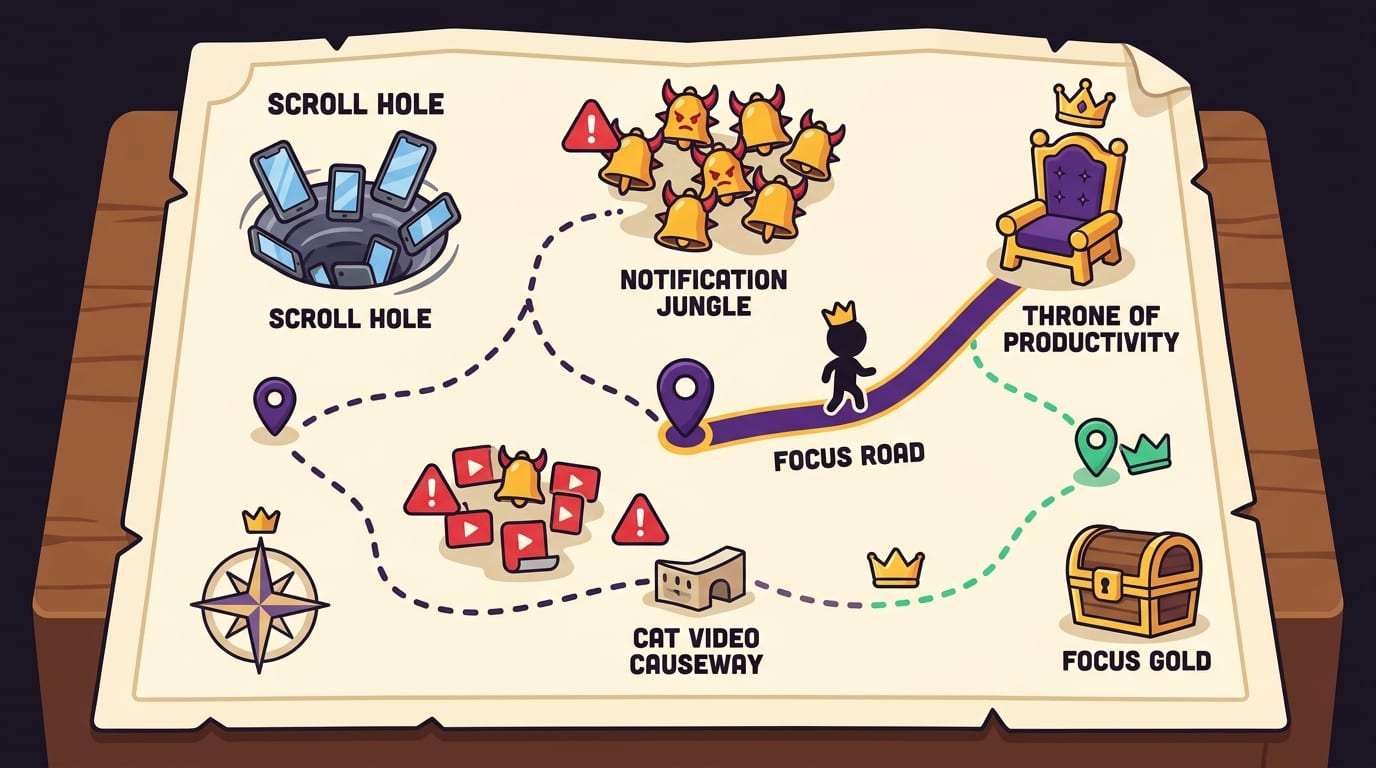
Build a Distraction Map Before You Build a Routine
Before you install every productivity app known to humanity and create a “focus stack” that requires its own onboarding seminar, map your distractions. This is the unglamorous but wildly useful part. You are basically becoming a detective, except the criminal is your own thumb.
For three days, write down what pulls you away from meaningful work. Do not judge it. Just track it. You are gathering evidence for the royal court.
Track these four distraction categories
- Digital distractions: social media, YouTube, Reddit, news, email, messages, shopping, games, AI tools.
- Environmental distractions: noise, clutter, people interrupting, open office chaos, snack proximity.
- Internal distractions: boredom, anxiety, fatigue, hunger, perfectionism, “I should reorganize my entire life before starting.”
- Task distractions: unclear next steps, too many priorities, intimidating projects, missing information.
Once you see the patterns, you can stop fighting imaginary dragons and start blocking the real ones. Maybe you do not have a discipline problem; maybe you have a “Reddit opens automatically when I feel slightly confused” problem. Different beast. Different sword.
This is where BlockChamp fits naturally. If your map shows that certain websites repeatedly hijack your day, you can block specific sites, entire distraction categories like Social Media or Video & Streaming, or—in Champion mode—keywords that lead you into trouble. The point is not punishment. The point is making your best choice the easiest choice.
Create Focus Windows: Tiny Kingdoms Where Distraction Is Not Invited
You do not need to be focused all day. That is a trap, and frankly, it sounds exhausting. You need protected windows where focus becomes non-negotiable. Think of them as small kingdoms on your calendar. During that time, the drawbridge goes up. The scroll goblins remain outside.
Start with one or two focus windows per day. A focus window can be 25 minutes, 50 minutes, 90 minutes, or two hours depending on your energy and the type of work. Deep creative work often benefits from longer blocks, while admin tasks can fit into shorter sprints.
A simple focus window formula
- Choose one clear task.
- Set a start and end time.
- Remove or block your top distractions.
- Put your phone out of reach or in another room.
- Work until the timer ends, even if the work is messy.
- Take a real break afterward.
The “one clear task” part matters. If your focus window begins with “figure out what I should do,” you are basically opening the castle gate and inviting in a parade of indecision ferrets. Decide before the session starts.
For Chrome users, BlockChamp’s Master Focus Toggle is useful here. Turn it on, and your chosen blocks are armed. Pro users can go further with recurring focus schedules—for example, Monday through Friday from 9 a.m. to noon, the King stands guard automatically. No daily negotiation. No “just today I’ll be responsible” speech. We have all heard that speech. It wears a fake mustache.
If you want to go deeper into reaching truly absorbed work, read reaching flow state in the age of distraction. Flow is not a mystical productivity unicorn. It is what happens when challenge, clarity, and uninterrupted time finally stop arguing.
Use Friction Like a Champion, Not a Miserable Robot
Finding freedom from constant distraction is less about “trying harder” and more about adding friction to the behaviors you want less of. Friction is anything that makes an unwanted action slower, less convenient, or more awkward. It is the digital equivalent of putting cookies on a high shelf. Can you still get them? Sure. But now you need a chair, a plan, and a moment to reconsider your life choices.
Common friction tactics include:
- Logging out of social media after each use.
- Removing apps from your phone’s home screen.
- Turning off non-essential notifications.
- Using grayscale mode to make your phone less visually addictive.
- Blocking distracting websites during work or study hours.
- Keeping your phone in another room during deep work.
- Setting app limits and actually respecting them like a functioning adult-ish creature.
External research supports the idea that reducing cues and increasing effort can help change habits. James Clear’s widely referenced work on habit design explains how environment often shapes behavior more powerfully than motivation; his habit formation guide is a solid introduction to making good habits easier and bad habits harder.
BlockChamp’s Hardcore Lockdown is a perfect example of strategic friction with a ridiculous crown on it. If you try to turn focus off during a weak moment, Champion users can enable a cooldown timer or a three-round boxing riddle before surrendering. Is that slightly theatrical? Absolutely. Does it give your impulse enough time to cool down? Also yes. The goal is to interrupt autopilot. The tiny dopamine goblin hates waiting.
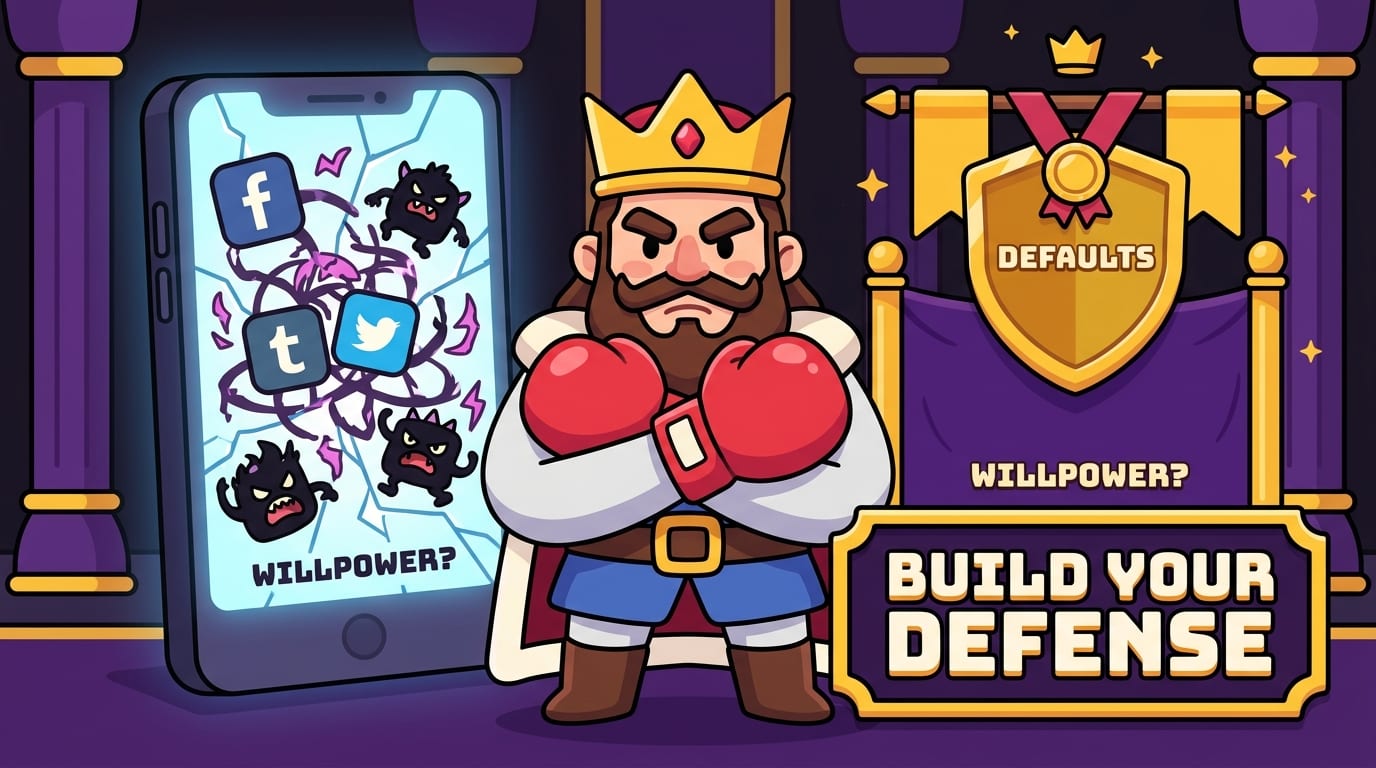
Replace “I Need More Willpower” With “I Need Better Defaults”
Willpower is useful, but it is a terrible full-time security guard. It gets tired. It forgets its badge. It lets Instagram sneak in because “it looked polite.” Better defaults beat heroic self-control almost every time.
A default is what happens automatically unless you intervene. If your default is an open browser, logged-in social accounts, notifications on, phone nearby, and no clear work plan, distraction wins without breaking a sweat. If your default is blocked websites, scheduled focus windows, a prepared task list, and a phone across the room, focus gets a head start.
Better defaults to set this week
- Default morning: no social media until after your first meaningful task.
- Default browser: distracting sites blocked during work hours.
- Default phone: notifications off except calls, calendar, and essential messages.
- Default breaks: stand, walk, stretch, hydrate, or stare at a wall like a Victorian ghost—not scroll.
- Default shutdown: write tomorrow’s top task before ending the day.
The magic is not that any one of these is revolutionary. The magic is that they reduce the number of decisions required to stay focused. Decision fatigue is real, and your brain is already spending precious energy deciding whether that email needs an exclamation point. Do not make it also negotiate with TikTok every 14 minutes.
For a practical cleanup plan, read fight distraction with a digital declutter. Decluttering your digital space is like removing banana peels from the productivity racetrack. Still possible to slip, but less cartoonish.
Protect Your Attention With Boundaries Other People Can Understand
Not every distraction comes from your own habits. Sometimes other people treat your attention like a community snack table. Coworkers message “quick question” every six minutes. Friends send memes during study time. Family members interpret headphones as a decorative headband. Boundaries are necessary, and no, they do not make you rude. They make you reachable at the right times instead of constantly interruptible.
The key is to make boundaries visible, specific, and repeatable. People respect systems more easily than vague moods. “I’m trying to focus more” is noble but squishy. “I do deep work from 9:00 to 11:00 and answer messages at 11:15” is clear.
Boundary scripts that do not sound like you joined a productivity cult
- “I’m offline for the next hour finishing this. I’ll reply after 2.”
- “I check messages at the top of the hour so I can actually get work done.”
- “I’m in study mode until 8. Send it now if you want, but I won’t see it until after.”
- “Can we batch these questions for our 3 p.m. check-in?”
- “I’m blocking social during work blocks because apparently I cannot be trusted near the meme buffet.”
Boundaries also work better when you pair them with availability. You are not disappearing into the mist. You are saying, “Here is when I am focused, and here is when I am available.” That is professional. Also it prevents you from becoming the human equivalent of a browser notification.
For remote workers and students especially, a visible routine helps. Put focus blocks on your calendar. Use status messages in Slack or Discord. If you use BlockChamp, treat your active reign as a signal: when the King is on guard, you are not casually browsing. The throne is occupied. Please take your meme to the waiting room.
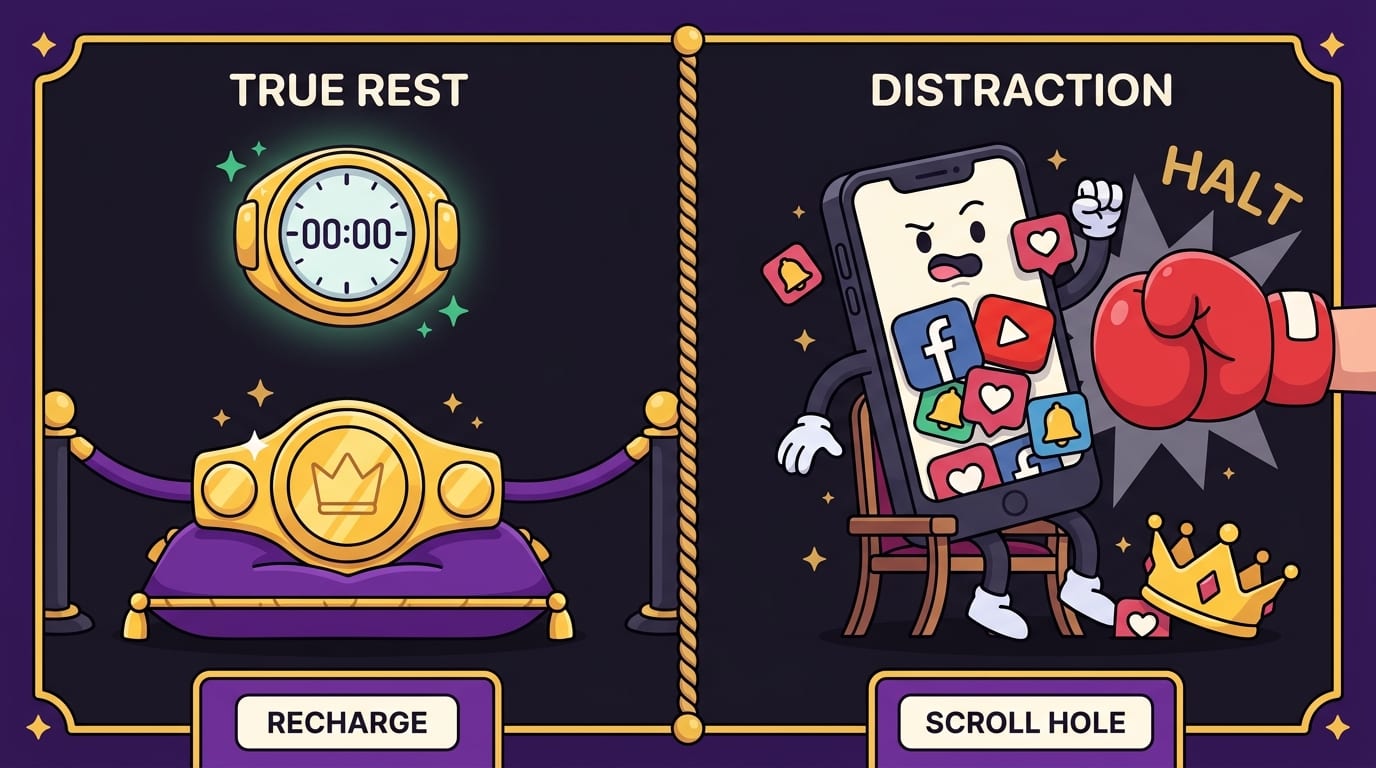
Learn the Difference Between Rest and Distraction
One sneaky reason people stay distracted is that they confuse distraction with rest. Scrolling feels like a break because you are not doing the hard task anymore. But it often does not restore you. It can leave you more wired, more comparison-drunk, more mentally cluttered, and somehow aware of six celebrity divorces you never asked to know about.
Real rest lowers mental load. Distraction often changes the channel while keeping your brain buzzing. The difference matters because if you never truly rest, your brain will hunt for relief in cheap stimulation. That is when “two minutes on YouTube” becomes a 47-minute documentary about luxury bunker design.
Cal Newport has written extensively about attention, deep work, and the cost of always-on digital habits. His concept of deep work remains one of the most useful frameworks for reclaiming serious focus; see his overview of digital minimalism for a thoughtful approach to intentional technology use.
Better break options that actually recharge you
- Walk outside for five to ten minutes.
- Stretch your neck, back, wrists, and hips.
- Drink water and eat something with actual nutrients, not just desk crumbs.
- Look out a window and let your eyes relax.
- Do a quick breathing exercise.
- Tidy one small area of your workspace.
- Write down the next step before stepping away.
Rest is not laziness. Rest is maintenance. Even the King has to polish the crown and ice the boxing gloves. If you want more on the role of rest in focus, read digital distraction and the power of rest. Your brain is not a machine; it is a royal raccoon with limits.
Make Progress Visible So Your Brain Gets a Reward That Is Not a Feed
One reason social platforms are so sticky is that they make feedback instant. Likes, comments, views, streaks, badges, notifications—your brain gets tiny proof that something happened. Work and studying often do not feel that way. You can spend two hours wrestling a project and have nothing glamorous to show except a paragraph, a spreadsheet, or the haunted stare of someone who learned pivot tables.
To stay focused long term, make progress visible. Your brain likes evidence. Give it some.
Simple ways to visualize focus
- Track focus hours on a calendar.
- Use a habit tracker for distraction-free sessions.
- Keep a “done list” instead of only a to-do list.
- Mark every completed deep work block with an X.
- Write one sentence at the end of the day: “Today I protected my attention by…”
This is one of the reasons BlockChamp uses XP, levels, badges, reigns, and a focus calendar. It turns invisible discipline into visible progress. Every minute of focus earns XP. Every blocked-site temptation survived becomes a Stare-Down victory. Every day your blocks stay active builds your reign. Instead of “I avoided distractions,” you get proof: focus hours, streaks, badges, and your climb from Peasant of Procrastination toward Block Champ glory.
Gamification works because it gives positive reinforcement to behavior that otherwise feels quiet and delayed. A finished degree, a thriving business, a book draft, a healthier mind—these take time. XP gives your brain a snack while the big feast is still cooking.
Use a “Distraction Protocol” for When You Inevitably Slip
You will get distracted sometimes. Congratulations, you are human and not a productivity statue carved from cold oatmeal. The point is not perfection. The point is recovery speed.
A distraction protocol is a simple plan for what to do when you catch yourself wandering. Without one, people often spiral: “Well, I already wasted 20 minutes, so the day is ruined. Might as well watch a man build a swimming pool in the jungle with a spoon.” No. The day is not ruined. The scroll goblin merely scored a point. Get back in the ring.
The 60-second reset
- Pause and name it: “I’m distracted.”
- Close the tab or app.
- Take three slow breaths.
- Write the next physical action: “Open document and edit intro.”
- Restart with a 10-minute timer.
That is it. No shame ceremony. No dramatic identity crisis. Just reset. If you use BlockChamp and hit a blocked site, The Stare-Down does this beautifully: it interrupts the behavior, makes the moment funny, reminds you what you are protecting, and sends you back to work. Sometimes being lovingly roasted by a royal boxer is exactly the pattern break your brain needs.
For more practical tactics, the BlockChamp guide on how to avoid digital distractions covers additional ways to stay on track when the internet starts waving shiny objects in your face.
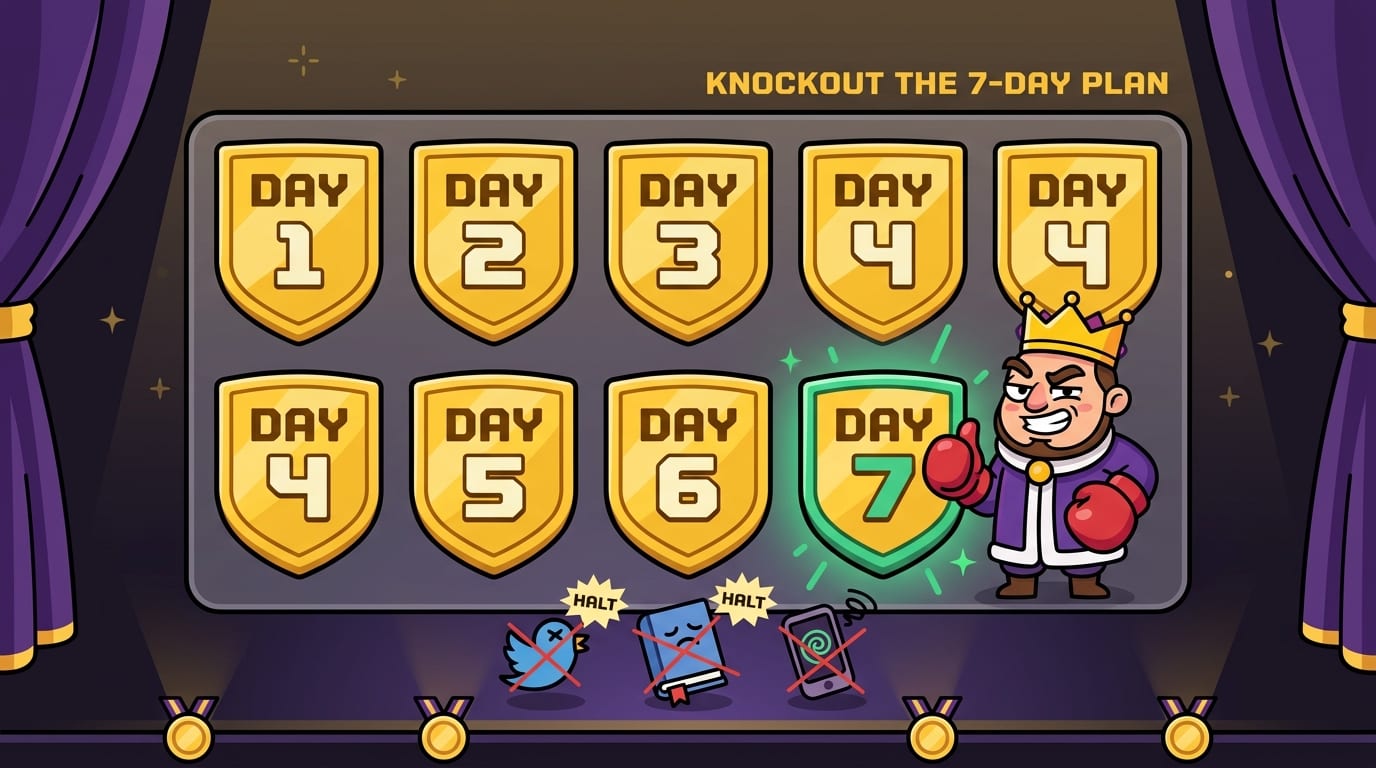
A Practical 7-Day Plan for Finding Freedom From Constant Distraction
You do not need to overhaul your entire life by Thursday. Start with seven days. Small, deliberate changes beat dramatic lifestyle makeovers that collapse after one stressful email.
Day 1: Map the chaos
Track your biggest distractions. Write down the websites, apps, times, triggers, and moods involved. No judgment. You are collecting royal intelligence.
Day 2: Choose your top three enemies
Pick the three distractions that cost you the most focus. Maybe it is YouTube, TikTok, and news. Maybe it is Amazon, Reddit, and “research” that mysteriously becomes gadget reviews. Add friction immediately.
Day 3: Create one protected focus window
Schedule a 45- to 90-minute block. Choose one task. Block your top distractions. Put your phone away. Begin before your brain can file a complaint.
Day 4: Clean your digital entry points
Remove bookmarks to distracting sites. Turn off non-essential notifications. Move tempting apps. Unsubscribe from junk. Your attention should not have to dodge confetti cannons every time you open a browser.
Day 5: Improve your breaks
Replace one scrolling break with a real break: walk, stretch, water, sunlight, or breathing. Notice whether you return calmer. Spoiler: probably.
Day 6: Add accountability or gamification
Track focus hours, use a streak, or let BlockChamp turn your focus sessions into XP, badges, and reigns. If your brain wants a game, give it a better one than endless scrolling.
Day 7: Review and adjust
Ask: What worked? What still pulled me away? What boundary needs to be stronger? Keep the useful pieces. Drop the nonsense. Productivity advice is not sacred scripture; it is a toolbox.
Conclusion: Freedom Is Built One Protected Moment at a Time
Finding freedom from constant distraction does not mean abandoning technology, deleting every app, or living in a cabin where the strongest signal comes from a suspicious squirrel. It means using technology intentionally, designing better defaults, protecting your best hours, and refusing to let every algorithm barge into your mental living room wearing muddy boots.
Start small. Map your distractions. Build focus windows. Add friction. Rest properly. Make progress visible. Recover quickly when you slip. These are not flashy moves, but they work. The crown is earned through repetition, not one heroic Tuesday.
And if your biggest distractions live in your browser, let BlockChamp help you knock them out. Block the sites, categories, and keywords that keep stealing your attention. Earn XP for staying focused. Build your reign. Survive The Stare-Down when temptation strikes. Maybe even let The King roast you back to work. It is focus with gloves on.
Long live your attention, champ. Defend the throne. Crush the scroll. Become king of your time.
Related posts

Finding Focus For Fiction Writing

Learning To Focus In A Digital World As A Creative

Finding Focus For Personal Growth
