
Deep Work Habits

Your brain was not built to write strategy docs while Slack screams, TikTok wiggles, email reproduces like rabbits, and a “quick” YouTube search becomes a 47-minute documentary about medieval bread. That is why deep work habits matter: they turn focus from a heroic once-a-month miracle into a repeatable routine you can actually trust.
Deep work is the good stuff: writing, coding, studying, designing, planning, solving hard problems, learning difficult skills, and doing anything that makes future-you richer, smarter, calmer, or at least less likely to panic at 11:58 p.m. before a deadline. But deep work does not happen because you bought a fancy notebook and whispered “discipline” at your laptop. It happens because you build systems that protect your attention.
In this guide, we’ll break down practical deep work habits you can start using today: time-blocking, distraction removal, focus rituals, better breaks, mindset shifts, and sustainable routines. We’ll also cover how tools like BlockChamp can help you defend the throne when your willpower has the structural integrity of wet cereal.
Quick Answers
What Are Deep Work Habits, Really?
Deep work habits are repeatable behaviors that help you enter and stay in a state of intense, distraction-free concentration. The concept of “deep work” was popularized by Cal Newport, who defines it as professional activities performed in a state of distraction-free concentration that push your cognitive abilities to their limit. Newport’s work is widely discussed in productivity circles, including in summaries and interviews from sources like Cal Newport’s official Deep Work page.
The key word is not “deep.” It is “habits.” Anyone can have one glorious focus session after drinking dangerous amounts of coffee and listening to a movie soundtrack like they are about to storm a castle. But the real win is building a routine that makes focused work boringly reliable.
Good deep work habits usually include four ingredients:
- Clear priorities: You know exactly what deserves focused attention.
- Protected time: You schedule deep work like a real appointment, not a vague wish floating in the productivity swamp.
- Low-distraction environment: You remove digital traps before they pounce.
- Recovery: You take breaks so your brain does not file a formal complaint with management.
The reason these habits matter is simple: attention is expensive. According to research from the University of California, Irvine, summarized in the classic study on interrupted work, it can take people significant time to return to a task after being interrupted. Even if the exact number varies by person and context, the principle is brutal: every interruption taxes your brain. It is like paying a focus toll to cross the bridge back into concentration.
Deep work habits lower that toll. They make focus easier to start, easier to protect, and easier to repeat.
Start With a Focus Target, Not a Vague Productivity Fog
Most people fail at deep work before they even begin because their goal is something like “be productive.” That is not a goal. That is a motivational poster wearing a fake mustache.
A real focus target is specific, outcome-based, and small enough to attack in one session. Instead of “work on essay,” write “draft the introduction and first two body paragraphs.” Instead of “grow business,” write “create the pricing page outline.” Instead of “study chemistry,” write “complete 25 practice problems on equilibrium and review mistakes.”
Before each deep work block, answer three questions:
- What exactly will I produce or finish?
- How long will I work before taking a break?
- What distractions are most likely to ambush me?
This turns deep work from a mood into a mission. You are not sitting down hoping your brain becomes a laser. You are entering the arena with a named opponent. Much more regal. Much less flailing.
If you struggle to identify your highest-value work, try sorting your tasks into three buckets:
- Creation: Writing, designing, coding, planning, studying, building.
- Coordination: Email, meetings, messages, admin.
- Consumption: Reading, research, watching tutorials, browsing “for inspiration,” which is often just procrastination in a fake scholar hat.
Deep work usually lives in the creation bucket. Coordination is necessary, but it rarely needs your best brainpower. Consumption can support deep work, but it becomes dangerous when research turns into tab-hoarding like a raccoon with Wi-Fi.
For more help protecting your priorities at work, BlockChamp has a useful related guide on how to stay focused at work with an attention charter. An attention charter is basically a royal decree for your focus: what gets your attention, what does not, and what gets thrown into the moat.
Time-Block Your Deep Work Like It Pays Rent
If your calendar is full of meetings but your important work is floating around in your head, your calendar has staged a coup. Time-blocking is one of the most practical deep work habits because it gives your focus a physical home on your schedule.
Time-blocking means assigning specific blocks of time to specific work. Not “write sometime today.” Instead: “9:00–10:30 a.m. write article draft.” This matters because vague intention loses to visible obligations. Your brain respects the calendar more than it respects a sticky note that says “focus pls.”
Here is a simple time-blocking routine:
- Choose one to three deep work blocks per day.
- Make each block 60 to 120 minutes, depending on your energy and experience.
- Assign one clear outcome to each block.
- Place shallow work, messages, and admin around those blocks.
- Review at the end of the day and adjust tomorrow’s plan.
If you are new to deep work, do not start with a four-hour monk-mode sprint unless you enjoy dramatic failure. Start with one 45-minute block. Win. Repeat. Build the muscle.
The best time for deep work depends on your chronotype, job, energy, and whether your household contains tiny humans who scream because toast was cut into triangles. Many people do their best cognitively demanding work earlier in the day, but not everyone. If you want to explore timing more deeply, read BlockChamp’s guide on the best time to work.
You can also use themed time blocks:
- Morning crown block: Your most important work before messages.
- Midday maintenance block: Meetings, email, admin, errands.
- Afternoon creation block: Secondary deep work, editing, review.
- Shutdown block: Plan tomorrow, close loops, stop working like a civilized monarch.
Time-blocking is not about creating a perfect schedule. It is about creating a schedule you can defend. When something interrupts your deep work block, you make a conscious tradeoff instead of drifting into chaos wearing sweatpants.
Remove Distractions Before They Put on a Fake Mustache
Deep work is not just about trying harder. It is about making distraction harder. This is where most people go wrong. They sit down, open a blank document, leave every tempting tab available, keep notifications on, place their phone nearby, and then act shocked when their attention gets mugged in broad daylight.
Your environment should make the right behavior easy and the wrong behavior annoying. This is not weakness. This is architecture.
Start with a distraction audit. For three days, write down every major interruption or focus leak. Common villains include:
- Social media tabs
- Email refresh loops
- Messaging apps
- News and doomscrolling
- YouTube “research”
- Shopping sites
- AI tools used as avoidance instead of assistance
- Phone notifications
- Random household chores that suddenly become urgent when work gets hard
Once you know your villains, block or remove them during deep work. Put your phone in another room. Close nonessential apps. Use full-screen mode. Disable notifications. Tell people when you are unavailable. If your browser is your battlefield, use a blocker.
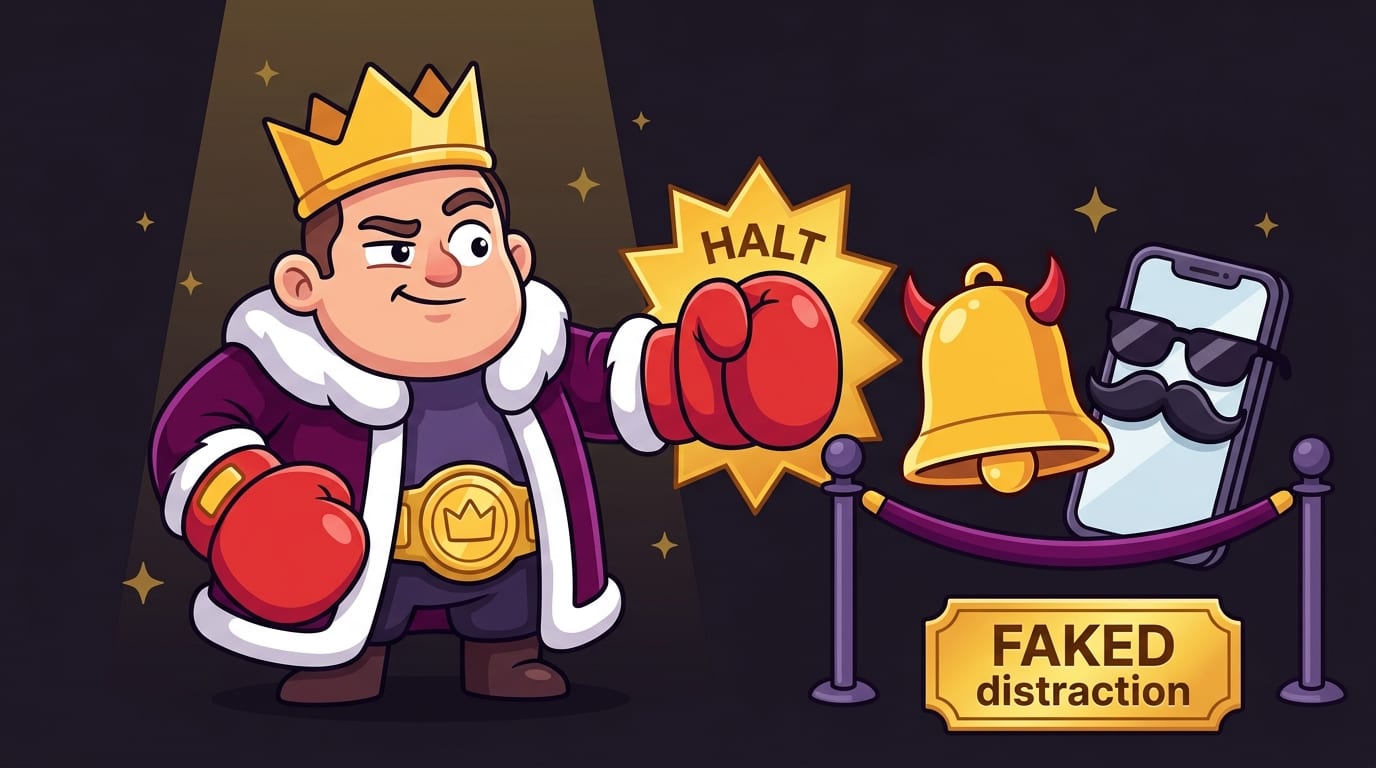
This is where BlockChamp earns its crown. It is a gamified website blocker for Chrome that lets you block specific sites, keywords, or entire distraction categories like Social Media, Video & Streaming, News, Shopping, Gaming, Gambling, Adult, and AI Distractions. Instead of trusting your willpower to defeat YouTube in single combat, you can flip the Master Focus Toggle and put The King “On Guard.” Very official. Very theatrical. Very useful.
And when you try to visit a blocked site, BlockChamp does not whisper, “This site is unavailable.” No. You get The Stare-Down: a full-screen royal judgment page where The King catches you trying to sneak into distraction town. Sometimes he even roasts you out loud. It is silly, memorable, and weirdly effective because it interrupts the impulse long enough for your better self to say, “Fine. Back to work.”
The science supports designing around distractions. The American Psychological Association’s overview of multitasking research explains that switching between tasks carries cognitive costs. In normal human language: multitasking makes your brain do tiny administrative cartwheels, and it gets tired.
Deep work habits become much easier when your tools stop helping you betray yourself.
Build a Pre-Work Ritual So Your Brain Knows It Is Go Time
Your brain loves cues. A ritual tells it, “We are not browsing. We are entering the focus arena.” The ritual does not need candles, robes, or chanting unless that is your brand. It just needs consistency.
A strong pre-work ritual might look like this:
- Clear your desk.
- Write your deep work target on paper.
- Open only the tools needed for the session.
- Turn on BlockChamp or another website blocker.
- Put your phone away.
- Set a timer for 60–90 minutes.
- Take three slow breaths and start.
This may sound almost too simple, but that is the point. Ritual reduces negotiation. You do not have to ask, “Should I check email first?” No, peasant. The ritual has spoken.
For students, the ritual might include opening lecture notes, loading a practice problem set, and blocking social/video categories. For freelancers, it might mean opening a client brief, turning off Slack, and blocking news sites. For creators, it might mean opening a blank draft, setting a word count goal, and blocking YouTube unless it is genuinely required.
The ritual also creates psychological separation. You are not “trying to focus.” You are in a mode. Athletes warm up. Musicians tune instruments. Boxers wrap their hands. Knowledge workers should do the same, except with fewer mouthguards and more tab discipline.
If your life is chaotic, rituals become even more important. BlockChamp has written about staying productive during messy seasons in productivity lessons from working through life changes. The short version: when motivation is unstable, routines become your scaffolding. Glamorous? No. Effective? Absolutely.
Use the Right Focus Sprint Length for Your Actual Human Brain
Some productivity advice acts like everyone should focus for four hours without blinking. Lovely idea. Also, many of us have bodies, jobs, snacks, and nervous systems.
The best deep work habits are sustainable. You want enough intensity to make progress, but not so much that your brain crawls under the desk and starts a union.
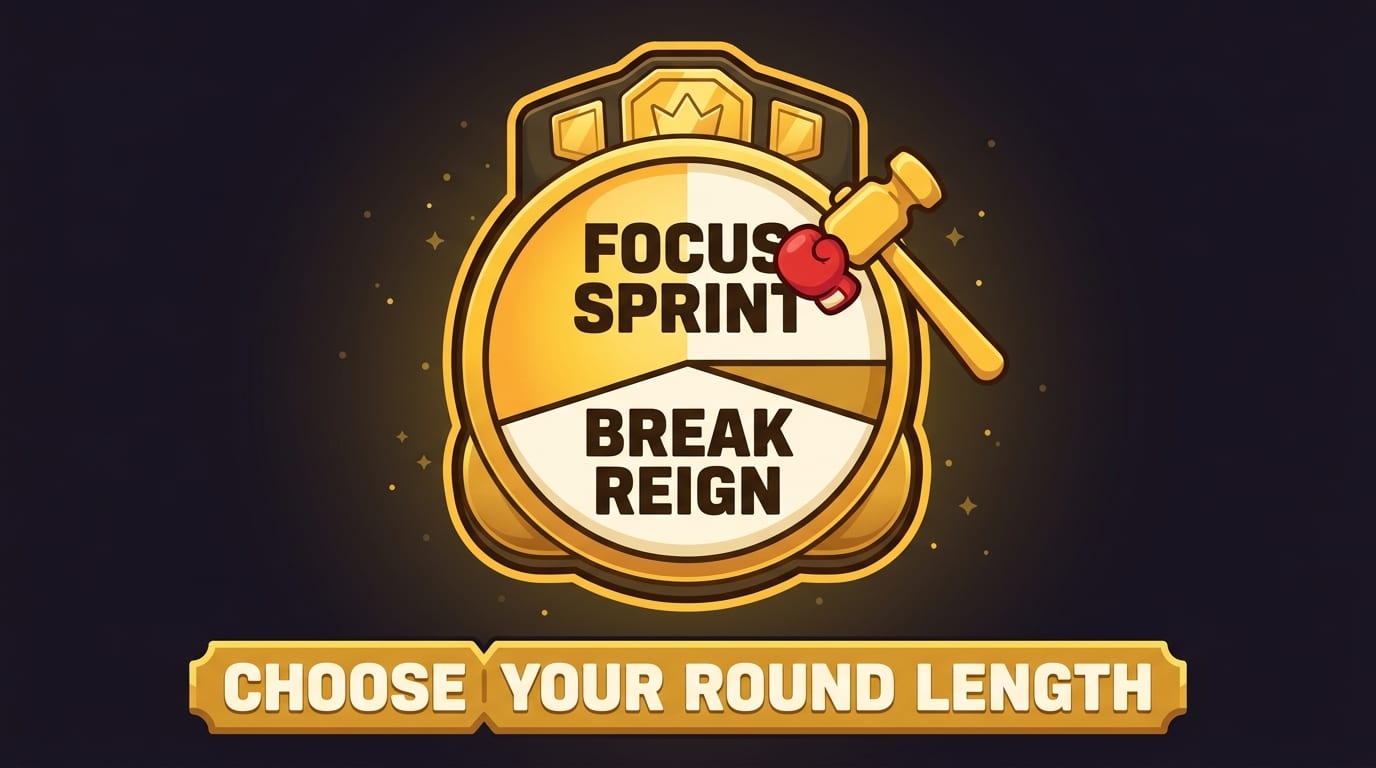
Try these focus sprint lengths:
- 25 minutes: Great for beginners, low-energy days, or tasks you are avoiding.
- 45 minutes: A strong middle ground for studying, writing, planning, or coding.
- 60–90 minutes: Ideal for serious deep work once you have built focus stamina.
- 2 hours: Excellent for advanced sessions, but only if you protect the time and recover afterward.
Many people use the Pomodoro Technique, which typically involves 25 minutes of work followed by a 5-minute break. Others prefer longer ultradian rhythm-style cycles, often around 90 minutes. There is no sacred timer handed down from Mount Productivity. Choose what helps you start and finish.
During a sprint, define “done” before you begin. For example:
- Write 700 rough words.
- Solve 15 practice questions.
- Debug one feature.
- Outline the presentation.
- Edit pages 1–5.
When the sprint ends, stop and review. Did you finish? What distracted you? What would make the next block easier? This feedback loop is where deep work habits get stronger.
BlockChamp’s gamification fits nicely here because it rewards minutes of focus, focused days, and even survived Stare-Downs. You are not just “not checking Reddit.” You are earning XP, building your reign, and climbing toward gloriously ridiculous rank titles like Knight of the Block and Duke of Discipline. Productivity is easier when your progress is visible and slightly dramatic.
Train Your Attention Like a Tiny, Easily Spooked Dragon
Deep work requires attention stamina. If you are used to switching tasks every 90 seconds, sitting with one hard problem may feel physically uncomfortable. That does not mean you are broken. It means your attention has been trained by modern apps to expect novelty confetti.
Social platforms, streaming feeds, and recommendation engines are designed to keep you engaged. Reports from sources like DataReportal’s Digital 2024 Global Overview Report show just how much time people spend online and on social platforms globally. The attention economy is not a conspiracy theory; it is a business model. Your focus is the buffet.
To rebuild attention stamina, practice boredom. Yes, boredom. The ancient art of not immediately feeding your brain a shiny object.
Try these attention workouts:
- Wait in line without checking your phone.
- Read 10 pages of a physical book without switching tasks.
- Take a walk without podcasts or music once a week.
- Work for 10 minutes past the first urge to quit.
- Keep a “distraction list” beside you and write urges down instead of acting on them.
The distraction list is especially powerful. During deep work, your brain will suddenly remember that you need to compare air fryers, check a sports score, reorganize your desktop, or learn whether penguins have knees. Write it down. Return to work. Later, during a break, decide if it matters. Spoiler: penguin knees can wait.
Mindset matters too. Do not interpret discomfort as failure. The moment deep work feels hard is often the moment it is working. Your brain is pushing into complexity. Stay there a little longer. That is where the treasure is buried.
Make Breaks Useful, Not Just Distraction Buffets
Breaks are essential. But not all breaks are created equal. A good break restores your attention. A bad break shoves your brain into a slot machine and calls it recovery.
If you finish a 60-minute writing block and immediately open TikTok, your brain gets blasted with novelty, social comparison, music, comments, rapid cuts, and possibly a raccoon stealing pizza. Entertaining? Sure. Restorative? Not exactly.
Better deep work breaks include:
- Walking outside for 5–10 minutes
- Stretching
- Drinking water
- Making tea or coffee without scrolling
- Looking out a window like a mysterious Victorian heir
- Doing light chores that do not become a full side quest
- Breathing exercises
The goal is to let your mind reset without hijacking it. Research discussed by Harvard Business Review on taking better breaks at work suggests that breaks can improve well-being and performance when used intentionally. The key is choosing breaks that help you return sharper, not breaks that require an exorcism to escape.
One practical rule: keep entertainment breaks separate from deep work cycles. If you want to watch YouTube, fine. Schedule it after your work blocks, not between them. The King allows recreation. The King does not allow “one video” to become a three-hour scroll goblin parade.
With BlockChamp, you can keep distracting categories blocked during work hours and then intentionally turn them off later if you choose. Champion users can even set recurring Focus Schedules, so blocks activate automatically during your deep work windows. Automation is beautiful because it prevents your 8:58 a.m. self from trusting your 2:37 p.m. self. That person is suspicious.
Protect Your Deep Work With Boundaries Other Humans Can Understand
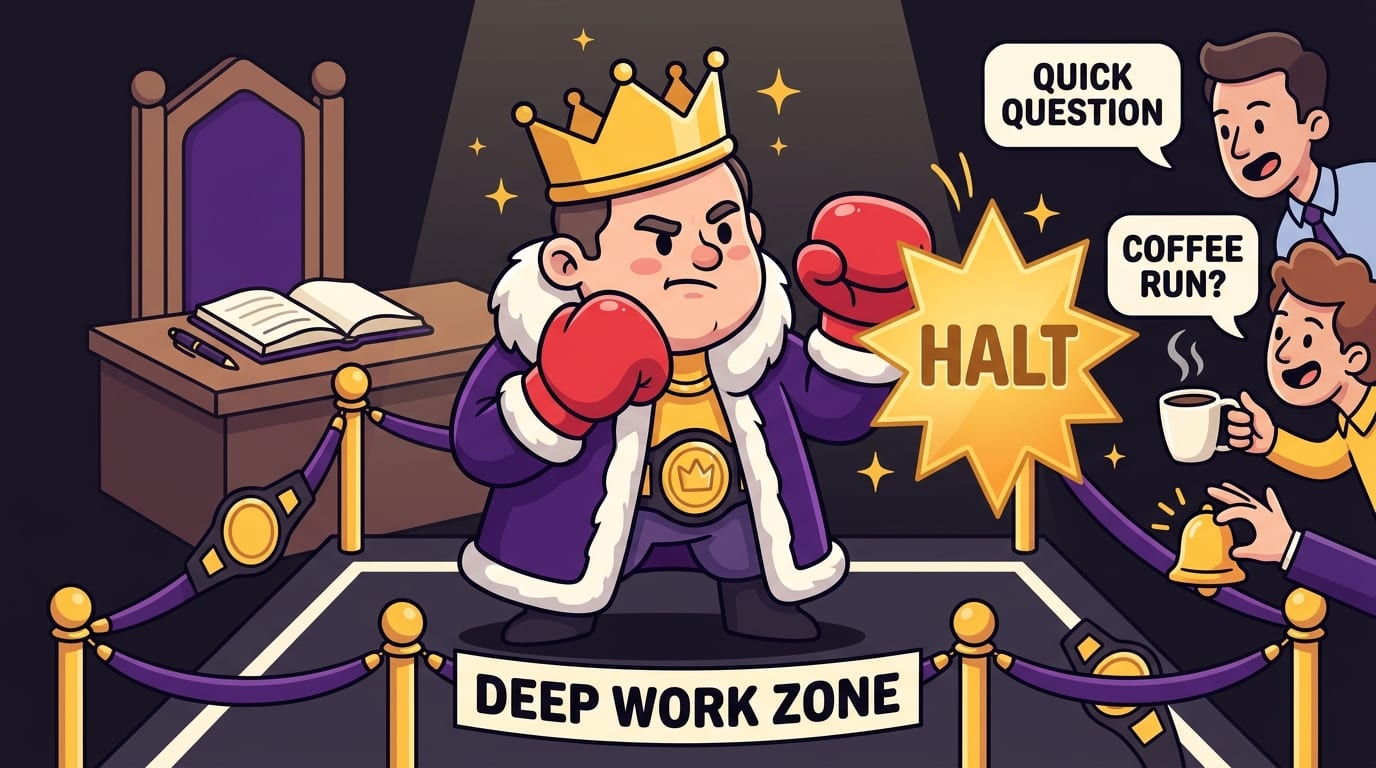
Deep work does not happen in isolation if your work involves coworkers, clients, classmates, roommates, or family members who believe every thought deserves immediate delivery. You need boundaries that are clear, polite, and boring enough to work.
Start by communicating your focus windows. For example:
- “I’m offline from 9:00–10:30 for deep work. I’ll respond after 10:30.”
- “I check messages at 11:00 and 3:00 unless something is urgent.”
- “If it is urgent, call me. If it is not urgent, please send it in Slack and I’ll batch replies.”
This reduces social friction. People are less likely to interrupt if they know when you will be available. It also trains you not to use responsiveness as a fake productivity trophy. Inbox zero feels good, but it is often shallow work wearing a tiny crown.
If your workplace culture is interruption-heavy, deep work might require team-level agreements. Define what counts as urgent. Create meeting-free blocks. Batch status updates. Use shared documents instead of constant pings. If you are interested in bigger work-structure questions, you may enjoy BlockChamp’s article on whether the 4-day work week is the future, because focus is not just personal; it is organizational.
For remote workers, boundaries are even more important. Home is full of sneaky productivity traps: laundry, dishes, snacks, pets, packages, and the seductive lie that you can work from the couch without becoming a blanket burrito. Create a physical signal if needed: headphones on, door closed, desk lamp on, crown metaphorically polished.
Turn Deep Work Into an Identity, Not a Punishment
The deepest deep work habit is identity. If you see focus as punishment, you will resist it. If you see it as who you are becoming, you will protect it.
This is why streaks, levels, and visible progress can be powerful. They turn behavior into identity. You are not merely avoiding distractions. You are building a reign. You are becoming someone who keeps promises to themselves. You are, dare we say, becoming king of your time.
James Clear popularized the idea of identity-based habits in Atomic Habits, and he discusses it in resources like his guide to identity-based habits. The basic idea is that lasting behavior change comes from seeing yourself differently: not “I’m trying to write,” but “I’m a writer.” Not “I should study,” but “I’m the kind of person who studies before panic enters the chat.”
BlockChamp leans hard into this idea with XP, levels, badges, reigns, calendars, and leaderboards. It makes focus feel like progression instead of deprivation. You start as a Peasant of Procrastination and climb toward BLOCK CHAMP — King of Your Time. Is it ridiculous? Yes. Does ridiculous work better than another gray dashboard telling you that you spent 11 hours on social media? Also yes.
The trick is to celebrate consistency, not perfection. A missed session is not a moral collapse. It is data. Ask:
- Was the block too long?
- Was the task unclear?
- Was I tired?
- Did I leave distractions too accessible?
- Do I need a better start ritual?
Then adjust. Deep work is not a purity contest. It is a training program.
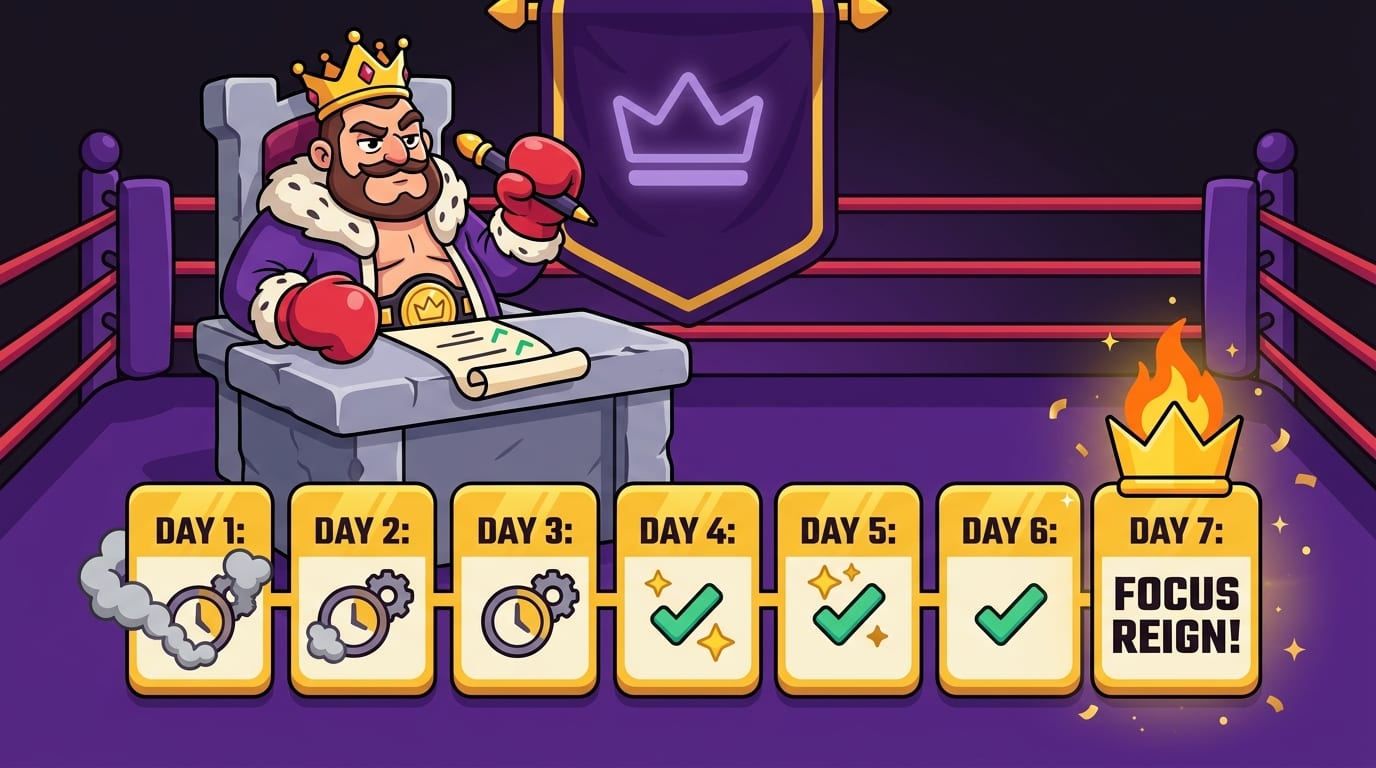
A Simple 7-Day Plan to Build Deep Work Habits
If you want a practical starting point, use this 7-day plan. It is simple, doable, and less obnoxious than downloading 14 productivity apps and creating a dashboard that requires its own project manager.
Day 1: Audit Your Distractions
Track what interrupts you. Write down websites, apps, people, times of day, and emotional triggers. Do you scroll when bored? Check email when confused? Open YouTube when a task gets difficult? Name the enemy.
Day 2: Create One Deep Work Block
Schedule one 45-minute block. Pick one outcome. Remove your phone. Close extra tabs. Turn on BlockChamp and block your top distractions. Finish the block even if it feels clunky.
Day 3: Build Your Pre-Work Ritual
Create a five-step ritual and repeat it before your focus block. Keep it short. The goal is consistency, not theatrical monk cosplay. Although if you own a robe, live your truth.
Day 4: Improve Your Environment
Block categories of distractions, clean your workspace, silence notifications, and prepare materials before starting. Champion users can use BlockChamp’s keyword blocking and recurring schedules to make the system even harder to dodge.
Day 5: Try a Longer Sprint
Move from 45 minutes to 60 or 75 minutes. Keep the task clear. Use a distraction list. Do not judge the session by how easy it feels; judge it by whether you stayed with the work.
Day 6: Review and Adjust
Look at what worked. What time of day felt best? Which distractions were most persistent? If you use BlockChamp, check your focus hours, Stare-Downs survived, XP, and reign. Data beats vibes, even though vibes have better branding.
Day 7: Plan Your Weekly Deep Work Schedule
Choose your recurring deep work blocks for next week. Start with three to five blocks total. Protect them like royal treasure. If you want broader productivity ideas, BlockChamp’s breakdown of productivity principles from The 4-Hour Workweek offers useful ways to think about leverage, elimination, and working smarter without becoming a hustle goblin.
Common Deep Work Mistakes That Quietly Bonk Your Focus
Even smart people sabotage deep work. Usually not dramatically. No lightning. No villain music. Just tiny decisions that leak attention until the workday looks like Swiss cheese.
Watch for these mistakes:
- Starting without a clear outcome: If you do not know what “done” means, you will drift.
- Leaving distractions available: Willpower is not a security system. Block the door.
- Checking messages first: This hands your best attention to everyone else’s agenda.
- Overplanning: Planning deep work is not deep work. Sneaky, but true.
- Skipping recovery: Tired brains make terrible rulers.
- Going too hard too soon: Build capacity gradually or your routine will collapse like a cheap camping chair.
- Using research as avoidance: Gather enough information to act, then act.
The fix is not self-loathing. The fix is better design. Make your target clearer. Make distractions harder. Make starting easier. Make progress visible. Make quitting slightly inconvenient. That last one is why BlockChamp’s Champion-tier Hardcore Lockdown exists: if you try to turn focus off, you can require a cooldown timer or even a 3-round boxing riddle before surrender. It gives the impulse time to die in the hallway. Noble.
Conclusion: Defend the Throne, Do the Work
Deep work habits are not about becoming a productivity robot with perfect posture and no browser history. They are about creating repeatable conditions where your best attention can do its best work. You choose a clear target. You block time. You remove distractions. You create a ritual. You work in sustainable sprints. You recover properly. You review, adjust, and keep going.
The modern internet is very good at stealing attention. It has algorithms, infinite feeds, autoplay, outrage, memes, and suspiciously compelling videos of people restoring rusty knives. So do not wander into battle armed only with “I’ll be disciplined today.” That is how the scroll goblins win.
Build a system. Protect your focus windows. Train your attention. And if your browser is the main battlefield, let BlockChamp stand guard. Block distracting sites and categories, earn XP for focused time, survive The King’s Stare-Down when temptation strikes, and turn deep work into a game you actually want to keep playing.
Long live your focus. Defend the throne. Crush the scroll. Become king of your time, champ.
Related posts

Writing Sprint Tips For Focused Output

Paper Or Digital Planner

Generative Ai And Staying Focused At Work
