
Productivity Lessons From Working Through Life Changes

Life changes do not politely knock, remove their shoes, and ask where to place the casserole. They kick the door open wearing muddy boots. New job. Breakup. Move. Baby. Caregiving. Graduation. Layoff. Health wobble. Surprise chaos goblin. Suddenly your old productivity system looks like a tiny paper umbrella in a hurricane.
That is why the best productivity lessons from working through life changes are not about becoming a robotic spreadsheet monarch. They are about rebuilding momentum when your calendar, energy, identity, and snack schedule have all been tossed into the air like confetti at a mildly stressful parade.
The goal is not to “optimize” your way out of being human. The goal is to stay functional, focused, and sane while your life rearranges the furniture. In this guide, we will cover practical strategies for timelines, prioritization, habit resets, distraction control, and realistic momentum. You will learn how to keep moving without pretending you are a productivity wizard who sleeps eight hours, journals at sunrise, and never opens YouTube “just for one tutorial.” Sure, Gary. Sure.
Quick Answers
1. Accept the Reset: Your Old Routine May Be Fired
One of the most useful productivity lessons from working through life changes is also the least glamorous: your old routine may not survive. That is not failure. That is physics.
A routine is built around conditions. Wake time, commute, workspace, emotional bandwidth, family needs, money pressure, health, sleep, and mental clarity all shape what is realistic. When those conditions change, the system that used to work might suddenly wobble like a shopping cart with one cursed wheel.
For example, the routine that worked during college may collapse when you start a full-time job. The deep work blocks that worked when you lived alone may become comedy fiction when you have a newborn. The morning workout habit that worked before a stressful move may vanish because your dumbbells are currently in a box labeled “kitchen???”
Instead of asking, “Why can’t I stick to my routine anymore?” ask:
- What changed in my environment?
- What changed in my energy?
- What changed in my responsibilities?
- What changed in my emotional load?
- Which parts of my old system still fit, and which parts need to be retired with dignity?
This shift matters because guilt burns energy you need for adaptation. Research from the American Psychological Association’s Stress in America reports consistently shows that major stress affects sleep, mood, decision-making, and daily functioning. In other words, if your brain feels like soup during a transition, congratulations: you own a human brain.
The first productivity move is not adding more tasks. It is admitting the game board changed. Once you do that, you can stop trying to force your old kingdom onto new terrain and start building a better castle. Preferably one with fewer notifications and less doomscrolling in the moat.
2. Build a Transition Timeline Instead of a Fantasy Calendar
During major life changes, people often create fantasy calendars. These calendars are gorgeous, color-coded, and completely unhinged. They assume you will wake up refreshed, respond to every email, exercise, meal prep, process emotions, rebuild your budget, call the dentist, learn Spanish, and become spiritually reborn before lunch.
No. Bad calendar. Sit in the corner.
A better approach is a transition timeline. A transition timeline acknowledges that life changes happen in phases. You do not need to solve everything immediately. You need to know what matters now, what can wait, and what would be nice but is not currently invited to the royal banquet.
The Three-Phase Timeline
Try dividing your life change into three phases:
- Stabilize: Handle urgent basics like income, sleep, food, deadlines, medical needs, paperwork, childcare, housing, or essential communication.
- Rebuild: Create new routines, adjust your work schedule, set up your environment, restart helpful habits, and reduce friction.
- Optimize: Improve systems, add stretch goals, refine workflows, and bring back ambitious projects when your foundation is less wobbly.
Most productivity meltdowns happen because people try to optimize while they are still stabilizing. That is like decorating the throne room while the castle is actively on fire. Lovely curtains, champ, but maybe grab a bucket.
If you are in the stabilization phase, your productivity goals should be brutally simple. Keep work moving. Pay the important bills. Sleep enough to avoid becoming a haunted accordion. Eat actual food. Maintain a short list of non-negotiables.
If you are in the rebuilding phase, focus on routines and structure. This is where time blocking, website blocking, workspace setup, and calendar rules become powerful again. If you want a deeper system for making time instead of just “finding it” like loose change in couch cushions, read BlockChamp’s guide on building a daily productivity system that actually makes time.
If you are in the optimization phase, you can start adding advanced goals: deep work sprints, fitness targets, creative projects, learning plans, or career upgrades. But earn your way there. Productivity during change is a climb, not a teleportation spell.
3. Prioritize Like a Tired Genius: Fewer Decisions, Better Outcomes
Life changes make prioritization harder because everything feels important. Your inbox screams. Your laundry stares. Your future makes vague threatening noises. Meanwhile, your brain keeps suggesting, “What if we reorganize all the files instead?” Classic brain. Absolute clown prince.
The productivity lesson here is simple: when life is unstable, reduce decisions. Do not rely on endless willpower. Build a prioritization filter.
The Four-Box Filter
Sort tasks into four boxes:
- Critical today: Must happen today or real consequences appear.
- Important this week: Matters, but does not need panic confetti.
- Maintenance: Keeps life from decaying into raccoon territory.
- Optional: Nice, shiny, seductive, and currently not the boss of you.
Here is an example for someone moving apartments while working full-time:
- Critical today: Submit lease document, attend client meeting, pack essentials.
- Important this week: Transfer utilities, update address, schedule movers.
- Maintenance: Laundry, groceries, 20-minute tidy.
- Optional: Perfectly labeling every spice jar like a domestic emperor.
This kind of sorting helps because your attention is limited. According to APA guidance on how stress affects the body and mind, stress can interfere with concentration and decision-making. Translation: do not ask your overloaded brain to hold 47 priorities in RAM. It will crash and open Instagram.
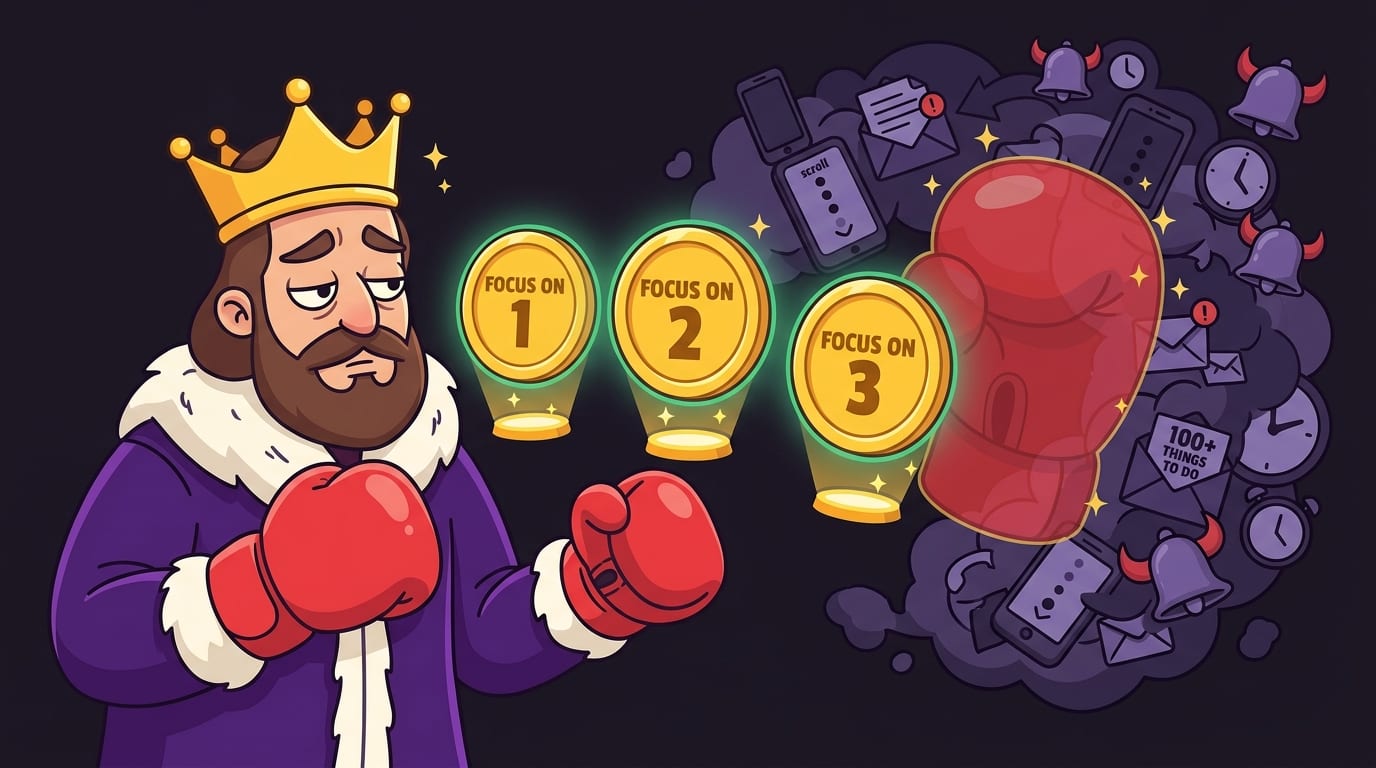
One practical rule: choose three “daily crown jewels.” These are the three outcomes that make the day successful even if everything else becomes a feral circus. Not 12. Not 19. Three. The King approves of threes. Very regal number. Probably.
If your life change is especially intense, reduce it to one crown jewel. “Today I will attend the appointment.” “Today I will finish the proposal.” “Today I will unpack the bed sheets because sleeping under a hoodie is not a lifestyle.”
4. Shrink Habits Until They Cannot Fail Dramatically
When life changes, habits often break because they were too large for the new context. A 90-minute gym routine becomes impossible. A two-hour writing block disappears. A perfect morning routine gets tackled by reality in the parking lot.
The fix is not abandoning habits. It is shrinking them until they are ridiculously doable.
Behavior scientist BJ Fogg has popularized the idea that tiny habits are easier to install because they require less motivation and fit into existing routines. His work at Stanford’s Behavior Design Lab emphasizes designing behavior around simplicity, prompts, and celebration. Translation: make the habit tiny enough that your brain cannot file a formal complaint.
Use “Minimum Viable Habits”
A minimum viable habit is the smallest version that still preserves identity and momentum. It is not impressive. That is the point. Impressive habits often die during transitions. Tiny habits survive like cockroaches with vision boards.
- Instead of “work out for 60 minutes,” do 10 pushups or a 10-minute walk.
- Instead of “write 1,000 words,” write one paragraph.
- Instead of “deep clean the house,” clear one surface.
- Instead of “study for three hours,” do one 25-minute focus block.
- Instead of “perfect digital detox,” block the top two sites stealing your soul.
This is where tools can help. A website blocker like BlockChamp can turn a tiny habit into a protected habit. For example, you might decide: “Every weekday from 9 to 11, I block social media and video sites.” That is not a full personality transplant. It is a simple boundary. BlockChamp makes it less miserable by turning focus into a game with XP, levels, reigns, badges, and The King’s magnificent stare-down when you try to sneak into a blocked site. Productivity, but with a crown and mild emotional damage. The fun kind.
If you want a gentler approach to discipline during messy seasons, BlockChamp’s post on soft discipline and sustainable focus routines pairs beautifully with this idea. The short version: consistency beats intensity, especially when life is throwing furniture.
5. Control Distractions Before They Become Emotional Support Gremlins
During life transitions, distractions get extra powerful. Why? Because distractions are not just entertainment. They are escape hatches. When your life feels uncertain, a scroll session offers quick comfort, novelty, and the illusion of control. Unfortunately, it also eats the afternoon and leaves you feeling like a soggy tortilla.
The attention economy is not neutral. Social platforms, streaming sites, news feeds, shopping apps, and games are built to keep you engaged. Reports like DataReportal’s Digital 2024 Global Overview Report show that people spend hours per day online and on social media globally. That does not mean the internet is evil. It means the internet is extremely good at being shiny.
When you are going through a life change, you need fewer shiny traps. Not because you are weak. Because you are busy rebuilding the kingdom.
Make a Distraction Defense Plan
Create a simple plan with three parts:
- Identify your top escape sites. Is it TikTok, Reddit, YouTube, news, Amazon, sports scores, AI chat tools, Discord, or “just checking one thing” that becomes a 42-tab swamp?
- Block during vulnerable hours. Most people have danger zones: late night, after meetings, before deadlines, during emotional dips, or right after waking.
- Replace, do not just remove. Decide what you will do instead: walk, stretch, read, message a friend, clean one thing, return to your task, or stare dramatically into the distance like a productivity knight.
BlockChamp is built exactly for this. You can block specific sites, use category bundles like Social Media, Video & Streaming, News, Shopping, Gaming, Gambling, Adult, and AI Distractions, or set recurring schedules as a Champion user. When your focus is on, The King stands guard. When you try to wander into YouTube during your work block, you get The Stare-Down instead of a rabbit hole. “The King sees you, peasant.” Honestly? Sometimes that is the accountability we deserve.
For a broader focus framework, check out BlockChamp’s guide to becoming a productivity expert through focus. It covers why attention is the foundation, not the garnish.
6. Use Time Blocks, But Make Them Squishy Around the Edges
Time blocking is useful during life changes, but only if you do not turn it into a prison schedule designed by a caffeinated accountant. A good time block creates clarity. A bad time block creates shame because you missed your 8:17 a.m. “become unstoppable” slot.
During transitions, use flexible time blocks. Think in zones rather than microscopic commands.
Try These Transition-Friendly Blocks
- Admin block: Paperwork, emails, scheduling, calls, forms, life bureaucracy goblins.
- Deep work block: One important project requiring real thinking.
- Maintenance block: Food, laundry, errands, cleaning, basic human upkeep.
- Recovery block: Walks, naps, therapy, journaling, reading, actual rest.
- Buffer block: The sacred spillover zone for when life does its little tap dance on your plans.
The secret is the buffer block. If your calendar has no buffer during a life transition, your calendar is lying to you. Transitions create hidden work: extra calls, emotional processing, logistics, fatigue, random delays, forgotten forms, and the sudden need to locate a document last seen during the Bronze Age.
Productivity experts often talk about protecting deep work, but during change you also need to protect recovery. Cal Newport’s concept of deep work is useful because it emphasizes focused effort without distraction, and you can explore his thinking through Cal Newport’s writing on deep work and attention. But deep work is easier when you are not running on fumes and vending machine crackers.
Pair your time blocks with environmental cues. Start a deep work block by closing unnecessary tabs, putting your phone away, turning on BlockChamp, and writing the single task on a sticky note. End the block by recording what you finished and what comes next. That tiny “what comes next” note is magic. It prevents tomorrow-you from opening the project and whispering, “What was I doing?” like a confused medieval ghost.
7. Track Momentum, Not Perfection
One of the most underrated productivity lessons from working through life changes is to measure momentum instead of perfection. Perfection is brittle. Momentum bends.
During a stable season, you might track outputs: words written, workouts completed, tasks shipped, hours studied. During a transition, also track survival metrics: days you showed up, focus blocks attempted, distractions resisted, important tasks completed, sleep protected, routines restarted.
This is why streaks can be powerful when used kindly. They make invisible effort visible. But streaks become toxic when one missed day makes you feel like the village failure. The best streak systems reward consistency without demanding sainthood.
BlockChamp’s reign system is built around this idea. Your reign continues as long as your Master Focus stays on. Every focused day earns XP. Every minute of focus adds progress. Every survived stare-down gives you a tiny win. You can see focus hours on a calendar and watch your progress climb. It turns “I did not waste the whole day online” into something visible and oddly satisfying. Like a gold star, but less kindergarten and more royal boxing arena.
If you are rebuilding after a life change, try tracking these five momentum signals:
- How many focused blocks did I complete this week?
- How many times did I return to the task after getting derailed?
- Which habits survived, even in tiny form?
- Which distractions did I reduce or block?
- What got easier compared with last week?
This kind of tracking keeps you honest without punching your self-esteem in the face. It also shows patterns. Maybe Wednesdays are chaos. Maybe late-night work blocks are fake news. Maybe you need childcare support, fewer meetings, better sleep, or stricter blocking during your danger hours.
For a thoughtful reminder that productivity struggles are often systemic, contextual, and not just “personal weakness,” read why productivity is not personal. It is a helpful antidote to the hustle goblin whispering, “You just need to try harder.” Sometimes you need a better setup, champ.
8. Create a “Bad Day Protocol” Before the Bad Day Arrives
Bad days are guaranteed during life changes. Not possible. Guaranteed. The mistake is acting surprised every time they happen. “Oh no, a stressful day during my stressful season!” Yes, your majesty, the weather in Chaos Land remains chaotic.
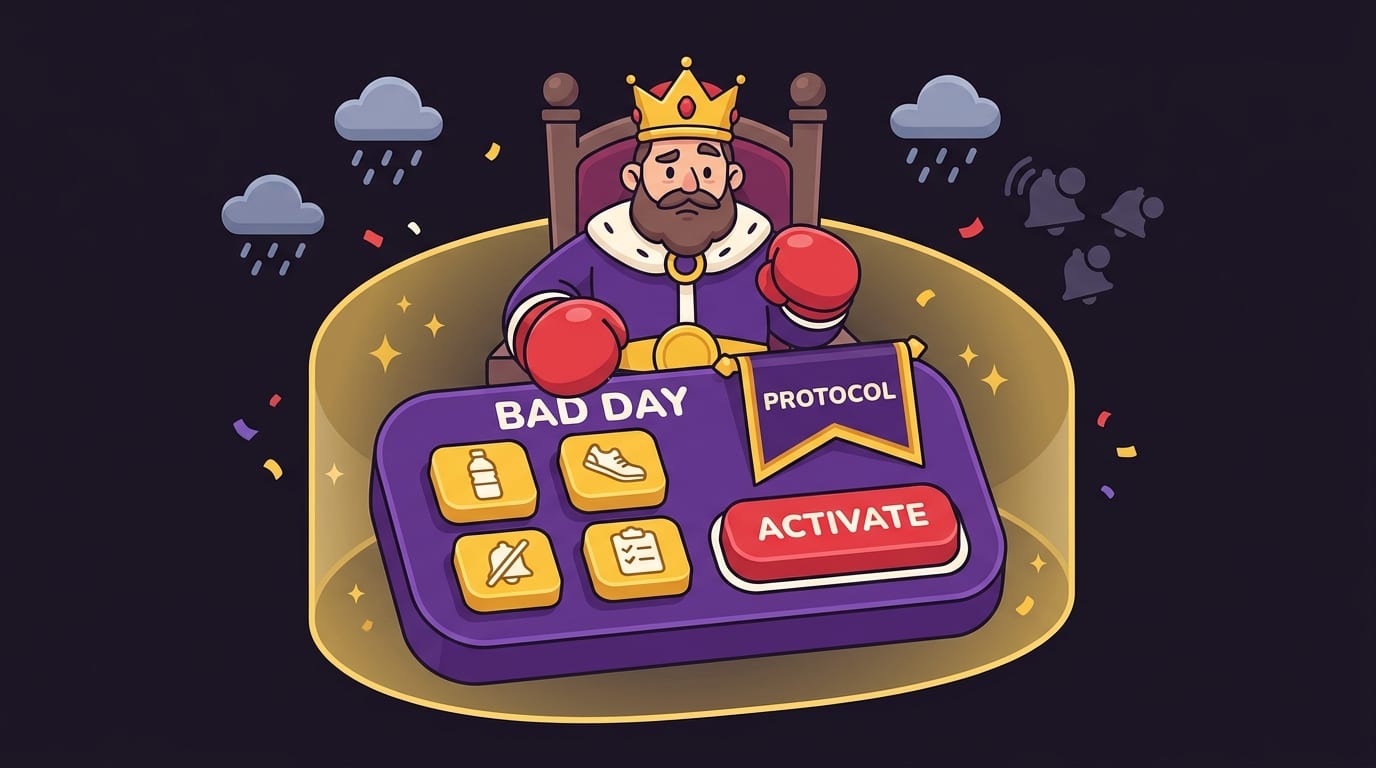
A bad day protocol is a pre-decided plan for low-energy, high-stress days. It prevents all-or-nothing collapse. Instead of thinking, “I cannot do my full routine, so I will do nothing and become one with the couch,” you follow the emergency version.
Your Bad Day Protocol Might Include:
- One essential task only.
- One 20-minute cleanup or admin sprint.
- One short walk or stretch.
- Basic food and water.
- Block distracting sites until the essential task is done.
- No major decisions after 9 p.m.
- A written plan for tomorrow.
The key is to make it specific. “Do better” is not a protocol. It is a fortune cookie wearing a blazer. A real protocol says: “If I feel overwhelmed, I will set a 25-minute timer, turn on BlockChamp, block Social and Video, complete the single task marked urgent, then take a 10-minute walk.”
This is also where BlockChamp’s Hardcore Lockdown can help Champion users. If your transition stress makes you prone to impulse scrolling, Hardcore Lockdown adds friction before you turn focus off. You can choose a cooldown timer or The King’s boxing riddle, where you must repeat glove combos before surrendering. It is silly. It is effective. It gives your impulse enough time to get bored and wander away.
Bad day protocols are not about lowering standards forever. They are about preserving continuity. One tiny win on a bad day keeps the crown from rolling under the couch.
9. Rebuild Identity: Become the Person Who Returns
Life changes mess with identity. You may no longer feel like “a disciplined student,” “a reliable worker,” “a creative person,” “a fit person,” or “someone who has their life together.” First: nobody has their life together. Some people just own nicer baskets for the chaos.
The identity that matters during transition is not “I never fall off.” It is “I return.”
You return to the task after distraction. You return to your routine after travel. You return to sleep after a rough week. You return to focus after a scroll spiral. You return to the throne, crown slightly crooked, snacks in hand, still in the fight.
This identity is more durable because it includes failure. That makes it realistic. James Clear’s work on habits often emphasizes identity-based behavior, and his writing on identity-based habits explains how small repeated actions reinforce who we believe we are. During life changes, the identity you want is not “flawless productivity machine.” It is “resilient builder of momentum.” Much less robotic. Better hair.
Use language that reinforces returning:
- “I am restarting my focus block.”
- “I am protecting one important task today.”
- “I am rebuilding my routine in small pieces.”
- “I got distracted, and now I am back.”
- “The reign continues.”
That last one is very BlockChamp-coded, naturally. When your focus tools, environment, and tracking system reinforce the identity of someone who protects attention, productivity becomes less about white-knuckle discipline and more about becoming the kind of person who defends their time. Long live your focus.
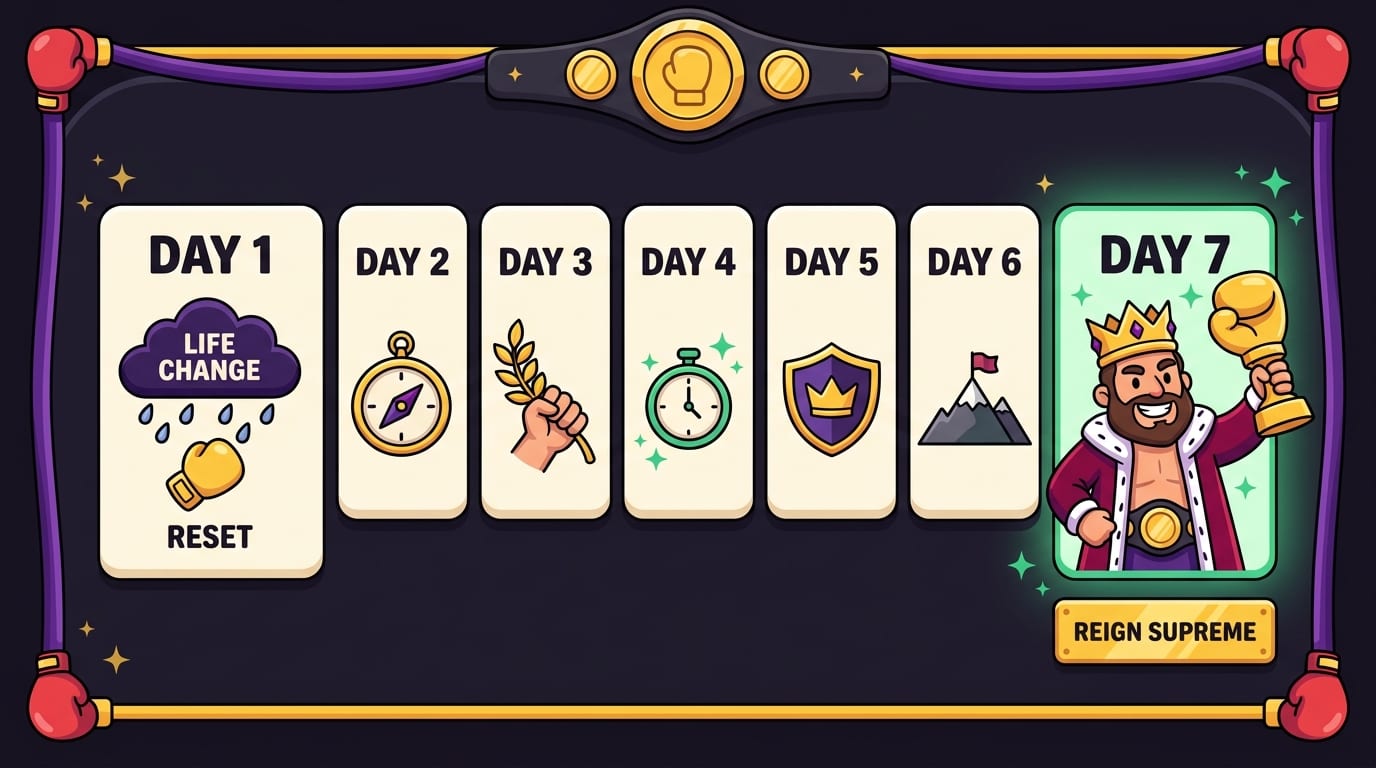
10. A Practical 7-Day Reset Plan for Working Through Life Changes
If you want a simple plan, use this seven-day reset. It is designed for messy real life, not imaginary influencer life where every surface is beige and nobody has unread emails.
Day 1: Stabilize the Battlefield
Write down everything currently demanding attention. Then circle only what is urgent in the next 72 hours. Pay bills, confirm appointments, answer essential messages, and handle anything with real consequences. Ignore the decorative panic.
Day 2: Choose Your Three Crown Jewels
Pick three priorities for the week. Not 14. Three. These should be outcomes that reduce pressure or create meaningful progress. Example: finish the application, unpack the bedroom, complete two study blocks.
Day 3: Block the Biggest Distractions
Identify your top distraction sites and block them during work or study hours. With BlockChamp, you can start free by blocking up to three sites and enabling two categories, then upgrade if you want unlimited sites, all categories, keyword blocking, schedules, and Hardcore Lockdown. Start small. Knock out the obvious villains first.
Day 4: Install Minimum Viable Habits
Pick two tiny habits: one for productivity and one for recovery. For example, one 25-minute focus block and one 10-minute walk. Make them almost laughably easy. Laughably easy is how empires begin.
Day 5: Create Your Bad Day Protocol
Write your emergency plan. Decide what you will do when energy is low. Include one essential task, one recovery action, and one distraction boundary.
Day 6: Add a Weekly Review
Spend 20 minutes reviewing what worked, what failed, and what needs adjusting. Do not roast yourself. That is The King’s job, and he has better timing.
Day 7: Celebrate Momentum
Celebrate what continued. Maybe you completed three focus blocks. Maybe you resisted Reddit twice. Maybe you found your passport. Progress is progress. Track it. Reward it. Build from it.
If you enjoy productivity principles with a sharper strategic edge, you may also like BlockChamp’s breakdown of practical productivity lessons from The 4-Hour Workweek. Use the useful parts, skip the fantasy yacht energy, keep the focus.
Conclusion: Productivity Through Change Is a Comeback Story
The biggest productivity lessons from working through life changes are not flashy. They are sturdy. Accept the reset. Build a transition timeline. Prioritize fewer things. Shrink habits. Block distractions. Use flexible time blocks. Track momentum. Prepare for bad days. Return, return, return.
You are not trying to become a perfect productivity robot. You are trying to become someone who can keep moving when life changes shape. That requires compassion, structure, and a few well-placed guardrails. Also snacks. Never underestimate snacks.
If your current life change has turned your attention into a runaway shopping cart, give yourself an unfair advantage. Try BlockChamp for Chrome and let The King stand guard while you rebuild your routine. Block the sites that keep ambushing your focus, earn XP for staying on track, survive the stare-downs, and start a reign you can actually see.
Because life may be changing, champ, but your time does not have to be surrendered to the scroll. Defend the throne. Crush the distractions. Long live your focus.
Related posts

Finding Focus For Fiction Writing

Learning To Focus In A Digital World As A Creative

Finding Focus For Personal Growth
