
Staying Focused And Motivated While Studying

Staying focused and motivated while studying sounds simple until your brain suddenly decides that reorganizing your sock drawer, checking one “important” notification, and watching a 47-minute video about medieval cooking are all urgent academic requirements. Congratulations: you are human, and the internet has tiny attention thieves hiding in every tab.
The good news? Focus is not a mystical gift reserved for monks, chess prodigies, and that one classmate who color-codes everything with terrifying calm. It is a system. Motivation is not lightning from the heavens; it is something you build with routines, goals, rewards, friction, and the occasional digital bouncer standing between you and TikTok. Preferably one wearing a crown and boxing gloves.
This guide breaks down practical strategies for staying focused and motivated while studying, from goal-setting and time blocking to environment design, distraction control, and daily routines that do not require waking up at 4:13 a.m. to journal beside a Himalayan salt lamp. Let’s defend the study throne.
Quick Answers
1. Start With a Study Goal That Is Not Completely Useless
Most study sessions fail before they begin because the goal is vague enough to be legally considered fog. “Study biology” is not a plan. It is a wish wearing sweatpants.
A useful study goal tells your brain exactly what victory looks like. That matters because motivation increases when progress is visible. Research on goal-setting has consistently shown that specific, challenging goals tend to improve performance compared with vague intentions. The classic work from Locke and Latham, summarized by the American Psychological Association’s goal-setting research overview, explains why clear goals help direct attention, effort, and persistence.
Instead of writing “study chemistry,” turn it into something concrete:
- “Complete 25 practice questions on chemical bonding.”
- “Review chapters 4 and 5 and make flashcards for every key term.”
- “Write a one-page summary of photosynthesis without looking at notes.”
- “Memorize 15 Spanish verbs and test myself twice.”
Notice the difference? Your brain can actually finish those. It gets a finish line instead of being trapped in the swamp of “more studying.”
Use the “one session, one mission” rule
Before every study block, write one primary mission. Not seven. Not “become academically invincible.” One. If you finish early, great. Add a bonus task. But your first job is to give the session a clean purpose.
Try this template:
By the end of this session, I will [specific task] so that I can [specific outcome].
Example: “By the end of this session, I will complete and review 30 algebra problems so that I can identify which equation types still punch me in the face.” Academic. Honest. Slightly dramatic. Perfect.
If you want more study-specific focus tactics, BlockChamp has a related guide on how to stay focused while studying that pairs nicely with this routine-building approach.
2. Build a Study Routine Your Future Self Cannot Weasel Out Of
Motivation is unreliable. It is basically a raccoon in a glitter jacket: exciting, unpredictable, and not something you should trust with your GPA. Routine is better because it reduces the number of decisions you need to make.
Every time you ask, “Should I study now? Where should I study? What should I study? Do I need a snack? Is this the moment I finally learn sourdough?” you burn mental energy. A routine removes those negotiations.
A strong study routine includes four things:
- A consistent start time: Your brain learns when it is time to work.
- A defined location: Same desk, library table, or quiet corner if possible.
- A startup ritual: A short sequence that tells your brain, “The kingdom is now closed for nonsense.”
- A shutdown ritual: A clear ending so studying does not feel endless.
A simple daily study routine
Here is a routine that works for many students:
- Put your phone away or on Do Not Disturb.
- Open only the tabs and apps needed for the subject.
- Turn on your website blocker if you use one.
- Write your study mission for the session.
- Set a timer for 25, 45, or 60 minutes.
- Study until the timer ends. No tab goblin behavior.
- Take a short break and record what you finished.
The key is repetition. Same sequence, same cues, same general rhythm. Over time, the routine becomes less painful because your brain stops treating every study session like a courtroom debate.
If you study in Chrome and keep losing battles to Reddit, YouTube, streaming sites, shopping tabs, or “just one AI prompt that becomes 40 minutes,” BlockChamp can act as your royal gatekeeper. You choose what to block, hit the Master Focus Toggle, and The King stands guard while you work. No gray punishment screen. More like: “HALT. The crown saw that.”
3. Time Blocks: Put Your Study Session in a Tiny Productivity Arena
Open-ended studying is dangerous. If you tell yourself, “I’ll study all evening,” your brain hears, “We have infinite time, so let’s waste the first two hours becoming emotionally attached to a YouTube comment section.”
Time blocking fixes this by giving your work a container. You decide in advance what happens and when. This reduces procrastination because the task is no longer floating around your day like a haunted assignment ghost.
The popular Pomodoro Technique uses 25-minute focus blocks followed by 5-minute breaks. For some students, that is perfect. Others need longer blocks to get into deep concentration. The best study block length depends on the task:
- 25 minutes: Flashcards, light review, memorization, warm-ups.
- 45 minutes: Practice problems, reading with notes, essay outlining.
- 60 to 90 minutes: Deep work, writing, mock exams, complex problem sets.
Attention research suggests that deep concentration benefits from protecting uninterrupted time. Cal Newport popularized this idea in his work on deep work, and his explanation of distraction-free concentration is worth reading in his overview of Deep Work.
Try the 3-block study plan
If you have a big exam coming, try this structure:
- Block 1: Learn — Read notes, watch the assigned lecture, or review the textbook.
- Block 2: Practice — Answer questions, solve problems, write from memory.
- Block 3: Test — Quiz yourself without notes and mark weak spots.
This beats rereading the same page six times while gently panicking. Learning feels productive, but testing yourself reveals whether the knowledge actually stuck or merely waved at you from across the room.
For a broader breakdown of distraction-free study setups, check out BlockChamp’s guide to studying without distractions.
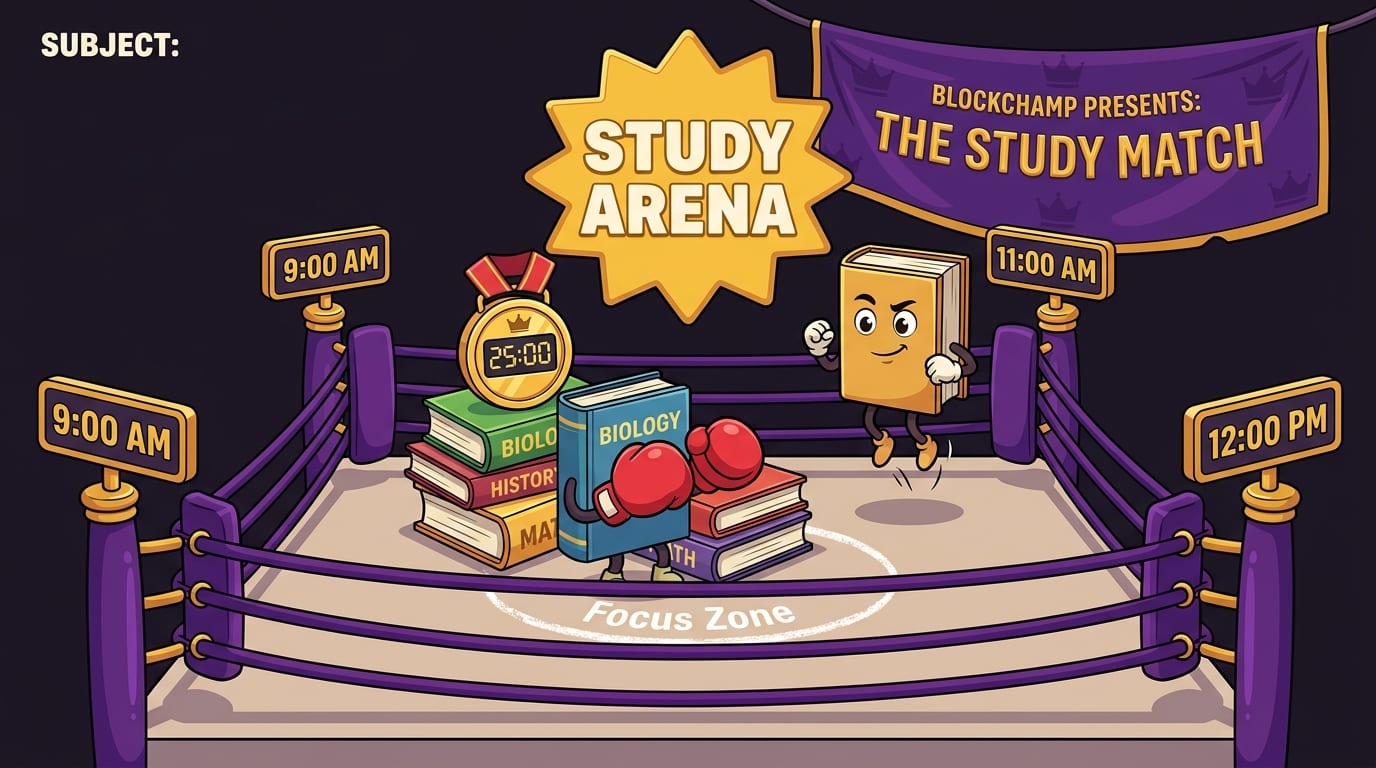
4. Motivation Loves Progress, So Make Progress Obvious
One of the sneakiest reasons students lose motivation is that studying often feels invisible. You can work for two hours and still think, “Did I do anything, or did I just sit here aging?”
To stay motivated while studying, you need visible proof that effort is turning into progress. This is why games are addictive in the best and worst ways: XP bars, levels, streaks, badges, quests, progress maps. Your brain loves feedback. It wants the little ding. The ding is powerful. Respect the ding.
According to the American Psychological Association’s discussion of motivation science, motivation is shaped by goals, feedback, autonomy, and the sense that effort matters. Translation: if your study system gives you feedback and lets you see improvement, you are much more likely to keep going.
Track these three study metrics
You do not need a 14-tab spreadsheet named “Academic Domination v9 FINAL final actual final.” Track only what matters:
- Focused minutes: How much real study time did you complete?
- Output: How many problems, pages, flashcards, summaries, or practice questions?
- Weak spots: What still needs review?
At the end of each session, write a tiny study log:
“45 minutes. Completed 20 econ questions. Missed elasticity formulas. Review tomorrow.”
That one sentence turns vague effort into usable data. It also gives tomorrow-you a clear starting point, instead of dumping them into the academic wilderness with no map and one sad granola bar.
Gamify your studying like a civilized nerd
This is where BlockChamp fits naturally. It turns focus into a game by awarding XP for focus time, active blocking days, and surviving blocked-site attempts. Every focused day builds your reign. Every blocked distraction you resist adds to your progress. The King may roast you, yes, but he also rewards you. Balanced monarchy.
That matters because staying focused and motivated while studying is not just about removing distractions. It is about making good behavior feel rewarding enough to repeat. BlockChamp’s levels, badges, calendar, leaderboard, and reign system give your study discipline a visible scoreboard. Suddenly, “I didn’t open YouTube” becomes “I defended my 7-day reign like an absolute academic warlord.”
5. Remove Distractions Before They Put on a Fake Mustache and Sneak In
You cannot rely on willpower alone. Willpower is useful, but it gets tired. The modern internet does not get tired. It has infinite scroll, autoplay, notifications, trending outrage, and thumbnails designed by people who understand your primitive lizard brain disturbingly well.
A report from DataReportal’s Digital 2024 Global Overview found that people spend an average of more than six hours per day online globally. That does not mean every minute is wasted, but it does mean the internet is not a small side quest. It is the main villain wearing a very shiny cape.
Distraction control works best when you remove temptation before the study session begins. Do not wait until you are tired, bored, and three paragraphs into your textbook to decide whether Instagram deserves “just a quick check.” That is how kingdoms fall.
Create a distraction blacklist
Make a list of your usual study enemies. Be honest. The crown demands truth.
- Social media: TikTok, Instagram, X/Twitter, Reddit, Snapchat.
- Video: YouTube, Netflix, Twitch, streaming sites.
- Messaging: Discord, WhatsApp Web, group chats.
- Shopping: Amazon, Temu, eBay, fashion sites.
- News: doomscroll portals disguised as “staying informed.”
- AI tools: helpful when assigned, chaotic when used to avoid thinking.
Then block them during study hours. With BlockChamp, free users can block up to 3 specific sites and enable 2 distraction categories. Champion users can unlock unlimited sites, all 8 categories, keyword blocking, schedules, and Hardcore Lockdown. For students, category blocking is especially handy because you can block “Social Media” or “Video & Streaming” in one tap instead of playing whack-a-mole with every shiny site on Earth.
Use friction, not fantasy
Do not say, “I simply will not check YouTube.” Adorable. Dangerous. Instead, add friction:
- Log out of distracting accounts.
- Keep your phone across the room.
- Use full-screen mode for notes or writing.
- Close every tab not required for the current task.
- Turn on a website blocker before you begin.
If you need more tactical ideas, this BlockChamp post on studying without distractions gives more ways to set up your study environment so your attention does not get mugged in a digital alley.
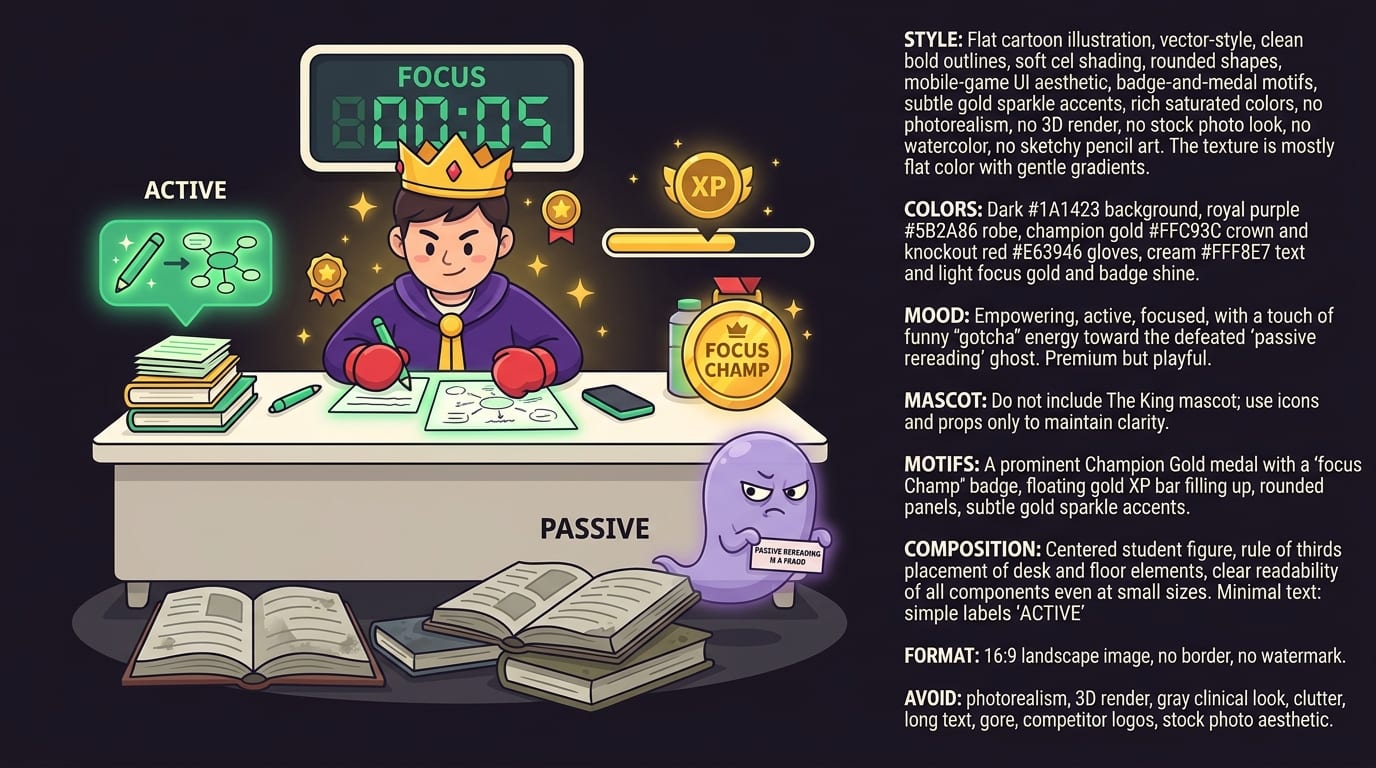
6. Study Actively, Because Passive Rereading Is a Sneaky Little Fraud
Many students confuse “looking at material” with “learning material.” They are not the same. Rereading notes can feel productive because your eyes are moving and your highlighter is having a glorious neon parade. But active recall and practice are usually much stronger.
The science of learning is pretty clear on this. The American Psychological Association’s learning and memory resources discuss how retrieval practice helps strengthen memory. In normal human language: testing yourself helps your brain remember better than simply staring at the answer like it owes you money.
Use active recall
After reading a section, close the book and ask:
- What are the three main ideas?
- Can I explain this concept in plain English?
- What example would prove I understand it?
- What would a teacher likely ask about this?
If you cannot answer, great. You found the weak spot. That is not failure; that is reconnaissance. The enemy has been located.
Use spaced repetition
Studying everything once the night before an exam is not a strategy. It is academic parkour over a pit of regret. Spaced repetition means reviewing information multiple times over increasing intervals, which improves long-term retention.
A simple schedule:
- Review new material the same day.
- Review again 2 days later.
- Review again after 1 week.
- Review again before the exam.
This works especially well for vocabulary, formulas, historical dates, definitions, and any subject where your brain likes to drop facts into a mysterious fog bank.
Mix subjects carefully
If you have several classes, rotate study types. For example, do math practice, then history recall, then biology flashcards. This can reduce fatigue because each subject uses your brain differently. Just avoid switching every five minutes. That is not variety; that is intellectual ping-pong.
7. Protect Your Energy: The Body Is Not Just a Laptop Stand for Your Brain
Staying focused while studying is much harder when your body is running on four hours of sleep, caffeine fumes, and a suspicious granola bar you found at the bottom of your backpack. Your brain is physical hardware. Treat it less like a disposable napkin.
Sleep is especially important for learning. The Sleep Foundation explains the link between sleep and memory consolidation, noting that sleep helps the brain process and store new information. So yes, pulling an all-nighter may feel heroic, but it often turns you into a confused raccoon wearing earbuds.
Use breaks like a professional
Breaks are not the enemy. Bad breaks are the enemy. A good break restores attention. A bad break opens a social media portal and spits you out 52 minutes later, older and spiritually sticky.
Good break ideas:
- Stand up and stretch.
- Walk outside for five minutes.
- Drink water.
- Do a quick breathing exercise.
- Prepare your next study materials.
Risky break ideas:
- Opening TikTok “for one minute.”
- Checking drama in group chats.
- Starting a new episode of anything.
- Browsing online shops because “looking is free.” It is not. Your attention paid the bill.
If breaks are where your study plan goes to die, use BlockChamp to keep distractions blocked even during short breaks. Then choose a real recovery activity instead of feeding your brain to the scroll beast.
8. Beat the Mid-Session Slump Without Declaring Academic Bankruptcy
Every study session has a danger zone. Usually it arrives after the first burst of focus, when the material gets harder and your brain starts whispering, “Perhaps we should check if any celebrities have purchased unusual furniture.”
This is the mid-session slump. It does not mean you are lazy. It means your brain wants relief. Give it relief without handing it the keys to the distraction kingdom.
Use the 5-minute reset
When focus crashes, do this:
- Stop and write what you are stuck on.
- Take five slow breaths.
- Stand up for one minute.
- Restart with the smallest next action.
Example: If your task is “write essay,” the smallest next action might be “write one ugly topic sentence.” Ugly is allowed. Ugly can be edited. Blank pages just sit there acting superior.
Switch from input to output
If reading makes you sleepy, switch to active work:
- Answer practice questions.
- Draw a concept map.
- Teach the topic out loud.
- Make a quiz for yourself.
- Write a summary from memory.
Output wakes up the brain because it demands effort. It is the difference between watching someone lift weights and actually picking up the academic dumbbell.
Use rewards, but do not bribe yourself with chaos
Rewards help motivation, but choose them wisely. “After 45 minutes, I get 10 minutes of TikTok” can work for some people, but for many students it is like rewarding sobriety with a tequila cannon. Try safer rewards:
- A snack.
- A walk.
- A favorite song.
- A short call with a friend.
- One episode only after the full study plan is done.
BlockChamp’s XP and badges are useful here because they give you a built-in reward that does not derail the session. You get progress without needing to open the very sites trying to eat your evening.

9. Make Your Environment Boring Enough to Be Brilliant
Your study environment should not be exciting. Exciting is for concerts, theme parks, and finding fries at the bottom of the bag. Your study space should be calm, predictable, and slightly boring in a productive way.
Environment design matters because attention follows cues. If your desk is covered in snacks, game controllers, receipts, three cups, and a mysterious cable from 2018, your brain gets mixed signals. Is this a study zone, a landfill, or a shrine to procrastination?
Set up a focus-friendly study zone
- Keep only the materials you need for the current session.
- Use headphones or background noise if your space is loud.
- Face away from visual distractions if possible.
- Keep water nearby so you do not use thirst as an excuse to roam the kingdom.
- Put your phone out of reach, not just face down beside you like a tiny temptation rectangle.
If you study in a shared space, tell people your study block in advance: “I’m studying from 7 to 8. Please only interrupt me if there is fire, blood, or pizza.” Clear. Reasonable. Pizza clause optional but respected.
For students balancing study and work, BlockChamp also has a helpful post on staying focused across studying and work, especially if your schedule feels like a circus with deadlines juggling knives.
10. Use a Weekly Review So You Do Not Accidentally Drift Into Chaos
Daily routines are powerful, but weekly reviews keep the whole system pointed in the right direction. Without review, you may spend lots of time studying the wrong things. That is like polishing a sword while the dragon is behind you eating your syllabus.
Once per week, take 20 minutes to review:
- What exams, quizzes, papers, or deadlines are coming up?
- Which subjects need the most attention?
- What study methods worked this week?
- Where did distractions win?
- What will you block, change, or simplify next week?
This is also a good time to update your study blocks. If you have a biology exam Friday and a history paper Sunday, schedule your hardest blocks earlier in the week. Future-you deserves mercy.
The Sunday setup routine
Try this quick weekly planning ritual:
- List every deadline for the next 10 days.
- Choose the top three academic priorities.
- Schedule study blocks for each priority.
- Prepare materials in advance.
- Update your blocked sites and categories for the week.
If you are using BlockChamp Champion, recurring Focus Schedules can automatically activate blocks during your planned study hours. That means you do not need to remember to defend the throne every day. The King simply shows up for duty, gloves on, nonsense banned.
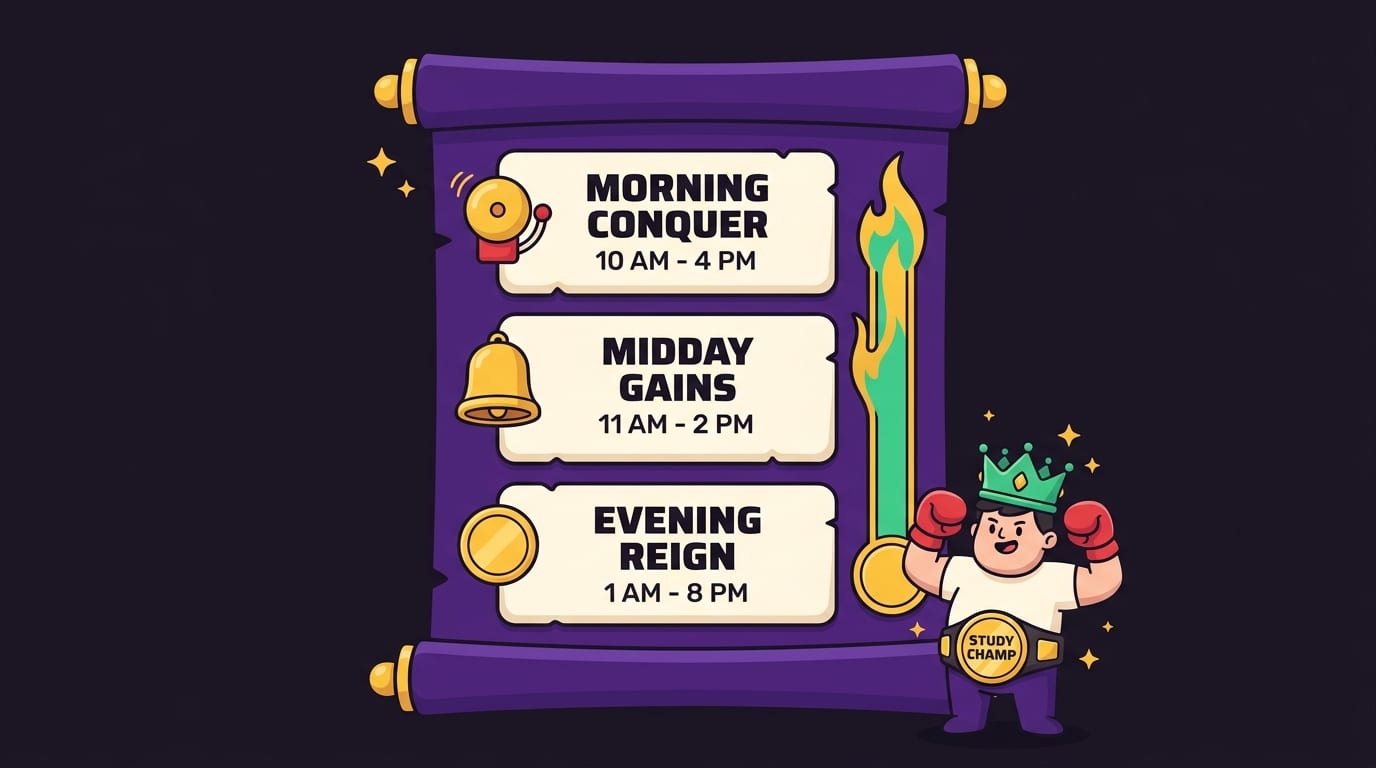
11. A Realistic Study Day Template You Can Steal Immediately
Let’s turn all this into an actual day. No productivity cosplay. No 19-step morning ritual involving imported matcha and self-actualization chants. Just a practical plan.
After school or class
- Take 30 to 60 minutes to decompress, eat, move, or reset.
- Do not accidentally begin a three-hour scroll festival. Use a timer.
Study Block 1: 45 minutes
- Mission: Review today’s hardest class topic.
- Method: Active recall plus practice questions.
- Distraction defense: Block social and video sites.
Break: 10 minutes
- Walk, stretch, hydrate, snack.
- No infinite scroll. The crown is watching.
Study Block 2: 45 minutes
- Mission: Work on upcoming assignment or essay.
- Method: Produce something measurable, like an outline, paragraph, or problem set.
Mini review: 10 minutes
- Write what you completed.
- Write what needs review tomorrow.
- Pack or prepare materials for the next session.
This simple rhythm can do more than a chaotic five-hour “study” marathon where only 38 minutes are real work and the rest is snack migration, playlist engineering, and emotional staring.
Conclusion: Crown On, Tabs Closed, Let’s Go
Staying focused and motivated while studying is not about becoming a flawless productivity robot with perfect posture and zero desire to check memes. It is about building a system that makes focus easier, progress visible, and distractions harder to reach.
Start with specific goals. Study in time blocks. Use active recall. Track progress. Protect your energy. Review weekly. Most importantly, remove the distractions before they start whispering nonsense from another tab like tiny digital goblins.
And if your biggest study enemy is the internet, bring backup. BlockChamp helps you block distracting sites, categories, and keywords in Chrome while turning focus into a game with XP, levels, badges, reigns, and The King’s glorious Stare-Down when you try to wander off. It is practical, ridiculous, and strangely motivating — exactly the vibe studying needs.
So pick your next study mission, arm your focus blocks, and defend the throne. Long live your focus, champ.
Related posts

Finding Focus For Fiction Writing

Learning To Focus In A Digital World As A Creative

Finding Focus For Personal Growth
