
Lead With Trust

To lead with trust is to do something wildly rebellious in modern work: assume adults can act like adults. Shocking. Alert the villagers. But in a world of remote teams, hybrid schedules, Slack pings, AI tools, invisible workloads, and calendars that look like someone spilled spaghetti on a spreadsheet, trust is not a fluffy leadership accessory. It is the operating system.
When leaders lead with trust, people stop wasting energy decoding hidden agendas, defending every tiny decision, and pretending to be “busy” like a raccoon wearing a blazer. Instead, teams can focus on meaningful work, communicate honestly, take ownership, and recover faster when things go sideways. And yes, things will go sideways. That is why we have coffee, project management tools, and emergency “can we hop on a quick call?” messages.
This guide breaks down practical, step-by-step strategies to lead with trust: how to build credibility, communicate transparently, empower people without abandoning them in the wilderness, create habits that strengthen workplace confidence, and protect the focus your team needs to actually deliver. Because trust without focus becomes chaos in a nice cardigan.
Quick Answers
What It Really Means to Lead With Trust
To lead with trust means you make trust your default leadership posture, not a reward people receive after proving themselves for 14 fiscal quarters and surviving a ceremonial performance review duel. It means you believe people want to do good work, you give them the context and autonomy to do it, and you create systems that make accountability clear rather than creepy.
Trust-based leadership is not the same as being passive, overly nice, or allergic to standards. Please do not confuse “I trust my team” with “I have no idea what anyone is doing, but I brought muffins.” Trust works best when paired with clarity. People need to know what success looks like, where decisions live, what trade-offs matter, and how their work connects to the bigger mission.
Research consistently shows that trust matters. According to Harvard Business Review’s article on the neuroscience of trust, employees in high-trust organizations report less stress, more energy at work, higher productivity, and stronger engagement. That is not leadership glitter. That is measurable business impact.
In practice, leading with trust looks like this:
- You share information early instead of hoarding it like a corporate dragon.
- You explain the “why” behind decisions, especially unpopular ones.
- You let people choose how to do the work when the outcome is clear.
- You create accountability without micromanaging every keystroke.
- You protect deep work time instead of treating attention like an infinite buffet.
- You admit mistakes quickly and visibly.
Trust is built in moments. The way you respond when someone misses a deadline. The way you handle questions in meetings. The way you talk about absent team members. The way you react when someone says, “I disagree.” Tiny moments, repeated often, either build a sturdy kingdom or a wobbly cardboard throne.
Step 1: Build Credibility Before You Demand Loyalty
If you want to lead with trust, start with credibility. Trust is not created by your title, your LinkedIn headline, or your ability to say “strategic alignment” without blinking. People trust leaders who are competent, consistent, honest, and human.
Credibility begins with doing what you said you would do. If you promise to follow up, follow up. If you say you will protect focus time, do not schedule a “quick sync” in the middle of it. If you ask for feedback, do not punish people for giving it. Simple? Yes. Easy? Apparently not, based on the number of workplaces where “open door policy” means “open door, closed mind.”
Here are credibility-building habits that work:
- Keep small promises. Big trust is made of tiny receipts.
- Be visibly prepared. Know the project, the people, and the constraints before making grand declarations from Mount PowerPoint.
- Own your gaps. Saying “I do not know yet, but I will find out” is stronger than improvising nonsense in a confident tone.
- Give credit publicly. Trust grows when people see you are not a glory vacuum.
- Take responsibility privately and publicly. If a team failure happened under your leadership, do not toss someone into the moat.
Credibility is especially important in hybrid and remote environments. When people do not physically see you working, they judge leadership quality through communication, consistency, responsiveness, and whether your decisions make sense. If your team is navigating hybrid work, this BlockChamp guide on how to stay focused in hybrid work pairs nicely with trust-based leadership because both require clear expectations and fewer random interruptions from the productivity goblin.
A credibility test: ask yourself, “Would my team believe me if I said this decision is in their best interest?” If the answer is “maybe, depending on snacks,” you have work to do.
Step 2: Communicate Transparently, Not Mysteriously Like a Dungeon Wizard
Transparency is one of the fastest ways to lead with trust because uncertainty breeds suspicion. When people do not know what is happening, they invent stories. And office fan fiction is rarely flattering. “Leadership is quiet because layoffs are coming.” “The project changed because someone important panicked.” “The new tool exists because finance hates joy.”
Transparent communication does not mean dumping every raw thought into the company chat like a leadership soup spill. It means giving people enough context to understand decisions, priorities, constraints, and changes. Good transparency reduces confusion. Bad transparency creates a 47-page memo no one survives.
Use this simple communication formula:
- What is happening? State the decision, change, or situation clearly.
- Why is it happening? Explain the reasoning, data, constraints, or trade-offs.
- Who is affected? Be specific about teams, roles, customers, timelines, and expectations.
- What happens next? Give the next step, owner, deadline, or decision point.
- Where can people ask questions? Create a safe channel for clarification.
For example, instead of saying, “We are shifting priorities for Q3,” say: “We are pausing the dashboard redesign for six weeks because customer onboarding issues are causing more support tickets than expected. Product and support will work together on the onboarding fixes first. Design will keep the redesign research warm but not move into production until September. We will review progress every Friday and share updates in the product channel.”
See the difference? One sounds like a fog machine in a conference room. The other gives people a map.
Gallup has repeatedly found that managers play a major role in employee engagement, and clarity is a key part of that equation. Their research on workplace engagement highlights how important managers are to team performance and motivation; you can explore more in Gallup’s State of the Global Workplace reporting. Translation: vague leadership is expensive. Also annoying. Mostly both.

Step 3: Replace Micromanagement With Clear Accountability
Micromanagement is what happens when leaders confuse control with trust. It usually starts with good intentions: “I just want to make sure everything goes well.” Then suddenly a manager is asking for status updates every 19 minutes and commenting on font choices like the fate of civilization depends on button radius.
To lead with trust, you need accountability. But accountability should clarify ownership, not suffocate people. The goal is to make expectations so clear that adults can work independently without needing constant surveillance.
Use an accountability framework like this:
- Outcome: What result are we trying to create?
- Owner: Who is directly responsible?
- Decision rights: What can the owner decide without approval?
- Checkpoints: When will progress be reviewed?
- Definition of done: What does complete actually mean?
- Risks: What should be escalated early?
Here is a real-world example. A marketing lead assigns a landing page project. A low-trust version sounds like: “Send me every draft before you change anything, and keep me updated constantly.” Cue anxiety orchestra.
A trust-based version sounds like: “You own the landing page for the webinar campaign. The goal is 500 qualified signups by launch. You can decide the layout, copy direction, and A/B test ideas. Please share a rough outline by Tuesday and a ready-for-review draft by Friday. Escalate if design capacity blocks the timeline or if the offer feels unclear.”
That is trust with guardrails. The good kind. Not the guardrails that feel like a tiny corporate prison.
This also applies to focus and productivity. Leaders who demand constant online availability accidentally train people to perform busyness instead of doing meaningful work. If your team needs help building stronger attention habits, the BlockChamp article on how to focus at work offers practical ways to reduce distraction without turning the workplace into a monastery run by spreadsheet monks.
Step 4: Empower People Without Abandoning Them in the Woods
Empowerment is not yelling “You got this!” and disappearing into the mist. That is not leadership; that is a motivational hit-and-run. To lead with trust, you need to give people autonomy, resources, and support.
Empowered teams move faster because decisions do not pile up in one manager’s inbox like laundry with Wi-Fi. But empowerment only works when people understand boundaries. They need to know where they can experiment, where alignment is required, and where mistakes are acceptable versus catastrophic.
Try using “freedom levels” for projects:
- Level 1: Recommend. The person researches options and recommends a path, but leadership decides.
- Level 2: Decide with review. The person decides, then gets feedback before execution.
- Level 3: Decide and inform. The person decides and tells stakeholders what happened.
- Level 4: Fully own. The person owns the outcome end to end and only escalates major risks.
This removes ambiguity. It also prevents the classic leadership betrayal where someone says “take ownership,” then swoops in at the last second to rearrange the work like a raccoon in a pantry.
Empowerment also means giving people the tools to succeed. If someone’s work requires deep concentration, but the environment is a carnival of notifications, meetings, and “urgent” messages that are actually just vibes wearing a fire hat, then trust will not be enough. You have to protect the conditions for performance.
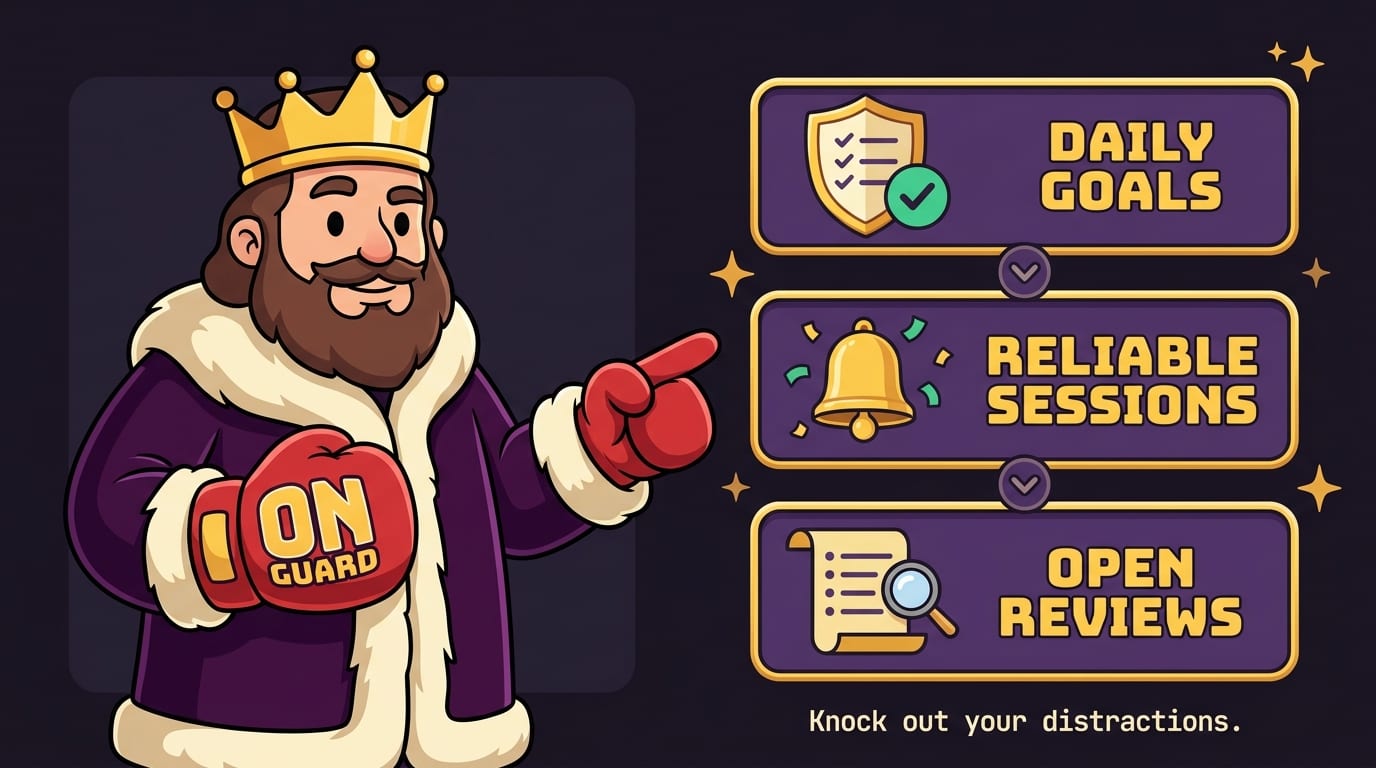
That is where tools like BlockChamp can help individuals and teams build better focus habits. BlockChamp is a gamified Chrome website blocker that lets users block distracting sites, keywords, and categories. Instead of treating focus like punishment, it turns it into a game with XP, levels, badges, reigns, and a gloriously judgmental mascot called The King. You can lead with trust by giving people autonomy over their attention while offering optional tools that help them defend the throne from YouTube, Reddit, TikTok, shopping sites, news spirals, and other tiny digital gremlins.
Step 5: Make Trust Visible Through Consistent Habits
Trust is not a poster in the break room. Trust is a pattern. Your team watches what happens repeatedly, especially under pressure. If you preach psychological safety during calm weeks but turn into a flaming cannonball during crunch time, people will believe the cannonball.
Consistency matters because it lets people predict how leadership will behave. Predictability lowers anxiety. Lower anxiety improves communication. Better communication prevents disasters from growing little villain mustaches.
Build these trust habits into your weekly rhythm:
- Weekly priorities recap: Share the top goals, what changed, and what did not.
- Decision log: Keep a simple record of major decisions and why they were made.
- No-surprise escalation: Encourage people to raise risks early without fear of punishment.
- Office hours: Create predictable time for questions, coaching, and unblockers.
- Meeting hygiene: Cancel meetings without a purpose, agenda, or decision needed. Be ruthless. Wear a tiny crown if necessary.
- Recognition rituals: Celebrate progress, not just heroic last-minute rescues.
Consistency is also crucial for personal productivity. People build trust in themselves when they keep promises to their own calendar. That is one reason BlockChamp uses streaks, or “reigns,” to make consistency visible. Every focused day earns progress. Every survived Stare-Down reinforces the habit. The point is not perfection; it is returning to the work instead of being kidnapped by the scroll goblin.
If you want a broader look at team focus and autonomy, read the freedom of an indistractable team. It connects beautifully with trust-based leadership because a focused team is not a controlled team. It is a team with clear priorities, fewer pointless interruptions, and stronger self-management.
Step 6: Create Psychological Safety for Truth, Not Just Polite Nodding
You cannot lead with trust if people are afraid to tell the truth. Psychological safety means people believe they can speak up, ask questions, admit mistakes, and challenge ideas without being humiliated or punished. It does not mean everyone gets a bubble wrap suit and unlimited praise cookies. It means candor is safe when offered respectfully.
Google’s well-known Project Aristotle research found that psychological safety was one of the most important factors in effective teams. You can read more about the findings in Google re:Work’s guide to effective teams. The short version: smart people do better work when they do not have to spend half their brain power managing fear.
To create psychological safety, leaders must model the behavior first. Say things like:
- “What am I missing?”
- “Who sees this differently?”
- “What risk are we not talking about?”
- “I made the wrong call here. Here is what I learned.”
- “Thank you for raising that early.”
The last one is especially powerful. If someone brings bad news and gets punished, congratulations: you just trained the team to hide fires until the building is doing interpretive dance. If someone brings bad news and gets thanked for surfacing it early, you build a culture where problems become solvable sooner.
Make disagreement normal. In meetings, ask for dissent before finalizing big decisions. Rotate who speaks first so the loudest person does not accidentally become the unofficial emperor of opinions. Invite written feedback before meetings to help quieter team members contribute without needing to elbow their way into the verbal boxing ring.
Trust grows when people learn that honesty is useful, not dangerous.
Step 7: Protect Attention Like It Is Company Property, Because It Basically Is
Trust and focus are best friends. Possibly roommates. If you lead with trust but allow constant interruptions, your team may feel respected in theory while being obliterated in practice. Attention is the raw material of knowledge work. Waste it carelessly, and performance drops faster than a dropped phone with no case.
The modern workplace is loaded with attention traps: chat notifications, meeting overload, email refresh loops, social media, “quick questions,” and the siren song of checking one tiny thing that becomes 37 minutes of algorithmic soup. Microsoft’s Work Trend Index has reported on the growing burden of digital communication and meetings; their insights on workplace productivity are worth reviewing in Microsoft’s Work Trend Index.
Leaders can protect attention by setting norms that make deep work possible:
- Create meeting-free blocks for focused work.
- Use async updates when a meeting is not needed.
- Define response-time expectations for chat and email.
- Encourage notification batching instead of instant reactivity.
- Let people block distraction-heavy sites during work sprints.
- Measure outcomes, not online presence.
This is where trust becomes practical. If you trust your team, you do not need them to be visibly available every second. You need them to make progress on meaningful outcomes. That might mean an engineer goes dark for two hours to solve a gnarly bug. A writer blocks social media to finish a draft. A student-worker uses a focus schedule to avoid YouTube during study hours. A remote employee shuts Slack for a deep work sprint and returns with actual work instead of 11 reactions and a mild headache.
BlockChamp supports this kind of self-directed focus. Users can block specific sites, enable categories like Social Media or Video & Streaming, and use a Master Focus Toggle when it is time to go “On Guard.” Champion users can set recurring focus schedules and use Hardcore Lockdown, which adds a cooldown timer or boxing-riddle mini-game before turning focus off. Is it ridiculous? Yes. Does ridiculous sometimes work better than another gray productivity dashboard? Also yes.

Step 8: Repair Trust Fast When You Dent the Crown
Even excellent leaders break trust sometimes. You miss a follow-up. You make a rushed decision. You communicate poorly. You get defensive. You schedule a meeting that could have been an email and everyone silently ages. The question is not whether trust will be damaged. The question is whether you repair it quickly.
Trust repair requires humility and specificity. A vague “sorry for any confusion” is not a repair. That is a fog machine wearing a name tag. Real repair sounds like:
“I changed the timeline without explaining the reason, and that created unnecessary stress for the team. I should have shared the customer escalation context earlier. Going forward, I will post timeline changes with the reason, impact, and next decision point in the project channel.”
That apology works because it includes:
- What happened.
- Why it mattered.
- What the leader owns.
- What will change.
Repair also means inviting feedback after the fix. Ask, “Is there anything else I should understand about the impact?” Then listen. Do not interrupt. Do not courtroom your way out of it. Do not explain for 12 minutes why your intentions were pure and your calendar was mean. Just listen, clarify, and act.
When leaders repair trust well, they often become more trusted than leaders who pretend they never make mistakes. Perfect leaders are suspicious. Human leaders who own their impact are easier to follow.
Common Trust-Killers That Sneak Into Workplaces Wearing Business Shoes
Some trust-killers are dramatic, like dishonesty or public blame. Others are quieter. They creep in through habits that seem harmless until the team starts acting guarded, disengaged, or suspicious.
Watch for these sneaky villains:
- Changing priorities without explanation. People can handle change. They struggle with mystery chaos.
- Rewarding urgency over quality. If every hero is the person who saves the burning project at midnight, people may start quietly setting fires.
- Asking for feedback and ignoring it. This teaches people that surveys are decorative.
- Micromanaging strong performers. Nothing says “I trust you” like inspecting every comma. Just kidding. It says the opposite.
- Allowing meeting bloat. A calendar packed with low-value meetings tells people their attention is not respected.
- Using productivity surveillance. Tracking activity instead of outcomes often reduces trust and encourages performance theater.
If employee performance is on your radar, BlockChamp has a related guide on how to improve employee performance without defaulting to old-school command-and-control tactics. Spoiler: clarity, focus, autonomy, and trust beat panic dashboards most days of the week.
The fix is not complicated, but it requires discipline. Stop measuring noise. Start measuring outcomes. Stop hoarding context. Start sharing it. Stop treating distraction as a personal moral failure and start designing work so people can actually concentrate.
A Practical 30-Day Plan to Lead With Trust
If you want to lead with trust but do not know where to start, use this 30-day plan. No ceremonial leadership cape required, though we support your fashion journey.
Week 1: Audit the Current Trust Level
Ask your team three simple questions, preferably anonymously if trust is already shaky:
- What helps you trust leadership right now?
- What makes trust harder?
- What is one habit we should change immediately?
Look for patterns. Do people mention unclear priorities? Too many interruptions? Lack of follow-through? Fear of speaking up? These answers are your map. Do not argue with the map.
Week 2: Clarify Outcomes and Decision Rights
Pick one active project and define the outcome, owner, decision rights, checkpoints, and definition of done. Share it with the team. Invite corrections. This one move can remove a shocking amount of friction because many workplace problems are just ambiguity wearing a fake mustache.
Week 3: Improve Communication Rhythm
Start a weekly update that includes priorities, decisions, risks, and changes. Keep it short. The goal is clarity, not a novella. If there is a major change, explain why. If there is uncertainty, say what is known, what is unknown, and when the next update will come.
Week 4: Protect Focus and Reinforce Autonomy
Introduce focus-friendly norms: meeting-free blocks, async updates, clear response expectations, and permission to use distraction blockers during deep work. Encourage people to experiment with focus systems that work for them. Some may use time blocking. Some may use Pomodoro. Some may install BlockChamp and let The King roast them away from Reddit. All valid paths to the throne.
At the end of 30 days, ask the same three trust questions again. Compare answers. Keep what works. Fix what does not. Repeat monthly. Trust is not a one-time workshop with stale cookies. It is a leadership practice.

Final Round: Trust Is Built by What You Repeat
To lead with trust, you do not need to become a flawless leadership wizard who floats into meetings glowing with emotional intelligence. You need to become consistent. Clear. Honest. Focus-protective. Willing to share context, own mistakes, and give people room to do the work they were hired to do.
Trust grows when leaders keep promises, communicate the why, empower people with boundaries, create psychological safety, and protect attention from the endless buffet of digital nonsense. It shrinks when leaders hide information, micromanage, reward chaos, or treat busyness like a personality trait.
And because trust also means trusting people to manage their own focus, give your team tools and norms that make deep work easier. If distraction is currently storming the castle, BlockChamp can help you knock out time-wasting sites with gamified blocking, XP, badges, focus streaks, and The King’s deeply unnecessary but highly effective Stare-Down.
Lead with trust. Defend the focus. Build the kingdom. And if someone tries to sneak into YouTube during deep work, well… The King sees all, champ.
Related posts

Benefits Of Productivity Tools

Finding Focus For Uninterrupted Writing

Using Ai Productively Without Losing Focus
