
How Focus Music Improves Concentration

Your brain has 37 tabs open, one of them is playing a mysterious song, and somehow you’re now watching a stranger restore a rusty toaster. If that sounds familiar, focus music may help. Understanding how focus music improves concentration starts with a simple idea: the right sound can make a distracting environment feel steadier, quieter, and easier to work in. It won’t magically turn a Tuesday afternoon into a montage of academic triumph, but a well-chosen soundtrack can support attention, improve your work routine, and help you get started.
The key is choosing music that works with the task rather than competing with it. Below, we’ll look at what research says, which sounds tend to help, when music can hurt, and how to build a practical listening routine for studying or deep work. We’ll also cover the part most playlists can’t handle: the browser tabs trying to lure you away from the throne.
Quick Answers
How focus music improves concentration: the basic idea
Focus music may improve concentration by giving your attention a consistent, predictable sound to settle around. In a noisy room, gentle background music can mask sudden noises such as conversations, hallway traffic, or someone announcing that they have “one quick question” and then opening a 40-minute presentation. A stable sound environment can make it easier to stay with a task.
Music can also become a routine cue. If you regularly press play before starting a study session, your brain may learn to associate that sound with work time. The music does not flip a secret productivity switch; the repeated ritual helps you move from “I should probably begin” to actually beginning. That first step is often the boss fight.
But music does not improve concentration in the same way for everyone or for every task. A quiet instrumental playlist may suit someone solving practice problems, while another person may do better with silence. Personal preference, task difficulty, environment, and the music itself all matter. Think of sound as a tool to test—not a universal law handed down from the royal playlist committee.
For a broader look at the topic, read BlockChamp’s guide to how music can help you focus. The useful takeaway is not “always listen to music.” It is “notice which conditions help you pay attention, then make those conditions easier to repeat.”
What the science says (and what it doesn’t)
Research on music and concentration is mixed, partly because “doing a task” covers a lot of different activities. Reading a dense textbook, sorting files, revising flashcards, and drafting a familiar email place different demands on attention and language. A soundtrack that helps with one task may distract from another.
One important factor is the competition for working memory—the mental workspace you use to hold and manipulate information. Lyrics can interfere with language-heavy tasks because your brain may try to process the words in the song while also reading, writing, or memorizing words. If you have ever tried to write an essay while your favorite chorus keeps taking over your inner monologue, you have met this problem in the wild.
Research reviews have explored how background music affects cognitive performance and found that effects vary by task and individual. The Frontiers in Psychology journal publishes research on music, attention, and cognition, including studies that examine why results are not one-size-fits-all. When reading research, look at the actual task and conditions studied; “music affects focus” is too broad to be useful on its own.
Music may also influence mood and arousal. A calm, familiar track can make a work session feel less unpleasant, while energetic music may help some people feel alert during repetitive tasks. That does not mean a dramatic movie soundtrack will make calculus easier. It may simply make the calculus feel like it has a larger budget.
There is no single scientifically certified “best concentration song.” Claims that a particular frequency, genre, or playlist will reliably boost everyone’s intelligence deserve a raised eyebrow. Treat music as an environmental aid: helpful for some situations, neutral or distracting in others.
Choose your soundtrack like a focus champ
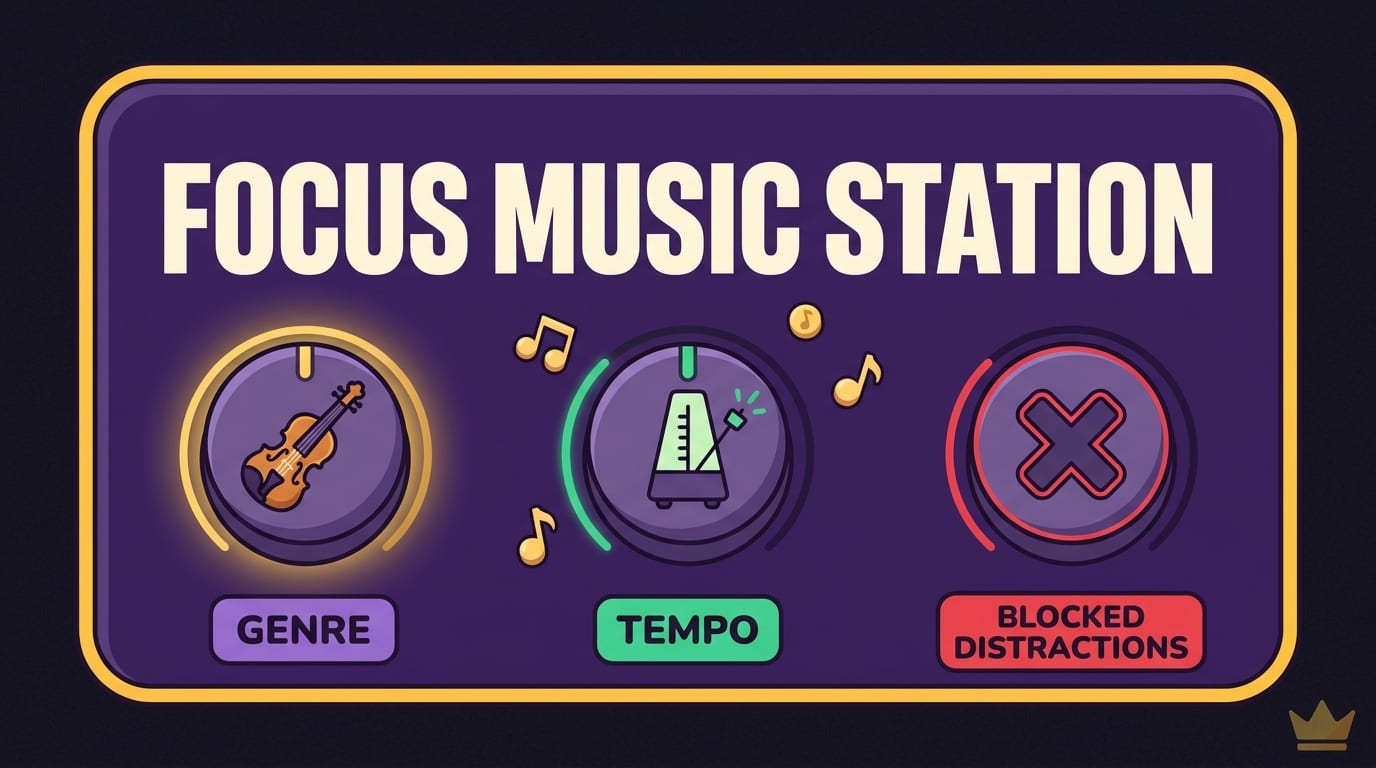
The best focus music is usually music that supports the work without demanding a starring role. Start with these characteristics and adjust based on how you respond:
- Few or no lyrics: Instrumental tracks are a sensible first choice for reading, writing, language learning, or memorization.
- Steady volume: Large changes in loudness can pull your attention toward the music.
- Predictable structure: Familiar music may be less distracting than a playlist full of surprising drops, dramatic pauses, and surprise bagpipes.
- Moderate energy: Pick a mood that fits the task. Calm does not have to mean sleepy, and energetic does not have to mean “boxing entrance music at maximum volume.”
- Low urge to skip: If you keep choosing the next track, the playlist has become another task.
Instrumental electronic music, ambient soundscapes, soft classical music, low-key jazz, and some game soundtracks can work well for people who like background sound. Nature sounds or plain noise may suit listeners who find melody distracting. None is automatically superior; your ears are part of the experiment.
Keep the volume low enough that the music sits behind the work. If you notice every instrument, lyric, or drum fill, lower it or try something simpler. Headphones can help block environmental noise, but they are not mandatory, and loud listening is not a productivity badge. Your hearing deserves a long reign too.

Match the music to the task, not just your mood
For reading and writing, start with instrumental or lyric-free audio. Language tasks already ask your brain to handle words, so adding sung lyrics may create competition. If you enjoy lyrical music, try it during a task that relies less on language, such as organizing notes, tidying your workspace, or completing familiar administrative work.
For repetitive tasks, a more upbeat playlist may help keep the session from feeling like a slow parade through Spreadsheet Kingdom. For demanding problem-solving, try quieter and less varied audio—or silence. When the task requires careful reasoning, it is worth testing whether music helps you sustain attention or merely makes the room feel nicer.
For studying, divide your work into clear blocks. Use instrumental music while reviewing a chapter, pause it when you need to recall material from memory, then play it again during a less demanding review activity. That gives you a practical comparison instead of relying on the vague feeling that “the playlist was good, I think.”
BlockChamp has more ideas for building a productive environment in its article about using music to support productivity. You can also explore how other habits affect attention in this guide to exercise and focus. Sound is one lever; movement, breaks, sleep, and a realistic plan are part of the same setup.
Build a simple focus-music experiment
Rather than hunting for the perfect playlist for three hours—a deeply ironic way to avoid work—run a small experiment. The goal is to find out what helps you focus on your actual tasks.
- Choose one task: Pick something specific, such as reading ten pages, completing a problem set, or drafting 300 words.
- Set a realistic work period: Try 25 to 45 minutes, depending on your task and attention span.
- Pick one sound condition: Use silence, instrumental music, or a consistent ambient track. Change only one thing at a time.
- Put the playlist on before starting: Avoid browsing for songs once the session begins.
- Notice the outcome: Did you finish the task? How often did your attention drift? Did you feel calmer, more alert, or irritated?
- Repeat on another day: One session can be affected by sleep, stress, hunger, or the fact that your neighbor has chosen today to learn the drums.
You do not need a complicated productivity spreadsheet. A quick note—“instrumental helped with reading; silence better for writing”—is enough to reveal patterns. You can also try a short work-and-break rhythm. After a focused block, stand up, stretch, get water, and decide deliberately whether the next block needs the same soundtrack.
For more practical concentration strategies, see BlockChamp’s guide to improving focus and concentration. It can help you pair audio with other useful habits rather than asking a playlist to carry the entire kingdom on its tiny musical shoulders.
When music distracts more than it helps
If music makes you feel focused but you keep rereading the same paragraph, trust the evidence from your work—not just the vibe. Background music can interfere when it is too loud, unfamiliar, complex, emotionally intense, or full of lyrics you want to sing along with. A playlist can also create extra decisions if you constantly skip, search, and fine-tune.
Silence may be a better option for tasks that require careful reading, complicated writing, memorization, or detailed reasoning. It may also help if you are already in a noisy or stimulating environment. Some people find that even quiet music becomes one more input to manage. That is not a personal failure; it is useful information.
Watch for signs that the sound is pulling you away from the task:
- You keep checking which song is playing or looking for the “perfect” track.
- You remember lyrics more clearly than the material you were studying.
- You turn the volume up whenever the work gets difficult.
- You feel more restless after listening, not less.
- You finish less work than you do in a quiet session.
If any of these sound familiar, try lowering the volume, choosing a familiar instrumental track, switching to a steady ambient sound, or working in silence. The crown does not require a soundtrack. It requires a plan you can actually follow.

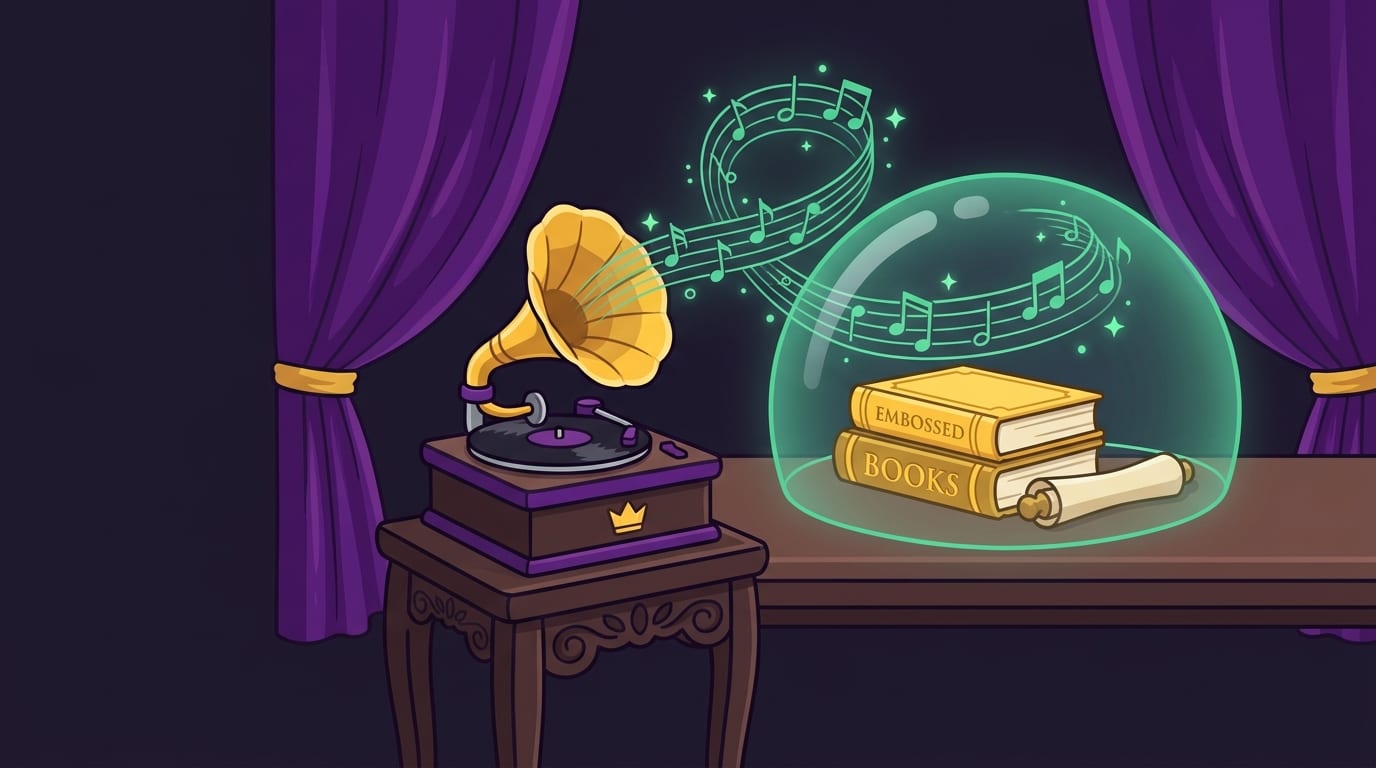
Music can help set the scene; it can’t block the scroll
Here is the sneaky limitation: a focus playlist cannot stop you from opening social media “for one second.” The music may make the work environment more comfortable, but it cannot remove the browser tab that is quietly offering you fresh memes, breaking news, shopping carts, and a video titled “You won’t believe what happened next.” That tab has the discipline of a raccoon near an unlocked pantry.
Make distraction harder to reach before your session begins. Close unnecessary tabs, silence non-urgent notifications, put your phone out of arm’s reach, and write down the next concrete action. “Study biology” is fuzzy. “Answer questions 1–5 on cell structure” gives your attention a target.
For Chrome users, BlockChamp can add a useful boundary by blocking selected distracting websites, categories, or—on its Champion plan—keywords during focus time. Its one-toggle setup makes it easy to put blocks on guard, while its XP, levels, badges, and reigns turn consistent focus into visible progress. If you try to visit a blocked site, The King’s Stare-Down provides a humorous reminder to return to the task. It is not music software; it is the bouncer standing beside your carefully chosen playlist.
BlockChamp is available as a Google Chrome website blocker at blockchamp.app. The free tier supports up to three blocked sites and two categories, with the core gamification system included. The point is not to block the whole internet forever. It is to protect the work session you chose to have.
Create a repeatable study ritual
A good focus routine should be easy to start and flexible enough to survive real life. Try this simple sequence:
- Decide what “done” means for the next work block.
- Prepare your materials and remove unrelated browser tabs.
- Choose music—or silence—based on the task.
- Set a timer for a manageable stretch of focused work.
- Keep your phone and tempting websites out of easy reach.
- Take a short break when the block ends, then choose the next task.
Repeat the same opening steps for a week and notice whether it becomes easier to begin. Familiar music can serve as a cue, but the routine should not depend on owning a specific playlist or having perfect headphones. If your earbuds run out of battery, your reign is not over. Work can still happen in silence, in a library, or with the gentle soundtrack of a ceiling fan trying its best.
Make the routine kind to your attention. If you are exhausted, a playlist is not a substitute for rest. If the task is too large, break it down. If you are repeatedly interrupted, change the environment where possible. Focus improves through a combination of conditions, not through one magical audio setting.
The takeaway: let the music serve the work
Focus music can improve concentration by masking distracting noise, supporting a steady work ritual, and shaping the mood of a session. It works best when it suits the task, stays in the background, and does not demand constant attention. Instrumental, familiar, moderate-volume tracks are a practical starting point; silence is a perfectly respectable competitor.
Test your options with real work, not just a playlist preview. Notice what you finish, how often you drift, and whether the sound helps you return to the task. Then combine the soundtrack with a clear goal, a short work block, and fewer digital distractions.
Pick one task, choose one sound, and begin. If the music helps, keep it. If it turns your study session into a private concert, switch it off. And if the browser keeps summoning you to the kingdom of endless scrolling, let BlockChamp help guard the gates. Long live your focus, champ.
Related posts

Protecting Your Attention From The Internet

How To Write 50000 Words With Focus

Finding Focus To Pursue Big Goals
