
Productivity Hack How Exercising Improves Your Focus

Your brain is not a browser tab, but wow does it act like one. Twelve tabs open, three playing audio, one mysterious process melting the CPU, and somewhere in the chaos you’re supposed to write the report, study the chapter, finish the design, or answer the email without accidentally spending 47 minutes watching a raccoon wash grapes.
Here’s the productivity hack how exercising improves your focus in plain English: moving your body changes your brain state. It boosts blood flow, wakes up attention networks, improves mood, reduces stress, and gives your restless nervous system something useful to do besides begging for TikTok like a tiny dopamine goblin. Exercise is not just “good for you” in the vague poster-on-a-school-gym-wall sense. Used correctly, it becomes a focus switch.
Even better: you do not need to become a monk, marathoner, or protein-shaker influencer named Chadwick. Short walks, quick strength circuits, mobility breaks, stair sprints, and five-minute movement snacks can all help you sharpen concentration. Pair that with a distraction shield like BlockChamp—the gamified Chrome website blocker where The King roasts your attempts to open distracting sites—and you’ve got a one-two punch: your body primes the brain, and your browser stops handing you shiny digital bananas.
Quick Answers
The Science Bit: Why Exercise Makes Your Brain Less Potato
Exercise improves focus because it affects several systems involved in attention, memory, motivation, and emotional regulation. That sounds fancy. Translation: movement helps your brain stop wandering into the swamp.
When you exercise, your heart pumps more blood, delivering oxygen and nutrients throughout the body, including the brain. Physical activity also influences neurotransmitters such as dopamine, norepinephrine, and serotonin—chemicals involved in alertness, motivation, and mood. This is one reason a brisk walk can make you feel like a functioning citizen again after a slump.
Research has repeatedly linked physical activity with better cognitive performance. The CDC notes that physical activity can improve brain health, including thinking, learning, and judgment skills. Harvard Health also explains that regular exercise may support memory and thinking by reducing insulin resistance, inflammation, and encouraging growth factors in the brain; see Harvard Health’s overview of exercise and cognition.
There’s also the “acute exercise” effect: one workout can improve attention and executive function shortly afterward. A review published in the British Journal of Sports Medicine found evidence that physical activity can benefit cognitive function across different age groups. You do not need to wait six months to feel the focus benefits. Sometimes the brain upgrade starts after one brisk walk around the block. The pigeons may judge you, but your prefrontal cortex applauds.
The key takeaway: exercise is not separate from productivity. It is productivity infrastructure. Your calendar, task app, and caffeine shrine all work better when your nervous system is not being slowly pickled by sitting still for eight hours.
The Productivity Hack How Exercising Improves Your Focus: Timing Is the Secret Sauce
The best workout for focus is not always the hardest workout. It is the workout placed at the right time for the job you need your brain to do. Timing turns exercise from “healthy thing I should probably do” into a tactical focus weapon.
Use these timing windows like a champion, not like a chaos raccoon:
- Before deep work: Do 10–25 minutes of moderate movement to boost alertness before writing, coding, studying, or planning.
- During an afternoon crash: Use a 5–12 minute movement break instead of immediately summoning your fourth coffee.
- After stressful meetings: Walk for 10 minutes to clear adrenaline and reduce mental residue.
- Before learning: Do light cardio before study sessions to improve readiness and memory encoding.
- After work: Train to decompress so your brain stops dragging work stress into your evening like a soggy royal cape.
For most people, moderate exercise before a focus block works better than a brutal workout that leaves you spiritually horizontal. If your “quick pre-workout session” turns into leg day so intense you need a forklift to reach your desk, congratulations, you’ve defeated focus by uppercutting your own nervous system.
A good rule: before mentally demanding work, aim for movement that leaves you energized, not demolished. You should finish thinking, “I’m awake and ready,” not “Tell my spreadsheet I loved it.”
Morning Movement: Put the Crown on Before the Scroll Attacks
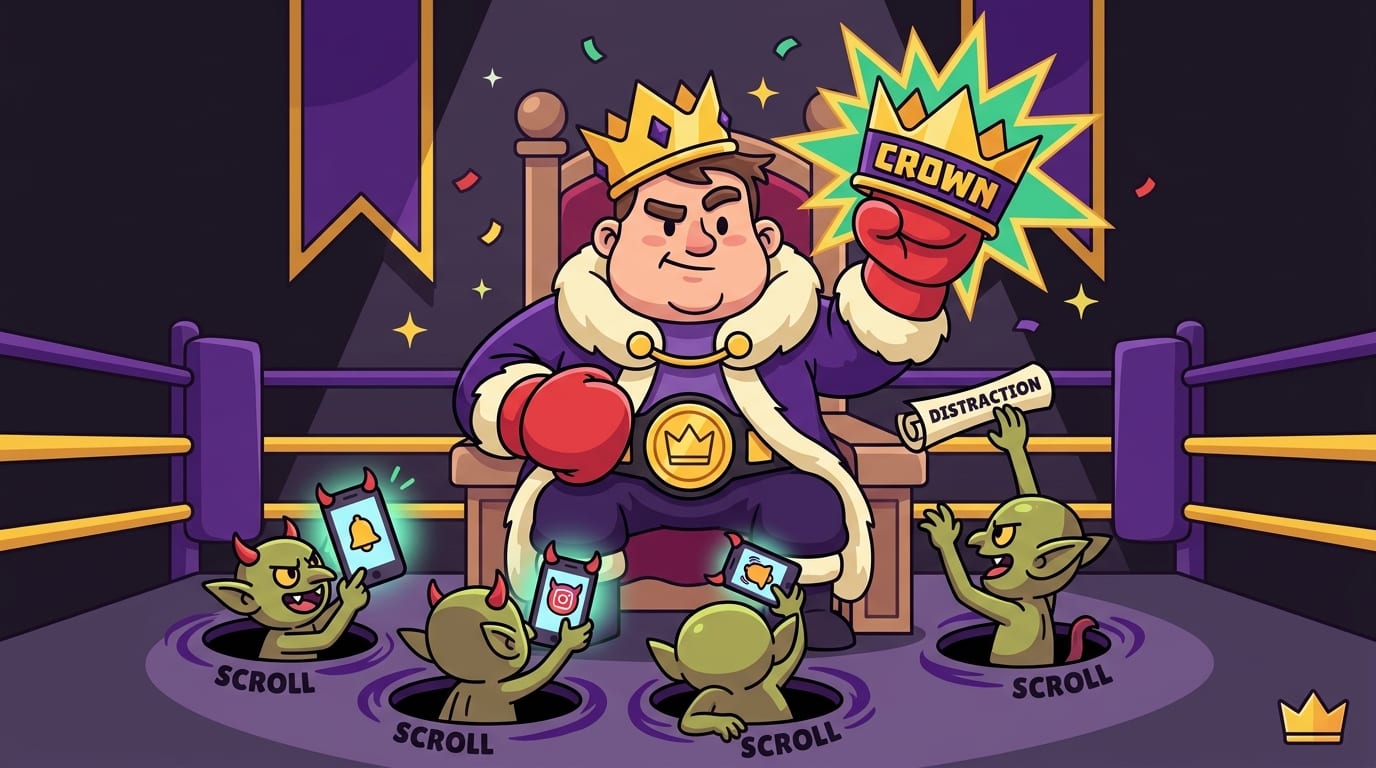
Morning exercise is powerful because it sets the tone before your attention gets mugged by notifications, email, and the cursed little red badges of doom. Even a short routine can tell your brain: “We are in charge today. The kingdom has standards.”
You do not need a 90-minute workout at dawn while inspirational violins play. Try this 12-minute morning focus primer:
- Two minutes of easy marching, jumping jacks, or brisk walking.
- Two minutes of bodyweight squats.
- Two minutes of push-ups against a wall, desk, or floor.
- Two minutes of reverse lunges or step-ups.
- Two minutes of shoulder circles, hip openers, and spinal rotations.
- Two minutes of slow breathing while standing tall like you own a tiny productivity kingdom.
After that, start your first focused task before checking social media. This is crucial. If you exercise and then immediately open an app designed by attention scientists to vacuum your soul through your eyeballs, you’ve basically polished the throne and invited a raccoon to govern.
This is where BlockChamp fits beautifully. Before your workout, turn on the Master Focus Toggle so distracting sites are blocked when you return. If your post-exercise brain tries to “just check YouTube for one second,” The King appears with The Stare-Down and reminds you that your reign is not being sacrificed for a thumbnail of someone eating 40 tacos in a bathtub.
If you want more on the movement-focus connection, BlockChamp already has a helpful companion read: 5 ways to improve your focus and productivity with exercise. Consider this article the strategy map; that one is another royal training manual.
Workout Intensity: Don’t Confuse “Effective” With “Near-Death Jazz Hands”
Exercise improves focus best when the intensity matches the task and your fitness level. More pain does not automatically equal more productivity. We are training the brain, not auditioning for a medieval punishment festival.
Here’s a simple intensity guide:
Low intensity: walking, stretching, gentle cycling
Low-intensity movement is ideal when you feel mentally stuck, anxious, or overloaded. It helps you think without spiking fatigue. Walking is especially underrated. A Stanford study found that walking can increase creative output, which is excellent news for anyone whose best ideas arrive somewhere between “mailbox” and “why is that dog wearing a sweater?” You can read the study summary from Stanford News on walking and creativity.
Moderate intensity: brisk walking, easy jogging, light circuits
This is the sweet spot for many focus sessions. You breathe harder, warm up, and feel alert, but you can still form sentences afterward. Use moderate intensity before deep work, studying, or long planning sessions.
High intensity: sprints, HIIT, heavy lifting
High-intensity workouts can be excellent for health and mood, but place them carefully. Some people feel laser-focused afterward; others feel like a bag of laundry with opinions. If you love intense training, schedule it before less cognitively demanding work or give yourself a cooldown buffer before tackling complex tasks.
The goal is not to become an elite athlete. The goal is to reliably shift your brain from fog mode to focus mode. If your workout helps you sit down and do the thing, it worked. If it makes you lie on the floor bargaining with gravity, maybe adjust.
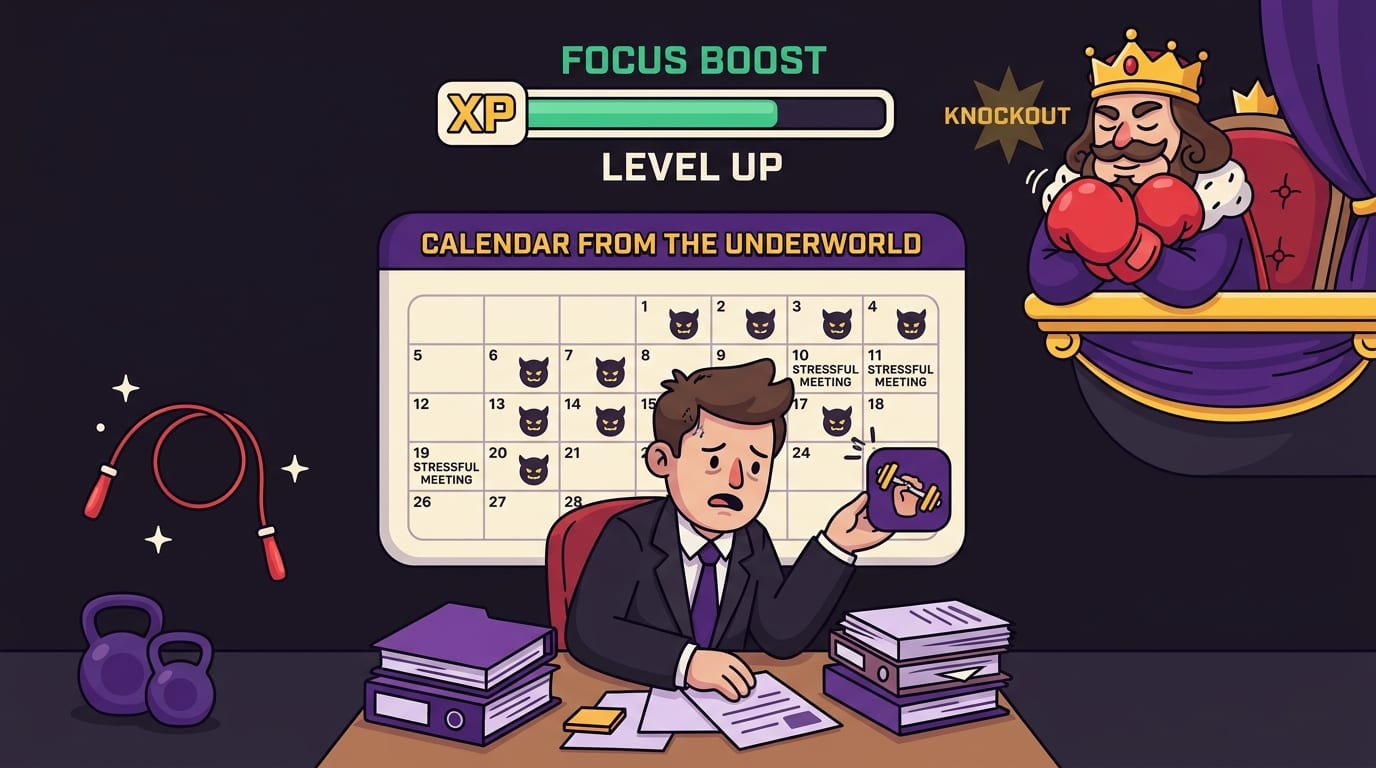
Movement Snacks: Tiny Workouts for People With Calendars From the Underworld
Not everyone can disappear for a full workout during the day. Meetings multiply. Deadlines hiss from the shadows. Someone starts a Slack thread with “quick question” and now your afternoon belongs to the empire. Enter movement snacks: short bursts of exercise sprinkled throughout the day.
Movement snacks are ideal because attention naturally fluctuates. Instead of forcing yourself through a two-hour focus block while your brain leaks out your ears, you reset with a quick physical interruption.
Try these 3–5 minute drills:
- 20 bodyweight squats + 10 desk push-ups + 30 seconds of deep breathing.
- Walk up and down stairs for three minutes.
- Do 10 lunges per side, then stretch your hip flexors.
- Set a timer and walk outside for five minutes without your phone.
- Do 60 seconds each: jumping jacks, plank, shoulder rolls, calf raises.
These mini-sessions work especially well between Pomodoro cycles. Work for 25 or 50 minutes, then move for five. The movement clears restlessness; the timed structure prevents “break time” from mutating into “I watched 18 product reviews for a blender I don’t own.”
If your breaks tend to become scroll portals, use BlockChamp to block your known traps during work hours. The Social Media, Video & Streaming, News, Shopping, Gaming, Gambling, Adult, and AI Distractions categories let you block entire classes of temptations. Free users can enable two categories; Champion users can guard the whole kingdom. Tiny workout, big boundary, no peasant nonsense.
Exercise, Stress, and the Focus Tax You Didn’t Know You Were Paying
Stress is a focus thief wearing a fake mustache. It eats working memory, makes distractions more tempting, and turns simple tasks into emotional boss fights. When your body is stressed, your brain looks for quick relief. Hello, doomscrolling. Hello, random snack quest. Hello, “I’ll just check Reddit,” the ancient phrase carved above the gates of procrastination.
Exercise helps because it gives stress a physical exit ramp. According to the American Psychological Association, exercise can help manage stress and improve mood. Movement burns off tension, improves sleep quality for many people, and provides a sense of control. That sense matters. A focused person is not someone who never feels stress; it’s someone who has a plan when stress shows up with cymbals.
Use this “stress-to-focus” reset when you’re mentally fried:
- Close the laptop or step away from the screen.
- Walk briskly for 10 minutes, preferably outside.
- During the last two minutes, breathe slowly: inhale for four counts, exhale for six.
- Return and write down the next physical action: “Open document,” “solve problem 1,” “reply to Alex.”
- Set a 25-minute timer and begin.
The final step is important. Exercise creates momentum, but you must aim it. Otherwise you come back energized and accidentally reorganize your desk drawers by emotional significance. Noble? Perhaps. Useful? Debatable.
If procrastination has deeper roots than “I’m tired,” check out 3 psychological factors negatively impacting your productivity. Exercise helps, but knowing the mental traps makes you harder to ambush.
The Best Focus Workouts for Students, Creators, and Remote Workers
Different brains, different battlegrounds. The productivity hack how exercising improves your focus works best when you match the routine to your environment and workload.
For students: the pre-study activation routine
Before a study block, do 10 minutes of moderate movement. Try five minutes of brisk walking, then five minutes of squats, wall push-ups, and lunges. Then sit down with one clear goal: “Review biology chapter 4,” not “study,” which is a foggy little goblin of a task.
Use BlockChamp to block YouTube, TikTok, Reddit, and streaming sites during study hours. The Stare-Down is especially useful when your brain tries the classic student maneuver: “I need to research this topic,” followed by “Why am I watching a 2012 compilation of people falling off treadmills?”
For creators: the idea walk
If you write, design, edit, compose, or build, walking can loosen ideas. Go for a 15–30 minute walk without consuming content. No podcasts. No videos. Let your brain wander productively. Boredom is not the enemy; it is the workshop where ideas take off their shoes and get comfortable.
Creators often struggle with switching between inspiration and distraction. If that’s you, read productivity, procrastination, and focus for creatives. Then build a routine where movement fuels ideas and your blocker protects execution.
For remote workers: the meeting detox
Remote work can glue you to a chair until your spine files a complaint. After long video calls, take a five-minute movement break before opening another task. Try shoulder mobility, a short walk, and 10 slow squats. It clears the mental residue of “circle back” and “let’s align.”
For remote workers, BlockChamp’s recurring schedules are useful. Set blocks Monday through Friday during work hours so your focus guard is automatic. The King stands on duty while you work. If you attempt to wander into X/Twitter mid-spreadsheet, royal judgment arrives. Fair? Yes. Funny? Also yes.
Pair Exercise With Digital Boundaries or the Algorithm Wins the Belt
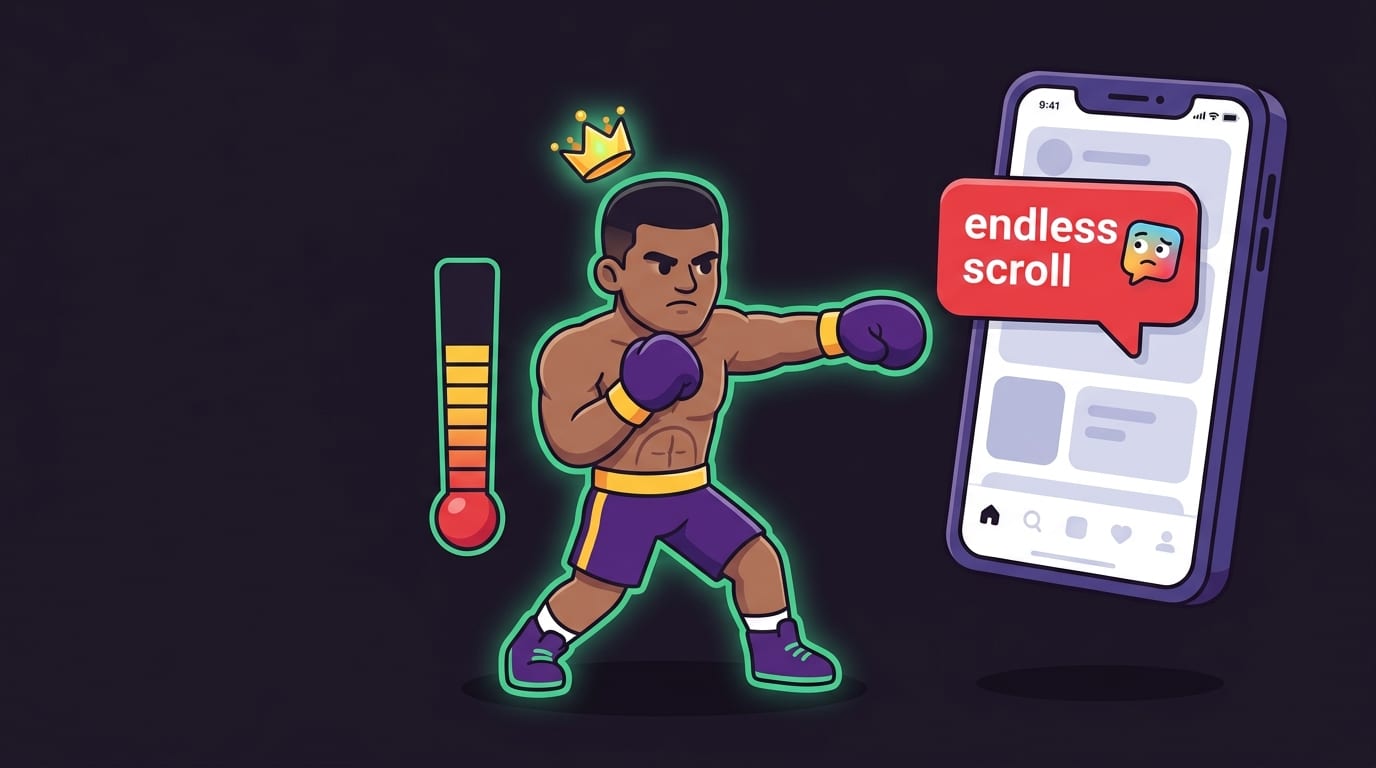
Exercise improves your brain state, but it does not delete the internet’s business model. Social platforms, streaming feeds, news sites, shopping apps, and AI tools are built to pull attention. If you finish a focus-boosting workout and return to a browser full of temptations, you are walking into the ring wearing a crown made of nachos.
This is why exercise and website blocking are such a strong combo. Movement handles the internal state; blocking handles the external environment.
Here’s the practical stack:
- Move first: Do 5–20 minutes of exercise before an important work block.
- Block second: Turn on BlockChamp and block your top distractions.
- Define the task: Write one outcome for the session.
- Work in a timed sprint: Use 25, 50, or 90 minutes depending on task difficulty.
- Move again: Take a short movement break before your next sprint.
This prevents the most common productivity failure: relying on motivation in an environment designed to mug motivation in an alley. Motivation is nice. Systems are better. A brisk walk plus BlockChamp is a system. Your distracted monkey brain may protest, but The King has gloves.
If social media is your main attention villain, you may also enjoy quitting Twitter for focus and productivity. Sometimes the best workout for focus is a walk. Sometimes it is not letting a rage-feed use your frontal lobe as a chew toy.

A 7-Day Exercise-and-Focus Plan You Can Actually Follow
Let’s make this practical. Here is a simple seven-day plan designed for focus, not athletic glory. No complicated equipment. No ceremonial leggings required.
Day 1: The baseline walk
Walk briskly for 15 minutes before your first deep work session. Block your top three distracting sites. Notice how you feel for the next hour. Track your energy, focus, and urge to procrastinate.
Day 2: The movement snack experiment
Do three five-minute movement breaks during the day. One mid-morning, one after lunch, one mid-afternoon. Use squats, stairs, or walking. Keep your phone away during breaks. Yes, away. The phone can survive without you. It is dramatic but resilient.
Day 3: The pre-study or pre-work circuit
Do a 12-minute circuit: squats, push-ups, lunges, plank, and stretching. Then start a 50-minute focus sprint with BlockChamp active. If you hit a blocked site, count that as a win: you caught the impulse and survived the stare-down.
Day 4: The recovery focus day
Keep exercise light. Walk 20 minutes or stretch for 15. Use this day to prove that consistency matters more than intensity. The crown is built with small bricks, champ.
Day 5: The creative walk
Take a 20-minute walk with no audio. Bring one question: “What is the next step in my project?” Let your mind roam. When you return, write down three ideas and act on the easiest one.
Day 6: The stress reset
When you feel the urge to procrastinate, do the 10-minute stress-to-focus reset: walk, breathe, write the next action, start a timer. This trains your brain to respond to discomfort with movement instead of scrolling.
Day 7: The reign review
Review what worked. Which workout timing helped most? Which distractions attacked hardest? In BlockChamp, check your focus hours, stare-downs survived, XP, and reign. Celebrate the data. You are not guessing anymore; you are training.
Repeat the plan, adjusting duration and intensity. Add harder workouts if they help. Reduce intensity if you feel drained. The best plan is the one you’ll actually do when life gets weird and your calendar starts making villain noises.
Common Mistakes That Ruin the Exercise-Focus Magic
Exercise is powerful, but humans are talented at turning useful things into bizarre rituals. Avoid these focus-sabotaging mistakes.
- Going too hard before deep work: If your workout crushes you, your focus block becomes a recovery nap with punctuation.
- Checking your phone during breaks: A movement break plus doomscrolling is just cardio for your thumbs.
- Being inconsistent: One heroic workout per month will not fix daily distraction. Small and frequent wins.
- Skipping cooldowns: Two minutes of slow breathing can help transition your body from motion to concentration.
- Using exercise to avoid work: “I can’t start until I complete the perfect workout routine” is procrastination wearing running shoes.
The fix is simple: make movement short, repeatable, and tied to work triggers. Before writing: walk. After meetings: stretch. Afternoon slump: stairs. Before studying: circuit. Before surrendering to the scroll: let BlockChamp catch you at the gate and let The King deliver the royal eyebrow.
Final Bell: Move Your Body, Guard Your Browser, Defend the Throne
The productivity hack how exercising improves your focus is not magic. It is biology plus timing plus environment. Exercise wakes up your brain, regulates stress, boosts mood, and gives restless energy somewhere to go. But focus really starts to stick when you pair that better brain state with better boundaries.
So here’s your next move: pick one tiny workout and attach it to one important work block tomorrow. Ten-minute walk before studying. Five-minute circuit before writing. Stair sprint before email. Then block the sites most likely to ambush you. Let movement sharpen the sword, and let BlockChamp guard the castle door.
If you want a fun, non-boring way to stop wasting time online, try BlockChamp for Chrome. You’ll block distracting websites, earn XP, build your reign, collect badges, and occasionally get roasted by The King when you try to sneak into YouTube like a guilty little peasant. Long live your focus. Defend the throne. Crush the scroll.
Related posts

Meditation For Productivity

Finding Freedom Focus Adhd Coach Weighs

Finding Freedom Focus Adhd Coach Weighs
