
Finding Focus For Meaningful Work

Finding focus for meaningful work sounds noble, doesn’t it? Like you’re about to light a candle, open a leather notebook, and produce genius while a choir hums softly in the background. In reality, you sit down to do the important thing, open one “quick” tab, and 47 minutes later you’re watching a raccoon steal cat food from a porch camera. The raccoon is thriving. Your meaningful work is not.
The good news: focus is not a magical personality trait reserved for monks, chess grandmasters, and that one suspiciously calm person at the coffee shop. Focus is a system. You can build it with better goals, smarter routines, fewer digital ambushes, and a work environment that doesn’t behave like a clown car full of notifications.
This guide is your practical, no-fluff playbook for finding focus for meaningful work: how to define what matters, protect deep work time, design habits that stick, defeat distractions, and use tools like BlockChamp to keep the scroll-goblins outside the castle walls. Crown on. Gloves up. Let’s defend the throne.
Quick Answers
Why Finding Focus for Meaningful Work Feels So Ridiculously Hard
If focus feels harder than it used to, you are not broken. You are simply trying to do serious thinking inside an attention casino.
Modern apps are designed to pull you back. Social feeds refresh endlessly. Video platforms auto-play. News sites dangle panic like a shiny worm on a hook. Even work tools can become distraction machines: Slack pings, email threads, shared docs, calendar alerts, and the dreaded “quick question” that arrives wearing tiny little productivity shoes but secretly carries a flamethrower.
Research backs up what your frazzled brain already knows. A widely cited study from the University of California, Irvine found that after interruptions, it can take more than 20 minutes to return to the original task. You can read more about Gloria Mark’s research on attention and workplace interruptions via this study on the cost of interrupted work. That means one innocent notification can leave a crater in your morning.
And then there’s the internet itself. According to DataReportal’s Digital 2024 Global Overview Report, people spend an average of more than six hours per day online globally. Not all of that is bad, of course. The internet gives us knowledge, connection, memes, and the ability to learn how to fix a sink at 1:12 a.m. But without boundaries, it turns meaningful work into confetti.
Finding focus for meaningful work starts with accepting one truth: willpower alone is a terrible bodyguard. It gets tired. It negotiates with YouTube. It says, “Maybe one Reddit thread will help me warm up.” Spoiler: it will not. You need structure.
First, Decide What “Meaningful Work” Actually Means
You cannot focus on meaningful work if everything is labeled “important.” That is how your task list becomes a haunted scroll of doom.
Meaningful work is work that moves something important forward. It usually has one or more of these qualities:
- It contributes to a long-term goal, not just a short-term reaction.
- It requires thinking, creativity, judgment, or problem-solving.
- It creates value beyond the moment you complete it.
- It aligns with your identity, values, career, craft, studies, or mission.
- It is often easy to avoid because it feels uncertain, difficult, or emotionally loaded. Rude, but true.
For a student, meaningful work might be studying for finals, writing a thesis, or building a portfolio. For a freelancer, it might be client strategy, outreach, or creating a signature offer. For a writer, it might be drafting the chapter instead of reorganizing the chapter folder for the tenth time like a tiny librarian with commitment issues.
If you’re a creator or writer trying to move from “I dabble” to “I do this seriously,” you may enjoy our post on finding focus to become a full-time writer. It digs into the messy, glorious battle of making creative work non-negotiable.
Try this simple filtering question each morning: What would make today meaningful if I completed it? Not “What would make me feel busy?” Not “What would make my inbox slightly less feral?” Meaningful.
Then write down one to three focus targets. Keep them specific. “Work on project” is a fog machine. “Draft 800 words of the proposal introduction” is a target. “Study biology” is mush. “Complete 30 flashcards and summarize chapter 8” is usable.
Set Goals Like a Strategist, Not a Panicked Squirrel
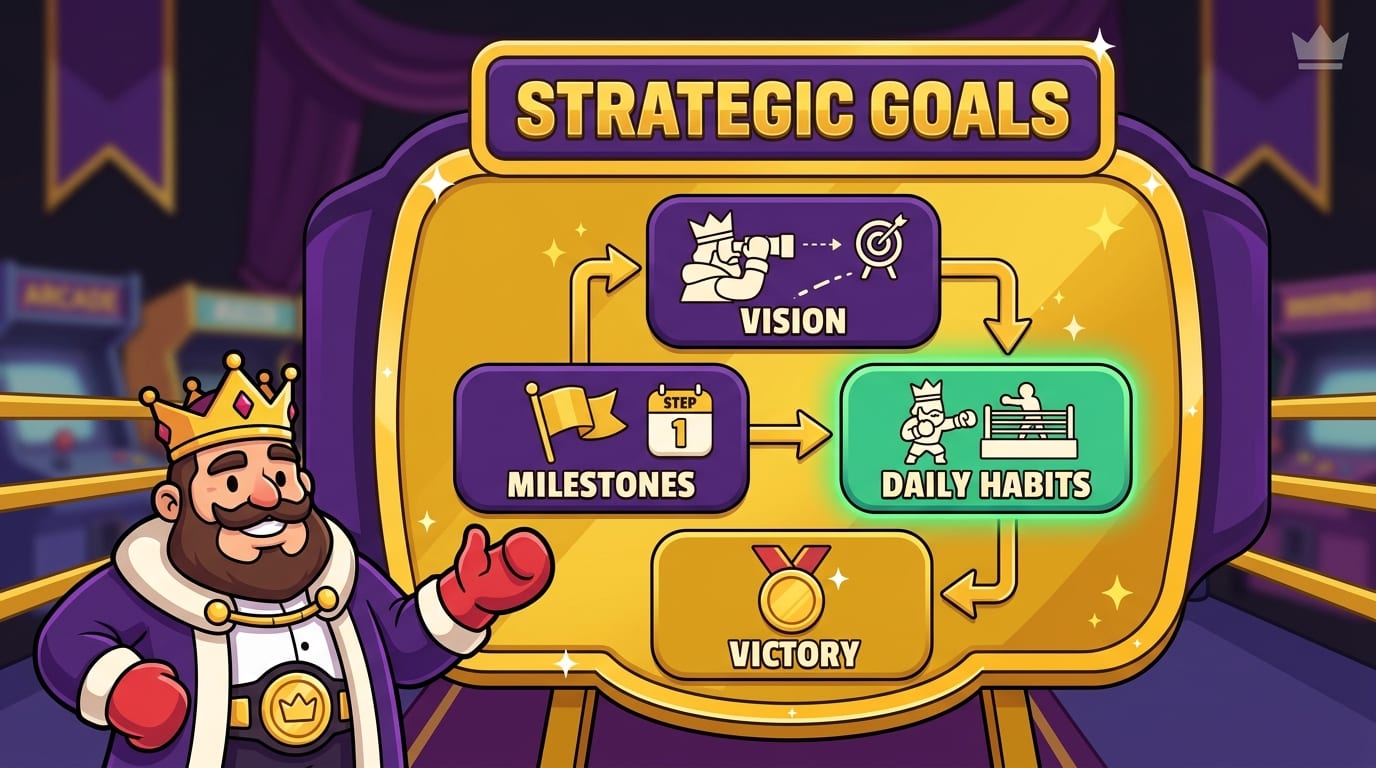
Goal-setting is where many focus plans either become powerful or collapse into decorative nonsense. The problem is not that people lack ambition. The problem is that ambition often arrives as a giant vague blob: “be more productive,” “write more,” “study harder,” “build my business,” “stop wasting time.” These sound good, but your brain cannot execute fog.
Use layered goals instead:
- Outcome goal: What result do you want? Example: “Finish the first draft of my research paper by March 30.”
- Process goal: What repeated action creates that result? Example: “Write for 90 minutes Monday through Friday.”
- Session goal: What will you do today? Example: “Draft the literature review section from sources 1–5.”
This is how you turn a mountain into stairs. Still sweaty, but less spiritually insulting.
For finding focus for meaningful work, the session goal matters most. Before each focus block, define:
- The task you will complete or advance.
- The amount of time you will protect.
- The “done” condition for the session.
- The distractions you will block before starting.
Here’s an example:
“From 9:00 to 10:30, I will outline section two of the client strategy deck. Done means I have five slide titles, bullet points for each, and three data sources added. I will block social media, news, video, and shopping sites before I start.”
Notice the difference? That is not a wish. That is a royal decree. The crown approves.
Time-Block Your Deep Work Before the Day Starts Swinging Chairs
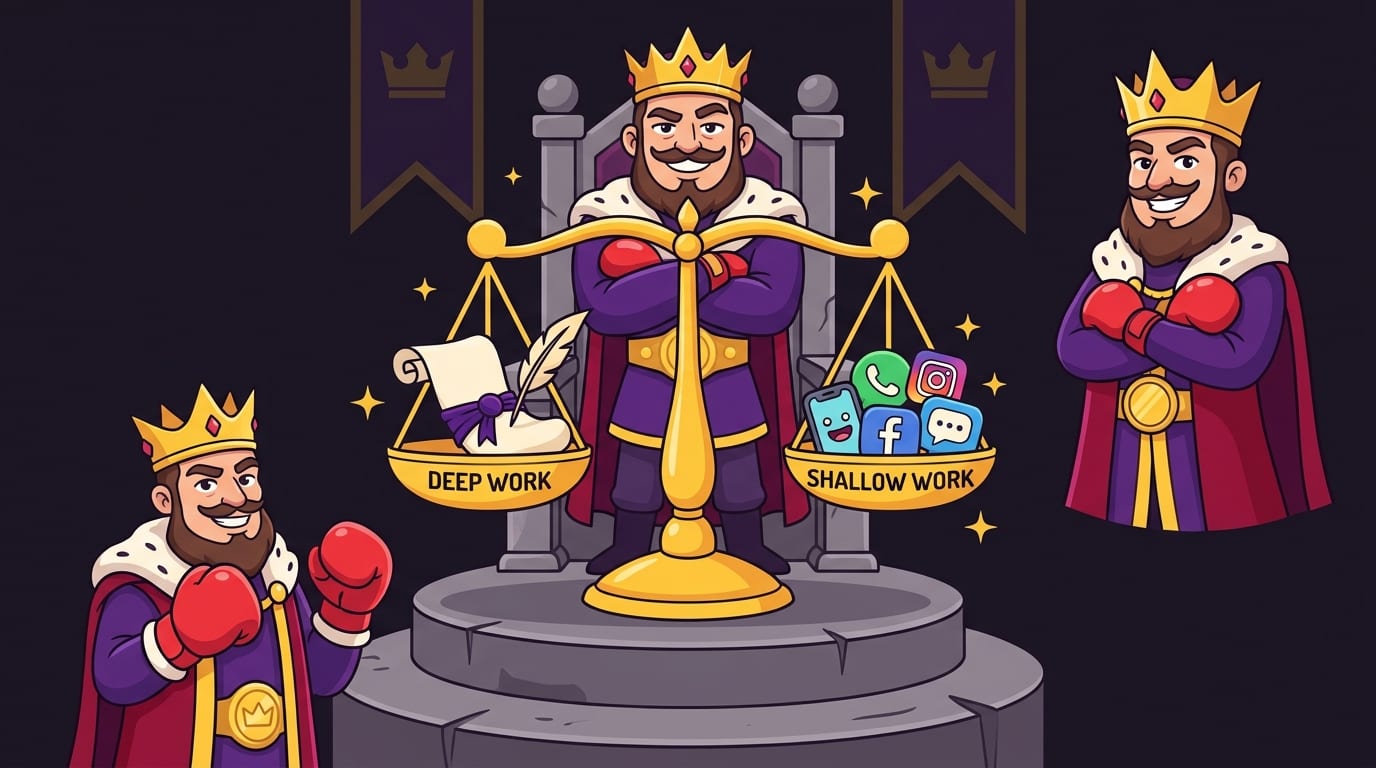
Time-blocking is one of the most effective ways to protect meaningful work because it turns focus from “I’ll get to it later” into “this has a home on the calendar.” And if meaningful work does not have a home, it becomes a couch-surfer in your schedule, sleeping under a pile of email.
Cal Newport popularized the idea of deep work: cognitively demanding work performed in a distraction-free state. His book and writing have influenced countless professionals who want to do better thinking in a noisy world. You can explore his overview of the concept on Cal Newport’s writing page.
To use time-blocking well, don’t just schedule tasks. Schedule energy. Most people have a few hours a day when their brain is sharper. For many, that’s morning. For others, it’s late evening after the world stops demanding snacks, status updates, and emotional tech support.
A simple deep work time-blocking routine
- Pick one daily focus window of 60 to 120 minutes.
- Choose one meaningful task before the block begins.
- Close unrelated tabs and apps.
- Put your phone away, ideally in another room, because “face down on desk” is just temptation wearing a tiny hat.
- Use a blocker to cut off your known escape routes.
- Work until the timer ends, then take a real break.
This is where BlockChamp fits beautifully. With its Master Focus Toggle, you can put your blocks “On Guard” before a session. If you use Champion features, you can set recurring Focus Schedules, such as weekdays from 9 a.m. to noon, so The King automatically stands guard while you do the work that actually matters. No dramatic ceremony required. Just block, focus, reign.
If you’re working in academia or research, focus can get especially slippery because the work is complex, open-ended, and full of rabbit holes disguised as “background reading.” For a deeper example, check out our post on finding focus as a professor and author.
Design Your Environment So Distraction Has to Work for It
Your environment is either helping you focus or quietly handing your attention to TikTok in a velvet pouch.
Behavior design expert BJ Fogg emphasizes that behavior happens when motivation, ability, and prompts converge. His model is explained by the Fogg Behavior Model. For focus, this means you should make good behavior easier and distracting behavior harder. Do not rely on heroic self-control when you can simply remove the banana peel from the floor.
Here are practical environmental tweaks that make finding focus for meaningful work much easier:
- Use a clean launch pad: Keep only the tools needed for the task visible. If you’re writing, open the document and research notes. Not email. Not six dashboards. Not “just in case” tabs.
- Create a focus playlist: Use the same instrumental playlist or background sound for deep work. Over time, it becomes a cue: “Ah yes, we are entering the productivity dungeon.”
- Move your phone: Out of reach is better than face down. Another room is better than out of reach. Inside a locked box guarded by a dragon is ideal, but zoning laws vary.
- Block your obvious traps: If YouTube, Reddit, Instagram, X, news, shopping, or AI chat tools hijack your sessions, block them before you start.
- Use full-screen mode: Reduce visual clutter. Your brain is easily startled by shiny things. Treat it kindly.
BlockChamp’s category blocking is useful here because distractions rarely travel alone. You may start by blocking one site, but your brain is a crafty little raccoon. If YouTube is blocked, it will try Reddit. If Reddit is blocked, it will try news. If news is blocked, it will suddenly need to check the price of air fryers. Category bundles let you block entire kingdoms of nonsense: Social Media, Video & Streaming, News, Shopping, Gaming, Gambling, Adult, and AI Distractions.
That last one matters. AI tools can be useful, but they can also become a productivity-shaped escape hatch. If you are supposed to write, study, code, or think, and you keep asking a chatbot to “brainstorm one more angle,” you may be procrastinating in a tuxedo.
Build a Pre-Focus Ritual That Tells Your Brain, “We Ride at Dawn”
A pre-focus ritual is a short sequence that helps you transition into deep work. It reduces friction, calms your nervous system, and stops the awkward “where do I begin?” shuffle.
Keep it short. You are not summoning an ancient productivity spirit. You are preparing to work.
Try this five-minute focus ritual
- Write your session goal in one sentence.
- List the first physical action: open document, solve problem one, read page 12, sketch outline.
- Clear your desk or browser of unrelated clutter.
- Turn on your website blocker and silence notifications.
- Set a timer for 25, 50, or 90 minutes.
The key is consistency. Rituals become powerful because they reduce decision-making. You stop asking, “Should I focus now?” and start following the sequence. Your brain may still complain, but it will complain while opening the document, which is progress. Let it whine in the royal carriage.
This is also where gamification helps. BlockChamp rewards your focus minutes with XP, tracks your reign, and gives you visible progress. That matters because meaningful work often has delayed rewards. You may not finish the thesis, launch the business, or master the skill today. But you can earn a focused session. You can survive a Stare-Down. You can keep your reign alive. Tiny wins become momentum.
If your meaningful work is creative, rituals are especially useful because creativity often needs both freedom and structure. Too much structure and it suffocates. Too little and it wanders into the pantry. We explored this balance in expressing creativity through focused work.
Use the “Distraction Delay” Instead of Trying to Become a Robot
Here is a shocking productivity truth: you will get distracted. You will want to check something. You will remember a message. You will suddenly feel an urgent need to research whether penguins have knees. They do. Now back to work.
The goal is not to eliminate every distracting thought. The goal is to stop obeying them immediately.
Use a distraction delay list. Keep a notebook or text file beside your work. When an urge appears, write it down instead of acting on it.
- “Check email about invoice.”
- “Look up laptop stand.”
- “Send meme to Sam.”
- “Research penguin knees. Apparently urgent to the kingdom.”
Then return to the task. At the end of your focus block, review the list. Most items will look dramatically less important after 45 minutes. This trains your brain that urges are not commands. They are suggestions from a chaotic intern.
For stronger urges, add friction. BlockChamp’s Stare-Down page turns attempted distraction into a moment of comic accountability. Instead of silently slipping into a feed, you get The King glaring at you with royal disappointment. It’s funny, but it creates a pause. That pause is gold. It gives your better intention time to stand up, adjust its crown, and say, “Back to work, champ.”
Champion users can go further with Hardcore Lockdown. If you try to turn focus off, you can require a cooldown timer or a boxing-riddle mini-game before surrendering. That may sound ridiculous. It is. Gloriously. But it works because impulses are often short-lived. Add 30 to 60 seconds of effort, and the craving frequently collapses like a cheap lawn chair.
Match Your Focus Method to the Type of Work
Not all meaningful work needs the same kind of focus. Some tasks require long, uninterrupted stretches. Others benefit from short sprints. Choosing the wrong method is like bringing a soup ladle to a boxing match. Bold, but confusing.
For writing, strategy, coding, studying, and research
Use longer blocks: 60 to 120 minutes. These tasks require mental loading time. You need to hold multiple ideas in your head, which is hard if you keep popping out every eight minutes to check notifications.
Best setup:
- One clear outcome for the block.
- All research or materials gathered beforehand.
- Social, video, news, and chat distractions blocked.
- A short break afterward for walking, stretching, or staring dramatically out a window like a misunderstood genius.
For admin, chores, and shallow work
Use shorter batches: 20 to 45 minutes. Group email, scheduling, file cleanup, and small tasks together. Do not let them leak into your deep work window like productivity soup.
Best setup:
- Batch similar tasks.
- Set a timer.
- Use templates where possible.
- Stop when the batch ends, even if the inbox still looks mildly possessed.
For creative exploration
Use a two-phase block. First, generate without judgment. Then edit or refine. Mixing creation and criticism too early is how good ideas get tackled before they learn to walk.
Best setup:
- Phase one: messy output only.
- Phase two: review, organize, improve.
- No social media “inspiration” during the block unless you enjoy being kidnapped by algorithms wearing glitter.
Finding focus for meaningful work becomes easier when your method fits the job. You wouldn’t train for a marathon by doing only bicep curls. You also shouldn’t attack every task with the same productivity hammer.
Protect Your Attention with Recovery, Not Just Discipline
Focus is not just about pushing harder. Your brain is not a toaster with a motivational quote taped to it. It needs recovery.
Sleep, movement, food, hydration, and breaks influence your ability to concentrate. The American Psychological Association has reported on how stress affects attention, memory, and cognitive performance; their resources on stress are a useful starting point for understanding the connection between mental load and performance: APA resources on stress.
If you are constantly exhausted, your focus plan will keep failing for reasons that have nothing to do with character. You cannot productivity-hack your way out of being a sleep-deprived raccoon in business casual.
Try these recovery rules:
- Take real breaks: Step away from screens. A break spent doomscrolling is not recovery; it is attention laundering.
- Move your body: Walk, stretch, do squats, shadowbox The King if you must. Movement helps reset mental energy.
- End focus blocks cleanly: Write down what you completed and the next step. This reduces re-entry friction later.
- Have shutdown rituals: At the end of the workday, list unfinished tasks and choose tomorrow’s first priority. Your brain relaxes when it trusts the system.
Recovery is not laziness. It is maintenance. Even champions sit down between rounds.
Track Progress Without Turning Your Life Into a Spreadsheet Dungeon
What gets measured often gets improved, but only if the measurement doesn’t become its own weird hobby. The goal is not to spend 40 minutes color-coding a dashboard about focus instead of focusing. That is procrastination with a monocle.
Track a few simple signals:
- How many deep work sessions you completed.
- Total focused minutes or hours.
- Which distractions appeared most often.
- What time of day produced your best work.
- Which environment helped you focus most easily.
BlockChamp makes this more fun by turning focus into a game. You earn XP for focus minutes, daily active blocks, and Stare-Downs survived. Your reign shows how long you’ve kept focus active without surrendering. The calendar helps you see your focus history. The leaderboard gives competitive types a place to flex responsibly instead of yelling “I am the spreadsheet king!” into the void.
This matters because meaningful work is built through consistency, not heroic one-day sprints followed by three days of digital potato behavior. A visible streak or reign can make the invisible visible. It gives you something to protect.
For people with ADHD or attention regulation challenges, tracking and external structure can be especially helpful, though every brain is different and deserves humane systems rather than shame confetti. You may find our ADHD-focused discussion useful: finding freedom and focus with insights from an ADHD coach.
A Practical 7-Day Plan for Finding Focus for Meaningful Work
Let’s turn this into action. Here’s a simple seven-day plan. No incense required. No productivity cult initiation. Just practical steps.
Day 1: Identify your meaningful work
Write down the one project, skill, or responsibility that would make the biggest difference if you gave it consistent attention. Define what progress looks like this week.
Day 2: Choose your focus window
Pick a daily 60 to 90-minute block. Put it on your calendar. Treat it like a meeting with your future self, who is currently judging your tab habits.
Day 3: Block your top distractions
List your usual escape routes. Add them to BlockChamp or use category blocking for the obvious villains: social media, video, news, shopping, gaming, or AI distractions. Turn the Master Focus Toggle on before your session.
Day 4: Create your pre-focus ritual
Use the five-minute ritual: define the task, write the first action, clear clutter, block distractions, start timer. Repeat it exactly.
Day 5: Add a distraction delay list
During your focus block, write urges down instead of following them. Review the list afterward. Laugh gently at how many “urgent” things were just brain popcorn.
Day 6: Review your data
Ask: What time worked best? What distracted me? What helped? What should I change next week? Keep the review under 15 minutes. The goal is insight, not a royal audit.
Day 7: Protect the reign
Repeat your best focus session. If you use BlockChamp, check your XP, reign, and focus hours. Celebrate consistency. You are training your attention like a champ, not waiting for motivation to descend from the heavens wearing a cape.
Final Round: Focus Is a Kingdom You Defend Daily
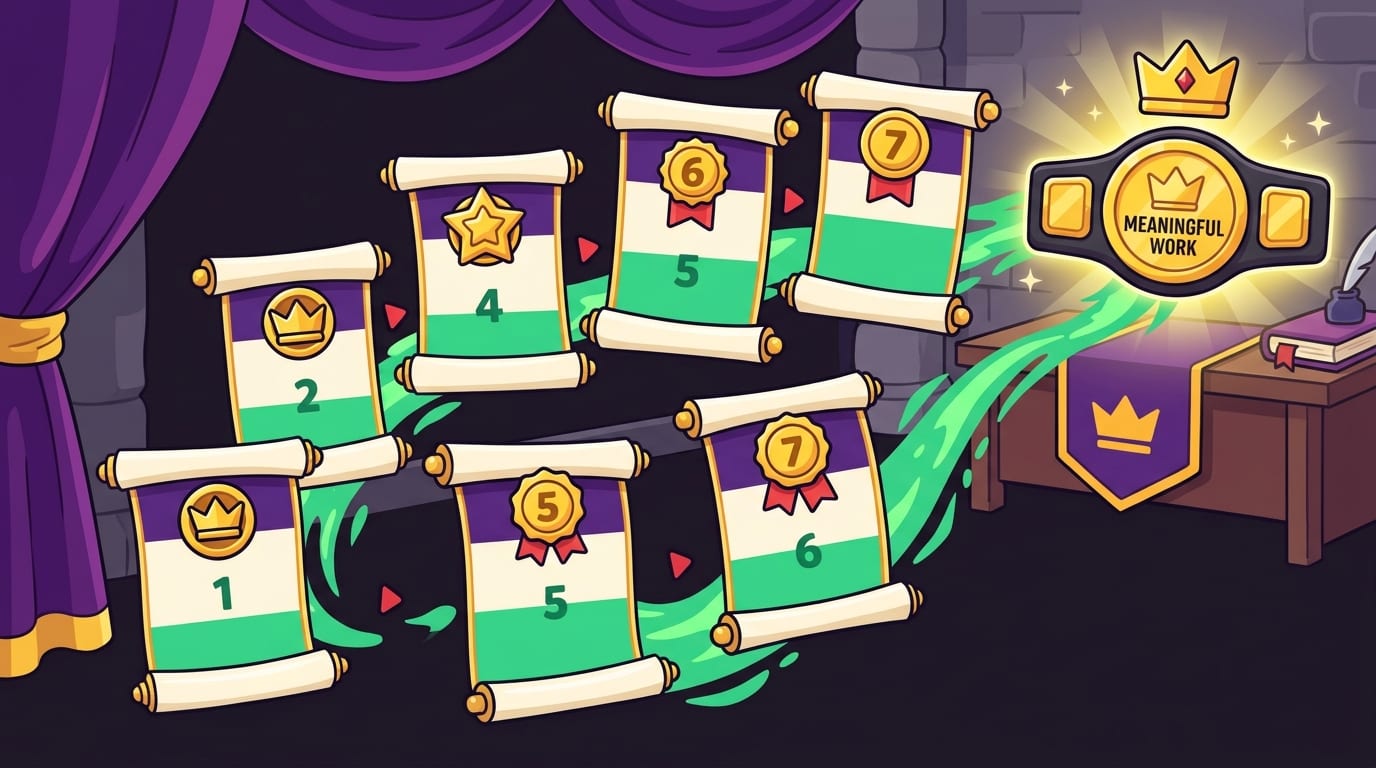
Finding focus for meaningful work is not about becoming a flawless productivity machine. Machines don’t write novels, build businesses, study for exams, compose music, solve hard problems, or decide to finally finish the thing that matters. Humans do. Distractible, ambitious, snack-seeking humans.
The trick is to stop treating focus like a mood and start treating it like a system. Define meaningful work clearly. Set session goals. Time-block your best energy. Shape your environment. Build rituals. Delay distractions. Recover properly. Track progress lightly. And when the internet tries to lure you into the swamp, put a royal boxer at the gate.
If you want a focus tool that doesn’t feel like punishment from a beige office printer, try BlockChamp. It blocks distracting websites in Chrome, turns focus into XP and streaks, and sends The King to roast you when you try to abandon your kingdom for “just one quick video.” Long live your focus. Defend the throne. Crush the scroll.
Related posts

Finding Focus For Fiction Writing

Learning To Focus In A Digital World As A Creative

Finding Focus For Personal Growth
