
Stop Wasting Time

You do not need another 47-tab productivity system named something like “Operation Titanium Sunrise.” You need to stop wasting time in the tiny moments where your brain quietly whispers, “Let’s check one thing,” and then somehow you wake up 38 minutes later watching a raccoon wash grapes on TikTok. Majestic? Yes. Helpful? The crown says no.
Wasting time usually does not look dramatic. It looks like opening Reddit between tasks, checking email “real quick,” watching one YouTube video before studying, or scrolling the news until your soul starts buffering. The good news: you can reclaim a shocking amount of your day with a few practical habits, better boundaries, and some well-placed friction. Not monk-on-a-mountain friction. Just enough to stop your future self from handing the kingdom keys to the algorithm.
This guide gives you practical strategies to stop wasting time, prioritize tasks, build simple routines, and protect your focus when motivation has left the building wearing sunglasses. We will cover the psychology, the tools, the routines, and the tiny fixes that actually stick. Let’s knock out distractions and get your time back, champ.
Quick Answers
1. First, Find Where Your Time Is Escaping Like a Tiny Digital Goblin
Before you can stop wasting time, you need to know where the leak is. Most people underestimate their screen time, overestimate their focus, and pretend that “research” includes watching three laptop reviews when they are not buying a laptop. Your brain is a charming liar in a little productivity hat.
Start with a time audit. Not forever. Just two or three days. Write down what you do in 30-minute chunks, or use your device’s built-in screen time reports. The goal is not to shame yourself. Shame is a terrible productivity coach. It mostly yells and eats chips. The goal is visibility.
Look for patterns like:
- Which websites or apps swallow the most time?
- When do you drift most often: morning, afternoon, late night?
- What emotion usually triggers the drift: boredom, stress, avoidance, loneliness, decision fatigue?
- Which “quick checks” regularly turn into long scrolls?
- What important work gets delayed because of distractions?
If your phone is the main culprit, BlockChamp has a useful breakdown on how much time people should actually spend on their phone. Spoiler: probably less than the amount required to achieve full goblin posture.
For broader perspective, DataReportal’s global digital reports consistently show that people spend hours per day online across devices. Their Digital 2024 Global Overview Report is a solid source if you want the big-picture numbers behind our collective screen-based circus.
Once you identify the top three time leaks, do not try to fix your entire life in one heroic Monday morning rampage. Pick one leak. For example, “I waste too much time on YouTube during work hours.” Great. That is specific. A specific enemy can be punched. A vague enemy like “I should be better” just floats around wearing a smug little cape.
2. Decide What “Not Wasting Time” Actually Means
Here is the annoying-but-true part: you cannot stop wasting time unless you define what your time is for. Otherwise every task feels equally urgent, and suddenly reorganizing your sock drawer becomes “productive” because technically your socks are now aligned by emotional maturity.
Ask yourself what a well-used day looks like. Not a perfect day. A useful day. For a student, that might mean two focused study blocks, one workout, and no TikTok before homework. For a freelancer, it might mean finishing one client deliverable before opening Slack. For a founder, it might mean 90 minutes of deep work before meetings eat the calendar like a swarm of corporate termites.
Try defining your day with three layers:
- Must-do: The one to three tasks that genuinely matter today.
- Should-do: Helpful tasks that can wait if life throws soup at the fan.
- Nice-to-do: Low-priority tasks, errands, admin, and “I’ll just tweak this template for 90 minutes” nonsense.
This simple split prevents fake productivity. Fake productivity is when you are busy enough to feel responsible but not focused enough to make progress. It is the productivity equivalent of wearing a lab coat while microwaving noodles.
If you want a research-backed reason to protect your attention, the American Psychological Association explains that switching tasks can create real mental costs. Their overview on multitasking and task switching is a helpful reminder that “I’m just bouncing between things” often means “I’m paying a tax every time I switch.”
So before you open your laptop, write this sentence: “If I only complete one thing today, it should be ______.” That blank is your throne. Defend it.
3. Prioritize Like a Ruthless-but-Fair Tiny Monarch
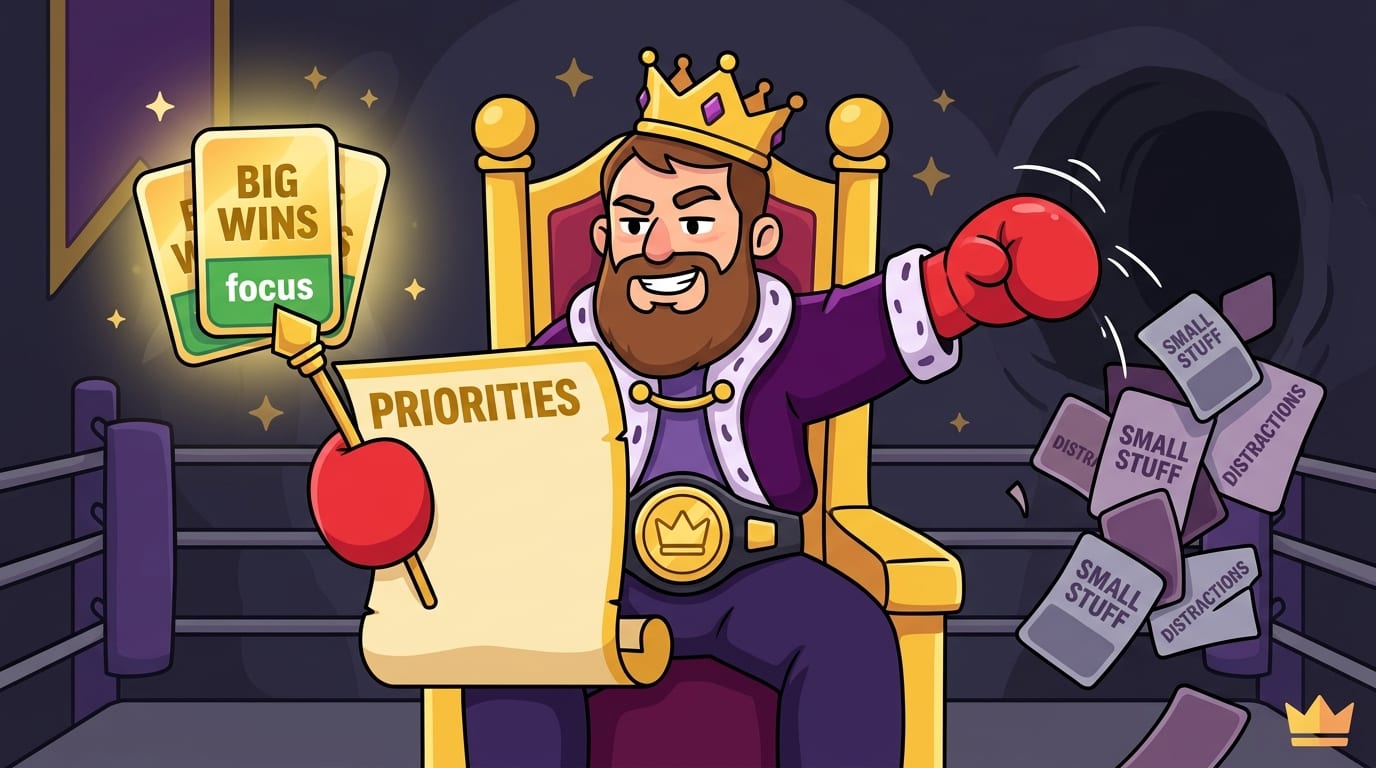
Once you know what matters, you need a way to choose what comes first. Productivity fails when every task arrives wearing a fake emergency mustache. Email feels urgent. Notifications feel urgent. Someone in a group chat saying “thoughts?” feels urgent. But urgency is not importance. Sometimes urgency is just a raccoon banging cymbals.
Use one of these prioritization methods to stop wasting time on low-value work:
The 1-3-5 Rule
Plan each day with:
- 1 big task
- 3 medium tasks
- 5 small tasks
This works because it respects reality. You are not a productivity robot powered by almond butter and inspirational quotes. Your energy is finite. Choose fewer tasks and finish them properly.
The Eisenhower Matrix
Sort tasks into four boxes:
- Urgent and important: do now.
- Important but not urgent: schedule it.
- Urgent but not important: delegate or reduce it.
- Not urgent and not important: delete it, ignore it, or send it to the dungeon.
The most valuable work often lives in “important but not urgent”: studying before the exam panic, writing the proposal, building a portfolio, exercising, planning your week. If you neglect these, they eventually become urgent and bring emotional fireworks.
The “Would I Be Annoyed If This Was Still Unfinished Tomorrow?” Test
This is beautifully simple. Look at your task list and ask which unfinished task would create the most stress, delay, or regret tomorrow. Do that first. Your future self will applaud politely from the balcony.
Prioritization is not about doing more. It is about making sure the right things happen before your attention gets kidnapped by tabs, pings, and a video titled “I Built a Secret Room Under My Bed.”
4. Build a Focus Routine So Your Brain Stops Negotiating
Motivation is unreliable. It is the friend who says “I’m five minutes away” while still wrapped in a towel. A routine is better because it reduces negotiation. When your brain knows the sequence, starting becomes less dramatic.
Create a short “focus launch ritual” you can repeat every time you need to work. Keep it simple enough that you will actually do it. No incense ceremony unless that is your thing. The King does not judge incense. He judges 14 open shopping tabs.
Here is a practical routine:
- Write the single task you are about to do.
- Set a timer for 25, 45, or 60 minutes.
- Close unrelated tabs and apps.
- Put your phone out of reach or in another room.
- Turn on blocking for distracting sites.
- Start working before your brain files an appeal.
This ritual works because it creates a clear boundary between “wandering mode” and “focus mode.” The timer gives your brain an endpoint. Closing tabs removes visual bait. Blocking sites removes the classic escape hatch.
If you use Chrome, BlockChamp makes this step more fun than a normal blocker. You can block specific sites, one-tap categories like Social Media, Video, Shopping, News, Gaming, Gambling, Adult, and AI Distractions, then flip one Master Focus Toggle to put The King on guard. When you try to visit a blocked site, you get The Stare-Down: a full-screen royal judgment scene that basically says, “Nice try, peasant. Back to work.” It is weirdly effective because it interrupts the autopilot loop with humor instead of sterile sadness.
The secret is consistency. Same routine, same cue, same start. Over time, your brain learns: timer on, distractions blocked, work begins. Fewer negotiations. Fewer dramatic internal courtroom scenes.
5. Use Friction: The Secret Weapon Against Impulse Clicking
If your plan to stop wasting time relies entirely on willpower, congratulations, you have built a castle out of wet crackers. Willpower helps, but your environment wins more often. The smarter move is to add friction between you and your worst distractions.
Friction means making the bad habit slightly harder and the good habit slightly easier. Not impossible. Just annoying enough that your impulse has time to cool down.
Examples:
- Log out of social media after each use.
- Remove distracting bookmarks from your browser bar.
- Keep your phone in another room during deep work.
- Turn off nonessential notifications.
- Use grayscale mode on your phone to make apps less shiny.
- Block your top time-wasting websites during work or study hours.
This matters because many distractions are not conscious choices. They are habits triggered by boredom, stress, or a tiny pause between tasks. You finish one paragraph, feel a microsecond of discomfort, and suddenly your fingers type “you” into the address bar faster than a medieval messenger sprinting from a dragon.
For serious focus sessions, BlockChamp’s Champion plan includes Hardcore Lockdown, which adds friction when you try to turn focus off. You can use a cooldown timer or a boxing-riddle mini-game where you repeat The King’s glove combo before surrendering. Is it ridiculous? Yes. Does it stop you from impulsively disabling your blocker for “just five minutes”? Also yes. Sometimes your future needs a bouncer wearing a crown.
If social apps are your main swamp, you may also enjoy BlockChamp’s guide on how to reduce screen time without stress. The goal is not to become a joyless cave scholar. The goal is to stop letting apps decide your schedule for you.
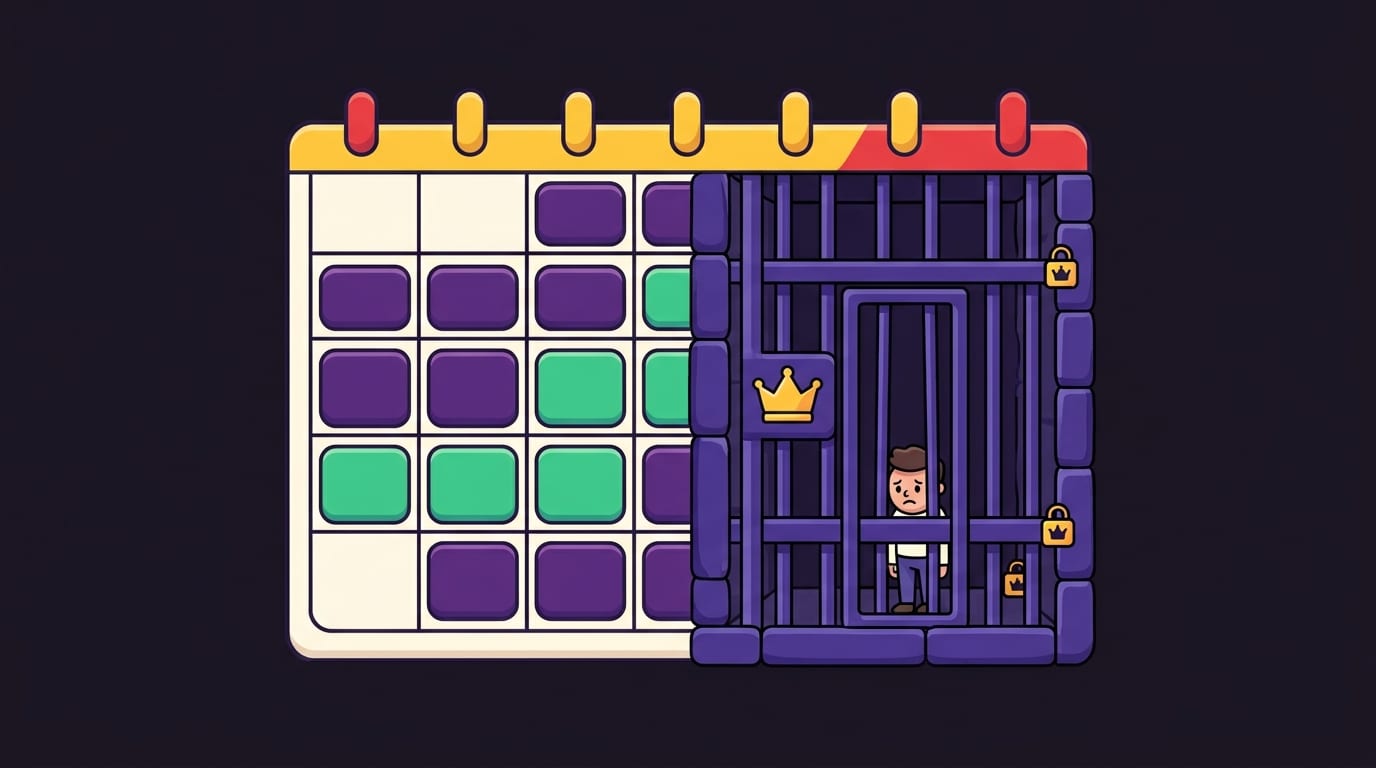
6. Try Time Blocking, But Do Not Turn Your Calendar Into a Prison
Time blocking is one of the simplest ways to stop wasting time because it gives your day a map. Instead of keeping a mushy list of tasks, you assign work to specific blocks of time. “Write essay” becomes “9:00–10:30: draft essay intro and first section.” Suddenly the task has a home. Lovely. Domestic productivity.
Start with broad blocks:
- Deep work: 60–120 minutes for demanding tasks.
- Admin: 30–60 minutes for email, messages, scheduling, forms, and tiny digital mosquitoes.
- Breaks: 5–20 minutes to reset your brain.
- Flexible buffer: 30–60 minutes for unexpected chaos.
Do not schedule every minute unless you enjoy rebelling against your own calendar by lunchtime. Leave buffer time. Humans are not spreadsheets with shoes.
A sample student schedule might look like this:
- 8:30–9:00: review notes and plan top three tasks.
- 9:00–10:30: focused study session, phone away, distracting sites blocked.
- 10:30–10:45: break.
- 10:45–12:00: problem sets or essay draft.
- 12:00–1:00: lunch and guilt-free scrolling window.
- 1:00–2:00: admin, email, class tasks.
A remote worker might block 9:00–11:00 for deep work before Slack and email take the throne hostage. A creator might reserve mornings for writing or editing and afternoons for posting, analytics, and community replies.
If you want your blocks to activate automatically, BlockChamp’s Pro scheduling feature lets you set recurring focus hours, like Monday through Friday from 9 to 5. The King stands guard while you work, which is much better than relying on your 2:47 p.m. self, who historically cannot be trusted near YouTube.
For more digital habit context, check out BlockChamp’s article on how to monitor screen time usage. Tracking plus scheduling is a powerful combo: one shows the leak, the other patches it.
7. Beat the “Just One More Thing” Trap With Better Breaks
One sneaky reason people waste time is that they never take real breaks. They take fake breaks. A fake break is when you leave your work to check social media, but your brain keeps absorbing noise, comparison, outrage, ads, and someone’s 19-part thread about oat milk betrayal. Then you return more tired and call yourself lazy. Rude. Inaccurate. Unhelpful.
A real break restores attention. It should give your brain less input, not more chaos in a shiny rectangle.
Try these better breaks:
- Walk outside for five to ten minutes.
- Stretch your neck, hips, and back.
- Drink water without also reading the internet’s worst opinions.
- Do a quick breathing exercise.
- Clean one small area of your desk.
- Look out a window like a mysterious Victorian person.
The Pomodoro Technique is popular because it alternates focused work with short breaks. The classic version is 25 minutes of work and 5 minutes of rest, but you can adjust it. If you need deeper concentration, try 50 minutes on and 10 minutes off. If you are starting from chaos mode, even 10 minutes on and 2 minutes off is a win. We do not mock small wins in this kingdom. We put tiny crowns on them.
Research on attention restoration suggests that breaks involving natural environments can help replenish focus. The concept is discussed in scientific literature, including work summarized by the National Library of Medicine on nature exposure and cognitive benefits. Translation: touch grass is not just an internet insult. It may actually help.
Set boundaries around entertainment breaks. If you want to scroll, make it intentional: “I will check Instagram from 6:00 to 6:20.” That is very different from “I accidentally donated my afternoon to the feed.” Intentional fun is good. Accidental time vaporization is where the goblins win.
8. Stop Procrastinating by Making Tasks Embarrassingly Small
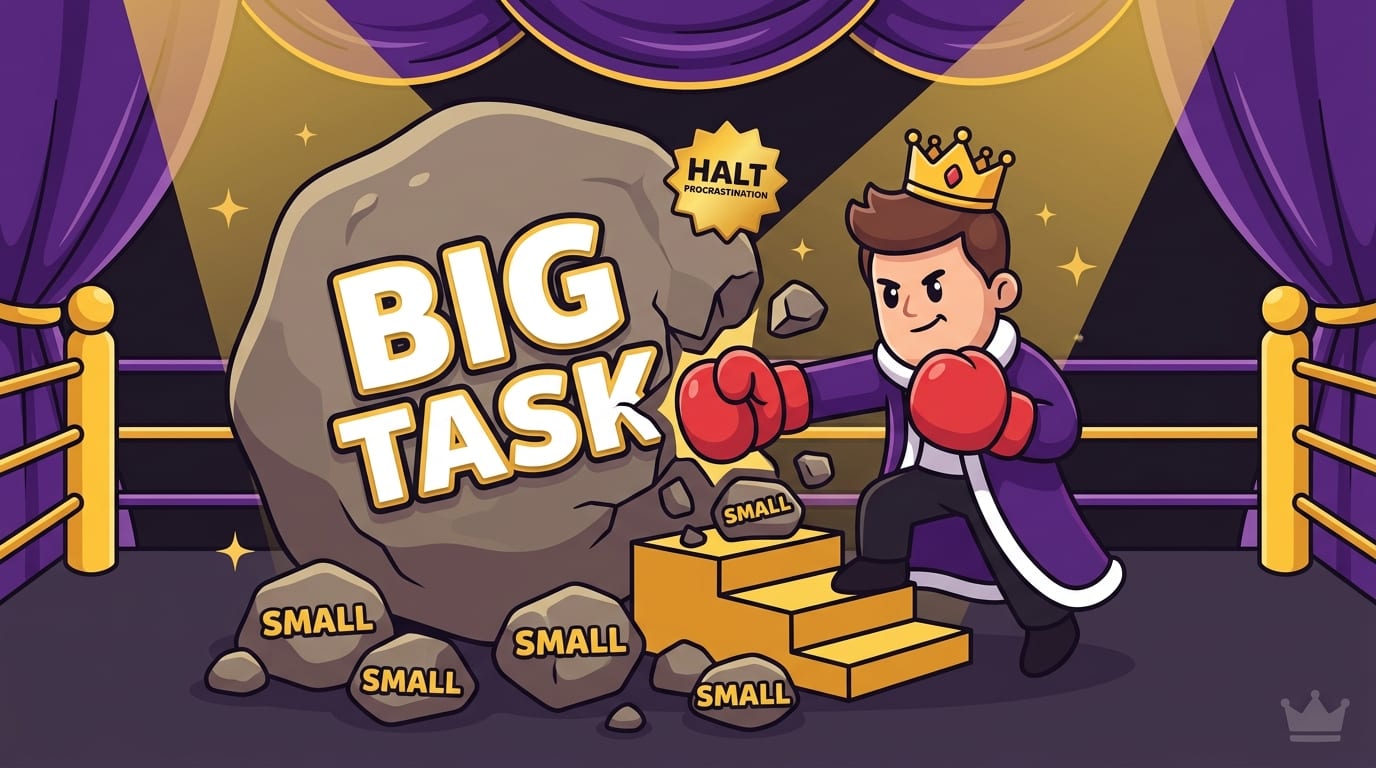
Procrastination often looks like laziness, but it is usually avoidance. The task feels unclear, too big, boring, scary, or emotionally sticky. Your brain sees “write report” and says, “Absolutely not, let’s investigate air fryers.”
The fix is to shrink the starting line until it becomes almost silly.
Instead of “study biology,” try:
- Open the textbook to chapter 4.
- Write five bullet points from yesterday’s lecture.
- Do three practice questions.
- Make one flashcard set for one concept.
Instead of “finish project,” try:
- Create the project file.
- Write the ugly first paragraph.
- List the next five steps.
- Send one clarification email.
Once you start, momentum often shows up. Not always wearing a cape, but it shows up. The first two minutes matter because they break the psychological seal. That is why the “two-minute rule” is useful: if a task feels impossible, commit to doing it for only two minutes. After two minutes, you may stop. Weirdly, you often continue because starting was the hard part.
Another trick: define “done” before starting. If your task is “work on website,” you can wander forever. If it is “rewrite homepage headline and publish new hero section,” you know when to stop. Clear finish lines prevent perfectionism from putting on a crown and declaring eternal rule.
If your procrastination is tied to mental fatigue from too much digital input, BlockChamp’s article on how screen time affects mental health is worth reading. Your attention does not exist in a vacuum. It exists in a browser with 27 tabs and a nervous system asking for mercy.
9. Create an Anti-Distraction Setup for Work, Study, and Life
Your environment should make focus the default. If your workspace is a carnival of temptations, do not be shocked when your attention leaves to buy cotton candy. A good anti-distraction setup removes obvious traps before your willpower has to wrestle them.
For your browser
- Keep only work-related bookmarks visible.
- Use separate browser profiles for work and personal browsing.
- Close tabs at the end of each day.
- Block known time-wasting websites during focus hours.
- Use keyword blocking for topics that reliably derail you.
BlockChamp is especially useful here because the internet is where many time leaks happen. Free users can block up to three sites and enable two categories, which is plenty to start with the big villains: maybe YouTube, Reddit, and TikTok, or Social Media plus Video. Champion users can block unlimited sites, all eight categories, and keywords. So if “crypto drama,” “celebrity gossip,” or “gaming leaks” sends you into a research spiral, you can block the topic itself. The King does not care how clever the rabbit hole is. The King blocks the hole.
For your phone
- Move addictive apps off your home screen.
- Turn off badges and lock screen notifications.
- Set app limits for your worst offenders.
- Charge your phone away from your bed.
- Create no-phone zones: desk, dinner table, bedroom.
For warning signs that your phone has become less “tool” and more “tiny glowing overlord,” read 5 signs you’re spending too much time on your phone. Awareness first. Tiny rebellion second.
For your physical space
- Keep your desk boring in the best way.
- Put a notebook nearby to capture random thoughts.
- Use headphones or background noise if your environment is loud.
- Keep water within reach so “getting water” does not become a 25-minute kitchen side quest.
Environment design is not about becoming a productivity monk who owns one wooden spoon and levitates. It is about making good choices easier and bad choices less convenient. That is the whole game.
10. Track Progress Without Turning Yourself Into a Spreadsheet Gremlin
Tracking helps you stop wasting time because it turns invisible habits into visible patterns. But tracking can also become another procrastination hobby if you spend more time decorating the tracker than doing the work. Beware the spreadsheet gremlin. It has conditional formatting and no mercy.
Keep tracking lightweight. Choose one to three metrics:
- Focused hours per day
- Number of completed priority tasks
- Screen time on your top distraction app
- Number of times you resisted a distraction
- Days your focus routine was completed
The best metric is the one that changes behavior. If tracking focused hours makes you more intentional, use that. If tracking completed tasks works better, do that. If tracking every minute makes you anxious and weird, release yourself from the goblin ledger.
BlockChamp’s gamification makes tracking feel less like homework and more like leveling up. You earn XP for every minute of focus, daily active blocks, streak bonuses, and each Stare-Down you survive. Your reign counter shows how long you have kept focus active, and the calendar lets you see your focus history in glorious gold. It rewards consistency, not perfection, which matters because one imperfect day should not send your whole system face-first into the moat.
Gamification can be powerful because it gives immediate feedback. Instead of waiting weeks to feel progress, you see points, levels, badges, and streaks now. That feedback loop makes it easier to keep going. You are not just “trying to focus.” You are defending a reign. Much cooler. Slightly theatrical. Correct.
The key is to review weekly. Ask:
- Where did I waste the most time this week?
- What helped me focus?
- What triggered procrastination?
- Which block or boundary should I adjust?
- What is one improvement for next week?
Small weekly adjustments beat dramatic life overhauls. A dramatic overhaul feels exciting for two days and then collapses under the weight of its own color-coded ambition.
11. Use the 10-Minute Reset When the Day Goes Sideways
Some days will go off the rails. You will waste an hour. You will open the forbidden app. You will stare into the void and the void will recommend a cooking video. Fine. The goal is not perfection. The goal is recovery speed.
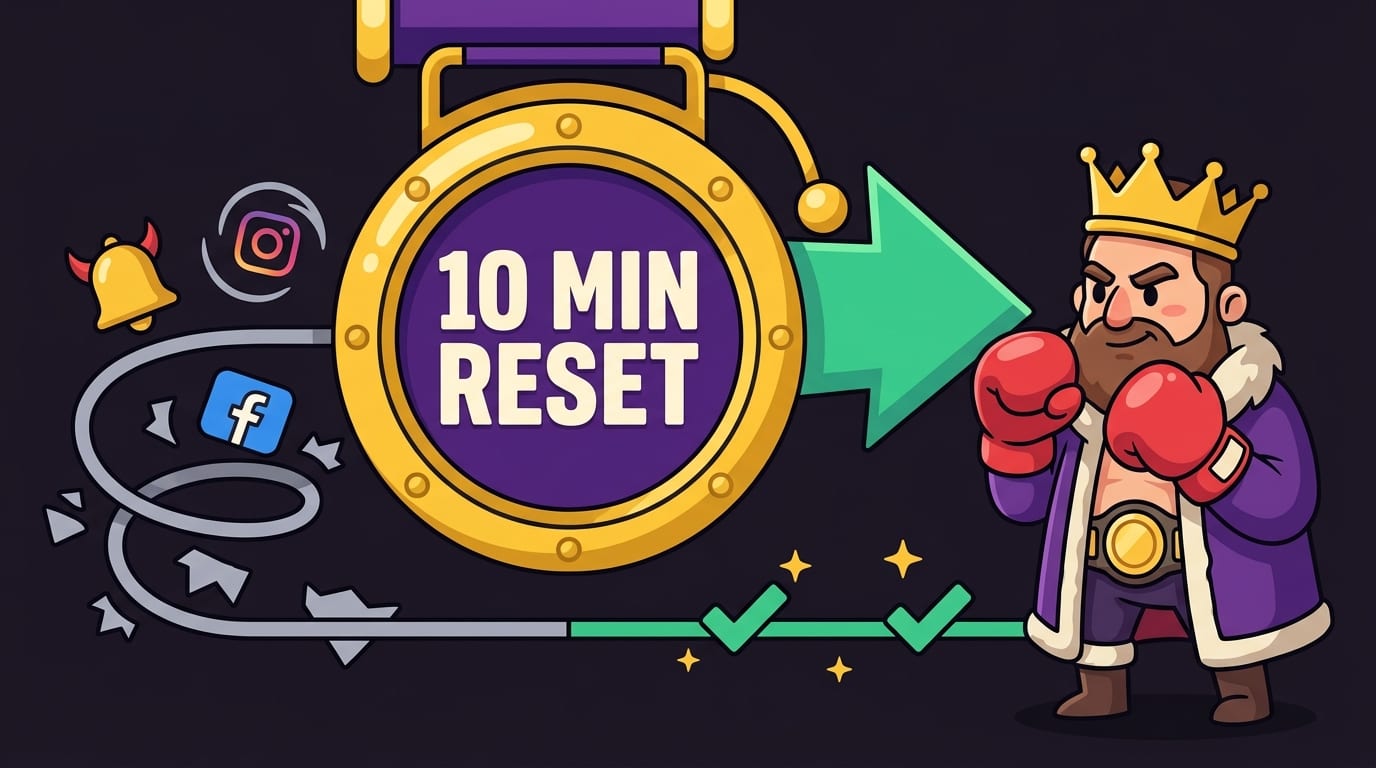
When you catch yourself wasting time, do a 10-minute reset:
- Close the distracting tab or app immediately.
- Stand up and take three slow breaths.
- Write down what you were avoiding.
- Choose the next tiny action.
- Set a 10-minute timer and begin.
This prevents the “day is ruined” spiral. One wasted hour does not require six more as tribute. You are allowed to restart without holding a full royal inquiry.
If you use BlockChamp and hit a blocked site, The Stare-Down becomes that reset moment. The King catches you, roasts you, and sends you back. Every Stare-Down survived earns XP, which reframes the slip as a rep. You did not fail; you resisted. That distinction matters. Habit change is built from many tiny moments where you almost go off track and then do not.
The next time your day derails, do not wait for a fresh Monday, new month, or spiritually significant moon phase. Restart in 10 minutes. The throne is still available.
Conclusion: Stop Wasting Time by Making Focus Easier Than Distraction
To stop wasting time, you do not need to become a different person. You need a better system. Audit your time. Define what matters. Prioritize ruthlessly. Build a repeatable focus routine. Add friction to distractions. Schedule your work. Take real breaks. Shrink scary tasks. Track progress lightly. Reset fast when you slip.
The big idea is simple: make focus easier than distraction. Because if your environment leaves every temptation one click away, your brain will eventually click. Not because you are weak. Because you are human, and the internet is a casino wearing a homework disguise.
If distracting websites are one of your biggest time leaks, give BlockChamp a try on Chrome. Block your worst sites, activate focus with one master toggle, earn XP while you work, and let The King stare down your bad ideas before they become 45-minute scroll sessions. Free users can start with three sites and two categories, while Champions can unlock unlimited blocking, keyword blocking, schedules, and Hardcore Lockdown.
Long live your focus. Defend the throne. Crush the scroll. And the next time your brain says, “Just five minutes,” kindly inform it that The King is on guard.
Related posts

Finding Focus For Fiction Writing

Learning To Focus In A Digital World As A Creative

Finding Focus For Personal Growth
