
Increase Your Productivity

Your to-do list has 14 items, your browser has 27 tabs, and somehow you’ve spent 20 minutes researching whether a tomato is technically a fruit. It is. Your deadline is still real. If you want to increase your productivity, the answer usually isn’t squeezing more effort out of an already crowded day. It’s making it easier to do the right thing, harder to wander off, and clearer what “done” actually means.
Productivity isn’t about becoming a perfectly optimized human spreadsheet. It’s about making steady progress on work that matters without letting every ping, tab, and spontaneous kitchen expedition run the kingdom. These practical strategies can help you plan better, focus longer, and build habits you can actually keep.
Quick Answers
1. Pick a target before the day picks one for you
A day without a plan is an open invitation for other people’s priorities—and your favorite distractions—to take over. Before you begin work, decide what would make the day feel meaningfully successful. Choose one important outcome, then identify a couple of smaller tasks that support it.
Be specific. “Work on the project” is foggy enough to hide in. “Draft the first 500 words of the proposal” gives you a clear starting point and a finish line. The more concrete the task, the less time you spend negotiating with yourself about what to do next.
Try a short planning routine:
- Write down the one task that matters most today.
- Break it into a first action small enough to start in five minutes.
- Choose two or three secondary tasks, not a heroic list of 19.
- Schedule fixed commitments and realistic breaks.
- Leave some open space for surprises, because life does not read your calendar.
This approach is useful for students and professionals alike. Instead of writing “study biology,” write “review lecture notes for 25 minutes, then answer ten practice questions.” Instead of “do admin,” write “reply to the three client emails that need a decision.” A clear task reduces friction and makes progress visible.
For a simple time-awareness method, see our guide to how using a time tracker can increase your productivity. Tracking a few work sessions can reveal whether your estimates are realistic, where your day gets fragmented, and whether a “quick check” of social media has developed a suspiciously long royal reign.
2. Match the task to your energy, not just the clock
Not every hour feels the same. Some people think most clearly in the morning; others hit their stride later. You don’t need to discover your “chronotype” with a laboratory coat and a clipboard. Just pay attention to your own patterns for a week or two.
Notice when it is easiest to concentrate, when routine tasks feel painless, and when your attention starts wandering like a bored court jester. Put demanding work—writing, planning, studying, problem-solving—inside your sharper hours when possible. Save lower-stakes tasks, such as filing or basic email, for times when deep thinking feels like trying to bench-press a carriage.
Energy also depends on basic care. Food, water, movement, and sleep are not decorative side quests; they support the attention you need to work. A short walk or a few minutes of stretching can be a useful reset between sessions. For more ideas, read about how exercise can improve focus and practical ways to use movement to support productivity.
Keep the experiment simple: rate your focus from one to five at a few points during the day, then compare it with the work you were doing. You may discover that your best thinking happens before lunch—or that scheduling complex tasks immediately after a meeting is a reliable way to turn your brain into lukewarm soup.
3. Work in focused sessions, then take real breaks
Trying to concentrate for hours without stopping is not a productivity strategy. It’s an ambitious way to become familiar with every mark on your desk. Focused work sessions give your attention a manageable job: work on one task for a defined stretch, pause briefly, then decide whether to continue or switch.
You can start with a familiar pattern: 25 minutes of focused work followed by a five-minute break. If that feels too short or too long, adjust it. Try 40 minutes on and ten minutes off, or 50 and ten. The ideal session is long enough to get into the work but short enough that the finish line feels believable.
During a session:
- Choose one task and write down what you intend to complete.
- Close unrelated tabs and put your phone out of reach.
- Keep a scrap page nearby for distracting thoughts or errands.
- When the timer ends, take a break away from the task if you can.
A useful break should help you return refreshed. Stand up, stretch, refill your water, look out a window, or take a quick walk. Be careful with activities designed to keep you scrolling. “I’ll check one post” can turn a five-minute break into a surprise documentary about an alpaca with strong opinions.
Our guide to taking better breaks for productivity and wellbeing has more ways to make downtime restorative rather than another screen-based detour. Breaks are part of the plan, not a prize you earn only after becoming a flawless productivity machine.

4. Make distractions harder to reach
Willpower has a limited job description. If a distracting website is one click away and your important task is difficult, the easy option may win—especially when you’re tired, uncertain, or avoiding a tricky first step. Rather than blaming yourself for being human, change the environment so your focus has a better chance.
Start by identifying your usual escape routes. Is it social media? Video recommendations? Shopping? News feeds? A work-related search that somehow ends with a review of a toaster you do not need? Name the distractions without judging yourself. Then choose a practical barrier for the times you want to work.
- Silence nonessential notifications during focus sessions.
- Keep your phone in another room or inside a bag.
- Close tabs that are not needed for the current task.
- Log out of accounts that invite habitual checking.
- Use a website blocker during study or deep-work hours.
For Google Chrome users, BlockChamp lets you block selected sites and distraction categories while focus mode is active. The free tier supports up to three blocked sites and two categories; Champion adds unlimited sites, all eight categories, keyword blocking, and scheduled blocking. Its gamified approach adds focus time, XP, levels, badges, and reigns, so protecting your attention can feel less like receiving detention and more like defending your crown.
When you try to open a blocked site, BlockChamp’s Stare-Down page puts The King on the case. Instead of a plain error screen, you get a royal reminder to return to work—and sometimes a voice line. The point is not to shame you for being tempted. It is to interrupt the automatic click long enough for you to remember what you meant to do.
Learn more at BlockChamp if a playful Chrome website blocker sounds useful. A tool can’t decide your priorities for you, but it can remove some of the distractions trying to decide them on your behalf.
5. Make starting almost laughably easy
Big tasks often feel uncomfortable because they are vague, difficult, or likely to expose what we don’t know yet. The brain notices the discomfort and helpfully suggests checking email, organizing a drawer, or learning whether the world’s smallest horse has a Wikipedia page. The solution is often to shrink the first step.
Instead of “write the report,” open the document and add three section headings. Instead of “study for the exam,” collect your materials and answer one practice question. Instead of “clean the entire house,” clear one surface. Starting is frequently the hardest part, so make the starting line close enough to step over.
A simple rule: define the next action as a physical or observable step. “Think about the presentation” is difficult to measure. “Open the slides and draft the first two bullet points” is not. Once you begin, you may keep going; if you don’t, you still made a real start.
When you get stuck, ask:
- What is the next visible action?
- What information or tool am I missing?
- Can I do a rough first version rather than a polished final one?
- Would a five-minute start make the task less intimidating?
This is especially helpful for creative work and studying, where progress is not always as tidy as a list of emails disappearing. A rough outline counts. A first attempt counts. A question you can now answer counts. Productivity is progress toward the outcome, not merely the satisfying sensation of being busy.

6. Use time blocking without turning your calendar into a prison
Time blocking means assigning a part of your day to a specific kind of work. It helps protect important tasks from being pushed aside by endless small requests. But it works best as a flexible guide, not a tiny tyrant demanding that every minute behave.
Try scheduling blocks for meaningful work, messages, meetings, and breaks. Give tasks enough room to be completed, including a little transition time. If writing normally takes an hour, booking 20 minutes because your calendar looks prettier that way is less planning and more optimistic fiction.
For example, a student might schedule two focused study sessions before lunch, a longer break, then a review session later in the day. A remote worker might reserve a morning block for project work, a short window for email, and the afternoon for meetings and follow-ups. The exact pattern should fit your responsibilities and energy.
At the end of each day, take five minutes to adjust tomorrow’s plan. Move unfinished tasks deliberately rather than copying the entire list forward like a cursed scroll. Ask whether the task still matters, whether it needs to be broken down, and whether the time you gave it was realistic.
If you tend to lose focus during certain work hours, a recurring website-blocking schedule can help make the plan easier to follow. BlockChamp’s Champion plan includes schedules, so chosen distractions can be blocked automatically during your work or study window. That means fewer decisions to make when your attention is already busy doing its actual job.
7. Protect your breaks and your recovery
Productivity is not just what happens while you’re working. Rest affects whether you can concentrate, make decisions, and keep going across the week. If every break becomes another opportunity to read messages, compare products, and absorb an entire internet’s worth of opinions, your brain may never get the quiet reset you intended.
Choose breaks that make it easier to return. Stretch, walk around the block, eat something, or sit somewhere away from the work screen. You do not need to turn every pause into a wellness performance. A normal cup of tea consumed without checking four apps is an entirely respectable achievement.
It also helps to set a stopping point. Decide when you are done for the day and write down the next step for tomorrow. This gives your brain a place to leave the task instead of carrying it around all evening like an unpaid intern with no off switch.
When planning your workload, remember that focus needs recovery. A schedule packed with demanding tasks from morning to night may look impressive, but it leaves little space for delays, meals, or being a person. Build in breathing room. A realistic plan is more productive than an imaginary one that collapses the moment the printer jams.
8. Measure progress without turning life into a scoreboard
It is hard to improve a pattern you cannot see. A brief time log can show where your attention goes, how long common tasks take, and which parts of the day are most vulnerable to interruptions. Track for a few days, not forever. The goal is useful information, not a new hobby called “maintaining spreadsheets about maintaining spreadsheets.”
Keep the record lightweight. Note the task, the approximate time spent, and any major interruptions. At the end of the week, ask what you learned. Perhaps meetings break up your best concentration hours. Maybe a supposedly brief social-media check happens whenever a task gets difficult. Or perhaps your estimates for email are consistently optimistic by a factor of three.
Use that information to make one change at a time. Move a demanding task to a better hour, reserve email for a set window, or block a distracting site during study sessions. Then see whether the change helped. A small experiment is easier to evaluate than a complete personal transformation planned on Sunday night with heroic music playing.
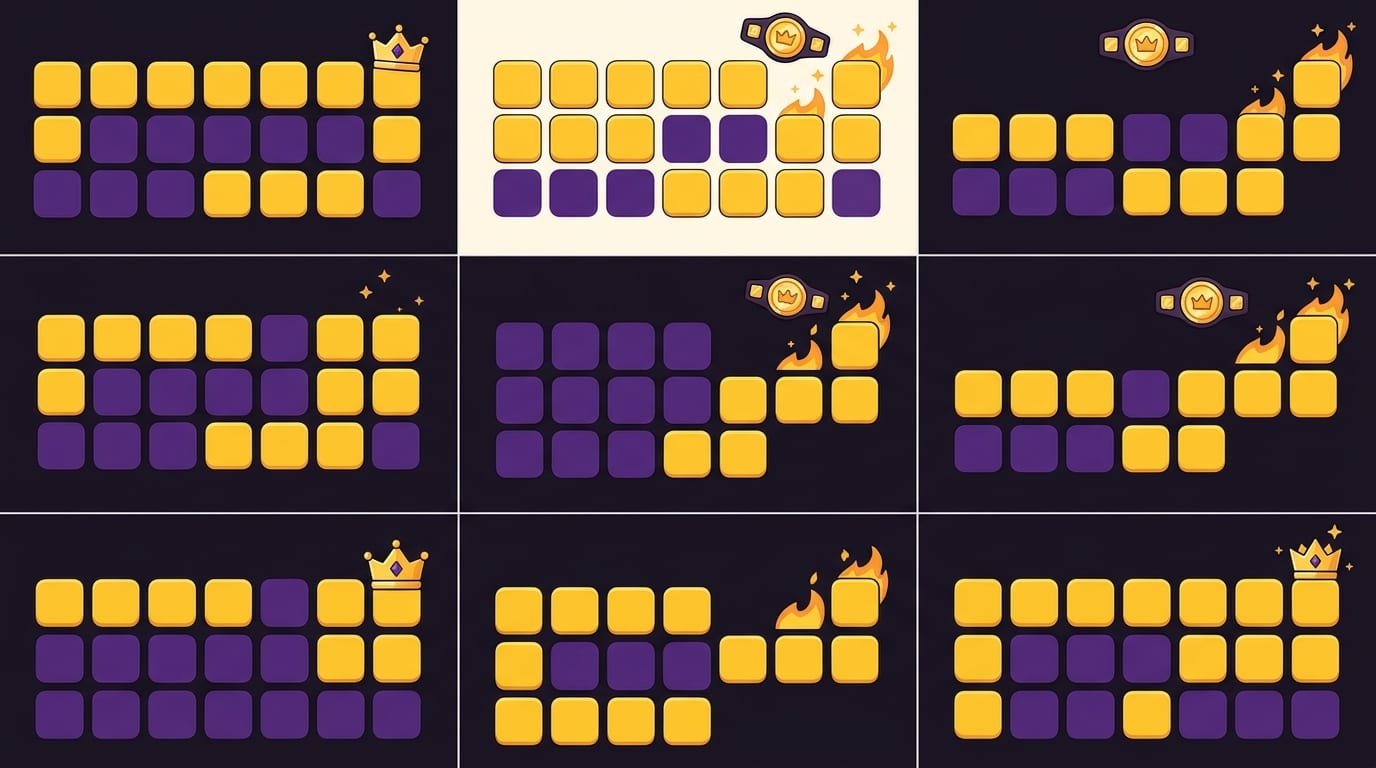
Progress tools can also make consistency visible. BlockChamp tracks focus time and rewards focused days with XP, levels, and badges; its calendar can show patterns in your focus history. Treat those features as encouragement, not a verdict on your character. A missed day is data, not a declaration that the crown has been repossessed.
9. Build a system you can return to after a messy day
One of the most useful productivity habits is learning how to restart. Most people do not follow a perfect plan every day. A meeting runs long, a family need pops up, the internet breaks, or your brain quietly votes for a nap. The important question is not whether you ever get distracted; it is how quickly you can return to the work that matters.
Make a simple reset routine for when the day gets away from you:
- Pause and take a moment to notice what is happening without turning it into a courtroom drama.
- Choose one task that still matters today.
- Make the first step small and clear.
- Remove one distraction or interruption.
- Work for a short, defined session, then reassess.
A flexible system beats an all-or-nothing rule. If you planned four focus sessions and completed two, you still made progress. If you broke concentration, you can restart. You do not need to wait for Monday, a new notebook, or a meteorological event to begin again.
That is also why motivation tools should reward consistency rather than demand perfection. BlockChamp’s reigns, badges, and XP offer visible progress while its humorous style keeps the experience light. The King may give you a look if you wander toward a blocked site, but the goal is to help you get back to work—not make one detour feel like a permanent defeat.
Increase your productivity one focused choice at a time
To increase your productivity, start with the basics: decide what matters, make the next step clear, work in focused sessions, take real breaks, and reduce the distractions that repeatedly steal your attention. Use your energy wisely, plan with flexibility, and review what is working. You do not have to overhaul your entire life before lunch.
Choose one change for tomorrow. Write down your most important task before opening your inbox. Put your phone in another room for one work session. Try a short timer. Track where an hour goes. Small improvements become powerful when they are repeatable.
And if your browser keeps luring you into a scroll-shaped side quest, consider giving it a royal guard. BlockChamp helps Chrome users block distracting sites and categories, while focus time, XP, and streaks make steady effort visible. Give your attention a fighting chance, defend the throne, and get back to the work you actually meant to do. Long live your focus, champ.
Related posts

Managing A Distractible Personality

How To Create A Writing Routine That Lasts

Working And Leading In The Age Of Distraction
