
How Facebook Keeps Us Addicted

Ah, Facebook. The social network that started in a dorm room and now seems to have taken up permanent residence in our lives. But have you ever wondered how Facebook keeps us addicted? It’s not just a coincidence that you find yourself scrolling through your feed even when you only intended to check a notification. Let’s dive into the psychological techniques behind Facebook’s grip on our attention and how it keeps us coming back for more.
Quick Answers
A News Feed With a Mind of Its Own
Facebook’s News Feed isn’t just a casual stream of updates from friends and family. It’s a carefully curated selection, thanks to some rather clever algorithms. These algorithms are designed to show you content that Facebook thinks you’ll like, based on your interactions. The more you interact with a certain type of content, the more you’ll see it. This is known as the “filter bubble,” which can create an echo chamber effect, keeping you engaged because it feels like you’re consistently finding content that resonates with you.
According to Social Media Examiner, Facebook uses various ranking signals to decide what appears in your feed. These include how recently a post was made, your past interactions with the poster, and how much engagement a post is receiving. It’s like having a personal DJ for your social life, spinning only the tracks you love.
Notification Nightmares (or Dreams?)
Notifications are the digital equivalent of a poke in the ribs. Whether it’s a new friend request, a comment on your post, or a memory from years past, these little nudges are designed to keep you coming back. Facebook notifications exploit what’s known as variable rewards — a concept from psychology that explains why people get hooked on slot machines. Sometimes you get a rewarding notification; other times, it’s something less exciting. This unpredictability keeps you checking and checking again.
Don’t underestimate the power of a simple red dot. According to Buffer Blog, the color red is used because it’s attention-grabbing and often signals urgency or importance. It’s all part of the plan to make sure you can’t resist clicking on that app icon.
The Social Validation Loop
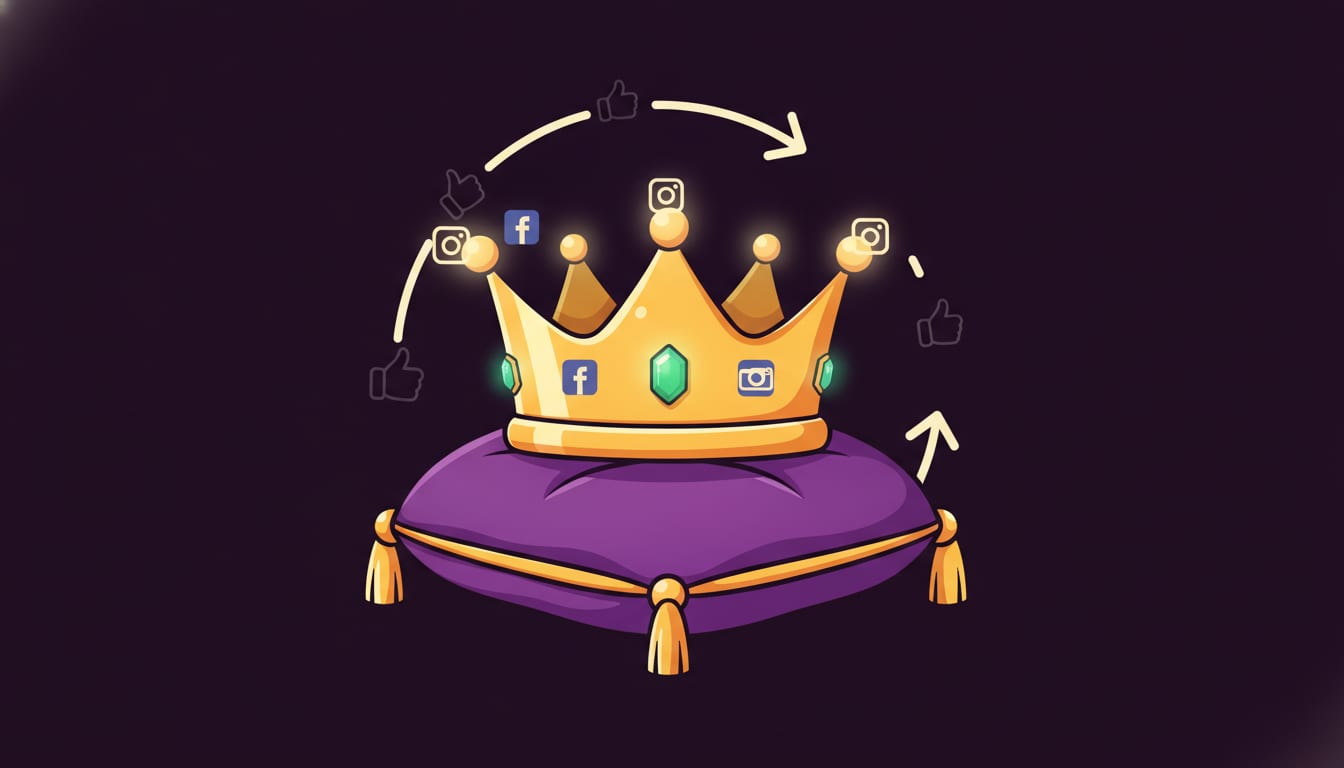
Let’s face it, we all enjoy a good ego boost. Whether it’s a like on a status update or a heart on a photo, these interactions give us a hit of dopamine — the “feel-good” neurotransmitter. Facebook leverages this desire for social validation, making us more likely to post content that will garner likes and comments. It’s a cycle that keeps users engaged, striving for more thumbs up and hearts.
According to Neil Patel, social media platforms like Facebook are deeply invested in this loop. They provide users with a sense of community and belonging, which is hard to resist. It’s like being at a never-ending party where everyone’s interested in what you have to say.
The “Infinite Scroll” Trick
Ever notice how you can scroll through your Facebook feed indefinitely? That’s not an accident. The infinite scroll design is intended to keep you scrolling by eliminating natural stopping points. Unlike a book that ends when you reach the last page, your News Feed is a bottomless pit of content. This design keeps users engaged because there’s always the possibility of finding something new just a little further down.
As highlighted in a Moz article, this design principle exploits a psychological tendency to avoid incomplete tasks. Known as the Zeigarnik Effect, it keeps you engaged because you never quite feel finished. There’s always more content to see, so you keep scrolling and scrolling.
How BlockChamp Can Help Break the Habit
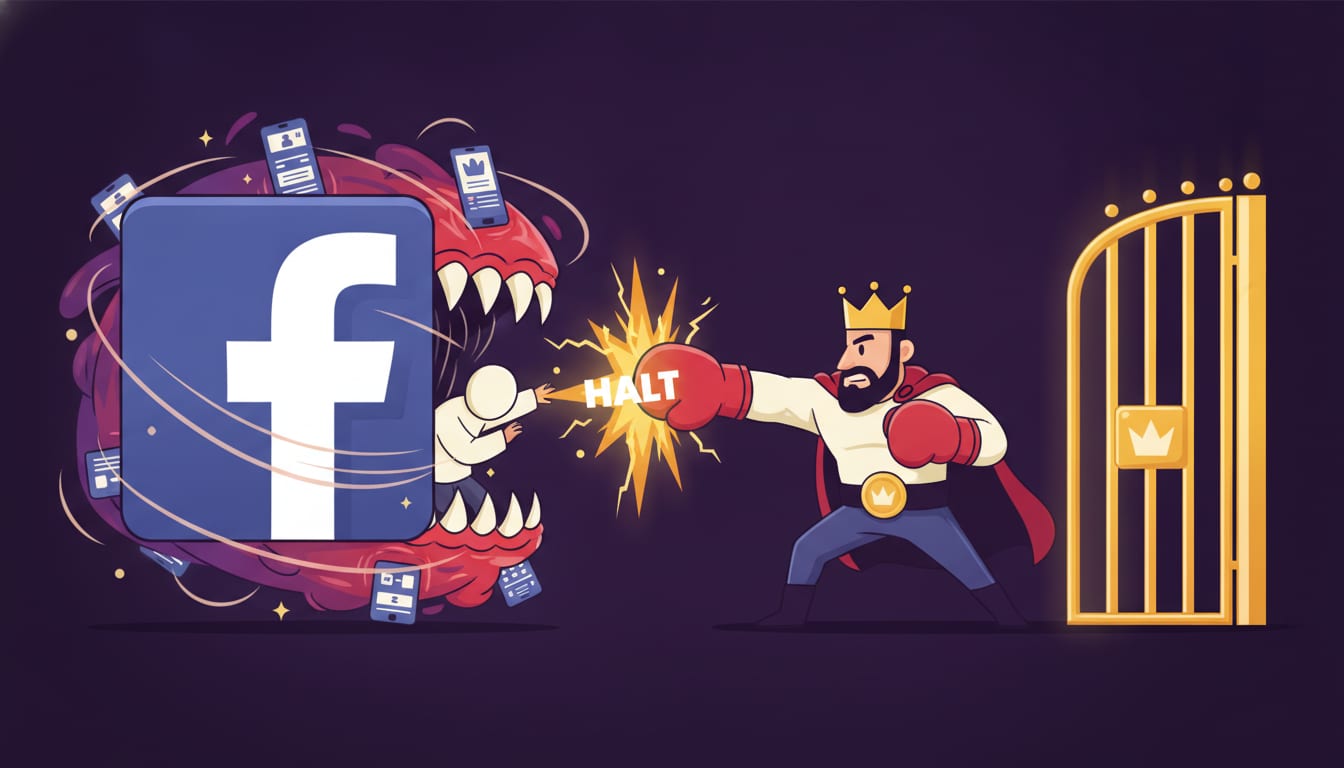
Feeling a bit too attached to your News Feed? That’s where BlockChamp comes in, your knight in shining armor against the seductive powers of Facebook. While Facebook keeps you scrolling, BlockChamp helps you reign it in with a gamified approach to blocking distractions. Picture this: You try to access Facebook, and instead of diving into a rabbit hole, you’re greeted by The King — a cheeky animated boxer who roasts you and nudges you back to focus.
BlockChamp’s approach to website blocking is not just about saying “no” but making it fun. With features like voice lines and stare-downs, it turns the act of staying focused into a game, rewarding you with XP and badges for every moment you resist the siren call of social media. And if you really want to break free, you can enable Hardcore Lockdown, making it nearly impossible to mindlessly turn off your focus mode.
Conclusion: Taking Back Control
Facebook’s addictive nature is a product of clever design and psychological insight. From algorithms that cater to your preferences to notifications that keep you clicking back, it’s easy to see why so many of us find it hard to disconnect. But with tools like BlockChamp, there’s hope for reclaiming your time and focus.
Want to knock out your distractions and reign over your kingdom of productivity? Check out BlockChamp today and see how you can transform your focus into a game worth playing. After all, why scroll aimlessly when you could be the champion of your own attention span?
Related posts

Finding Focus For Fiction Writing

Learning To Focus In A Digital World As A Creative

Finding Focus For Personal Growth
