
Focus On High Performance And Deep Play

Your brain is not a sad little office printer. It is not designed to run hot for 11 hours, jam at 3:17 p.m., and then wheeze out one half-useful email before collapsing into YouTube shorts about raccoons stealing cat food. If you want to focus on high performance and deep play, you need a better system: intense work when it matters, real recovery when it counts, and enough fun baked into the process that your motivation does not flee the kingdom by Wednesday.
High performance without play becomes burnout wearing a blazer. Play without focus becomes “I accidentally spent four hours reorganizing my Spotify playlists by emotional weather.” The magic is in the balance. Deep work gives you output. Deep play gives you renewal, creativity, and the ability to return to your work without feeling like a haunted spreadsheet.
In this guide, we’ll break down practical strategies, daily routines, and distraction-proof systems to help you build concentration, protect your best energy, and actually enjoy the process. We’ll also talk about how tools like BlockChamp can help you defend your focus from the digital goblins clawing at your attention. Crown on. Gloves up. Let’s begin.
Quick Answers
What Does “Focus on High Performance and Deep Play” Actually Mean?
To focus on high performance and deep play means designing your life around two complementary modes: deliberate effort and deliberate restoration. One is the ring. The other is the royal garden. You need both unless your grand plan is to become an exhausted productivity ferret.
High performance is not just “working more.” It is doing the right work with full attention, at the right time, with enough energy to execute well. It includes deep work, decision-making, problem-solving, studying, writing, coding, selling, building, practicing, or any demanding task where quality matters.
Deep play is not passive escape. It is restorative, immersive, energizing play that helps your mind recover and expand. Think hiking, music, sport, painting, reading fiction, cooking, chess, lifting weights, dancing badly in your kitchen, or playing a game with friends where nobody says “synergy.” Deep play is enjoyable, but it also has structure, presence, and meaning.
The problem is that most people live in a cursed third mode: shallow stimulation. That’s the land of infinite feeds, doomscrolling, open tabs, inbox checking, and pretending that watching “one quick video” at 11:48 p.m. is a lifestyle choice and not a tiny coup against tomorrow.
Research on attention and task switching supports what your soul already knows: constant interruptions are brutal. The American Psychological Association explains that switching between tasks can create measurable costs in time and mental efficiency, especially when tasks are complex or unfamiliar. You can read more in the APA’s overview of multitasking and task-switching costs. Translation: every time you bounce from spreadsheet to Slack to Instagram to “what is the tallest duck,” your brain pays a toll.
The goal is not to become a productivity robot. The goal is to stop leaking attention into the swamp so you can spend it like royalty: on work that matters and play that actually restores you.
The Performance-Play Loop: Work Hard, Recover Like You Mean It
High performers are not high performers because they grind endlessly. They perform well because they recover well. Athletes understand this. Musicians understand this. Elite chess players understand this. Somehow, knowledge workers decided recovery is for peasants and then wondered why their brains started buffering during meetings.
The performance-play loop is simple:
- Choose one demanding task that matters.
- Remove distractions before you start.
- Work in a focused block with a clear finish line.
- Take a real break that restores energy instead of draining it.
- Repeat, but not forever, because you are a mammal, not a forklift.
This is where deep play matters. A “break” that consists of scrolling social media may feel relaxing, but it often keeps your brain in a high-stimulation, low-satisfaction state. You stop working, yes, but you do not truly recover. You just swap one screen for another and let the algorithm juggle your neurons like flaming bowling pins.
Better recovery is more active, embodied, or creative. A walk. A guitar session. A workout. A sketchbook. A nap. A conversation. A meal away from your laptop. These activities give the mind room to reset and often produce insights that brute-force effort cannot.
If you want a deeper dive into balancing strong work with better leisure, BlockChamp has a related guide on finding focus for work well and play more. The short version: your best work does not come from treating yourself like a mildly disobedient machine. It comes from cycles.
Build a Focus Fortress Before the Distractions Attack
Most people try to focus by relying on willpower. This is adorable. Also doomed.
Willpower is useful, but it is not a security system. If your phone is face-up, your browser has seven social tabs open, and your brain knows Reddit is two keystrokes away, you are not “testing discipline.” You are leaving the castle gate open and asking the raccoons to respect the crown.
To focus on high performance and deep play, you need environmental design. Make focused behavior easy. Make distracted behavior annoying. Not impossible, necessarily. Just annoying enough that your impulse has time to evaporate.
Set up your focus fortress in five minutes
- Close all unrelated tabs. If a tab is not serving the current mission, it is a tiny attention vampire.
- Put your phone away. Not face down. Away. Drawer, bag, other room, under the watchful eye of a judgmental houseplant.
- Use full-screen mode. Hide the digital carnival around your work.
- Block known distractions. Social media, streaming, news, shopping, AI rabbit holes, whatever keeps ambushing you.
- Define the win. “Work on project” is mush. “Write 800 words of the proposal” is a target.
This is exactly where BlockChamp earns its championship belt. Instead of trusting yourself to “just not open YouTube,” you can block specific sites, keywords, or entire categories in Chrome. The Master Focus Toggle puts The King on guard, and when you try to sneak into a blocked site, you get The Stare-Down: a full-screen royal judgment scene that says, in spirit, “Really? We’re doing this now?”
That moment matters. It interrupts the automatic habit loop. Instead of slipping into a 40-minute scroll trance, you get a funny, slightly savage pause that sends you back to work. Even better, BlockChamp turns those resisted distractions into XP, streaks, badges, and reigns. Because apparently your brain will ignore a deadline but respect a shiny level-up badge. Humans are weird. Use it.

Use Time Blocks Like a Champion, Not a Spreadsheet Goblin
Time blocking is one of the simplest ways to improve focus, but people often ruin it by scheduling every minute of the day like they are running a military parade for ants. You do not need a 47-color calendar. You need protected windows for high-value work and protected windows for real play.
Start with two types of blocks:
- Performance blocks: 60 to 120 minutes for cognitively demanding work.
- Play blocks: 30 to 120 minutes for restorative activities that are not disguised doomscrolling.
For most people, one to three performance blocks per day is plenty. Your best focus is finite. Guard it like treasure. Do not spend your freshest brain hours answering low-stakes emails unless your job is literally “email dragon tamer.”
The productivity company Asana reports that knowledge workers spend a large portion of their time on “work about work” rather than skilled work itself. Their Anatomy of Work research highlights how coordination, status updates, and scattered work consume time that could otherwise go toward meaningful output. That is why scheduled focus blocks are not a luxury. They are a defense mechanism.
A simple daily template
Try this if your current schedule is “panic with snacks”:
- Morning launch: 10 minutes to choose your top three priorities.
- Deep focus block: 90 minutes on the most important task, with distractions blocked.
- Admin sweep: 30 minutes for messages, email, and small tasks.
- Second focus block: 60 to 90 minutes on creation, study, or problem-solving.
- Deep play block: 45+ minutes of physical, creative, or social recovery.
- Shutdown ritual: 10 minutes to review progress and define tomorrow’s first move.
If you use BlockChamp Pro, you can set recurring Focus Schedules so your blocks turn on automatically during your chosen work hours. It is like hiring a tiny royal bouncer for your browser, except cheaper and less likely to ask for a protein shake.
Choose Deep Play That Actually Restores You
Not all play is created equal. Some play leaves you refreshed. Some leaves you vaguely sticky, overstimulated, and wondering why your neck hurts. The difference usually comes down to presence.
Deep play has a few key traits:
- It absorbs your attention without hijacking it.
- It gives you energy back, even if it requires effort.
- It often involves your body, imagination, craft, nature, or connection.
- It has a natural stopping point, unlike algorithmic feeds that scroll until the sun explodes.
Examples of deep play include climbing, cycling, board games, painting, woodworking, playing piano, gardening, martial arts, pickup basketball, long walks, fiction reading, cooking something ambitious, or building a ridiculous LEGO castle because adulthood is a scam and bricks are forever.
Compare that with shallow stimulation: checking notifications, scrolling TikTok, opening news apps every 12 minutes, binge-watching clips you did not choose, or hopping between AI tools because “research” has become the modern costume for procrastination.
This does not mean all screen-based leisure is evil. Games can be deep play. Films can be deep play. A thoughtful YouTube tutorial can be useful. The question is: did you choose it intentionally, and do you feel better afterward?
If boredom feels impossible, that is a sign your attention may need a detox from constant stimulation. BlockChamp has a great related read on the lost art of boredom and deep focus, which explains why a little empty space is not a productivity failure. It is where your brain stops being a frantic jester and starts becoming useful again.
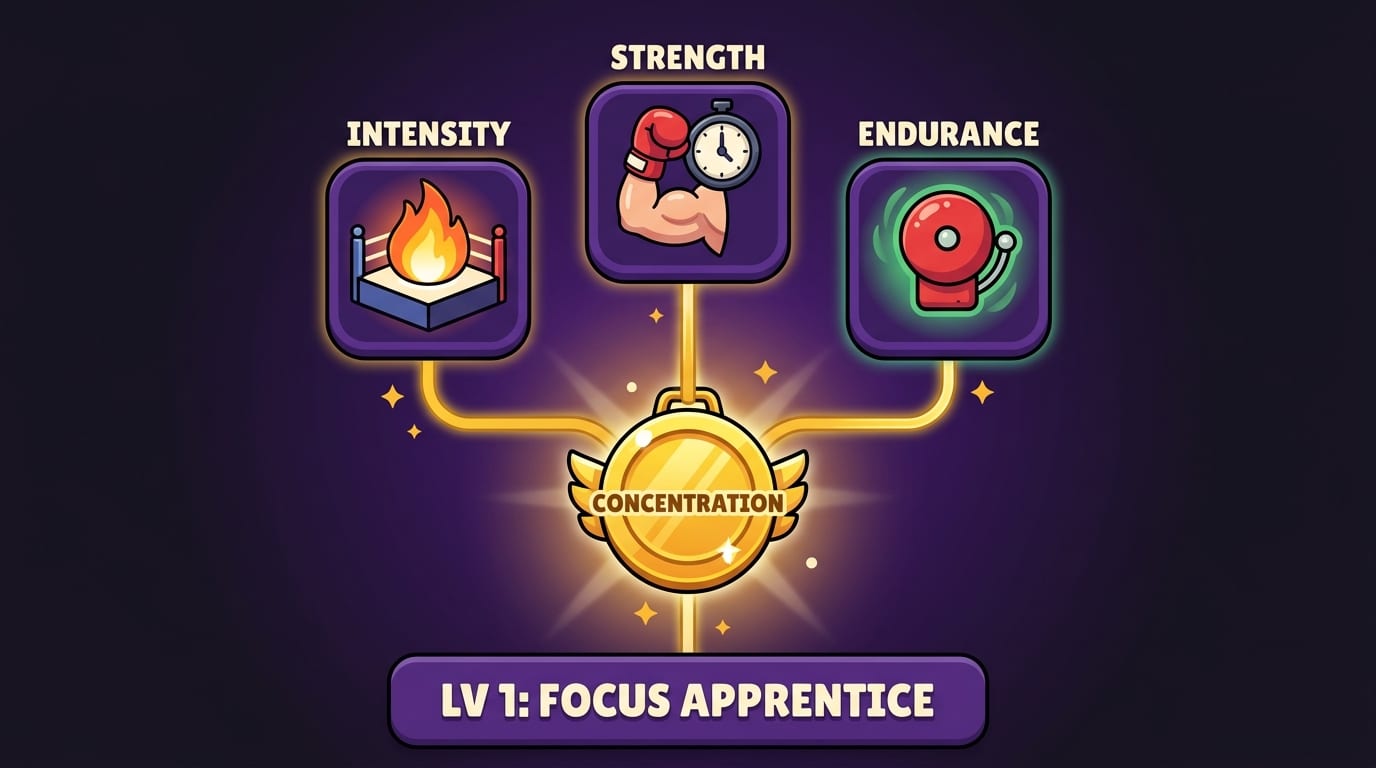
Train Concentration Like a Skill, Not a Personality Trait
People say “I’m bad at focus” as if focus is a fixed trait, like height or having a laugh that scares birds. But concentration is trainable. You improve it by practicing single-tasking, reducing interruptions, and gradually increasing your tolerance for deep work.
Newport-style deep work, deliberate practice, and flow all point toward the same idea: meaningful performance requires sustained attention. Cal Newport popularized the modern language of deep work, but the underlying principle is ancient: if you want mastery, stop letting every passing beep slap your brain around.
Research from Gloria Mark, a professor at UC Irvine, has shown that attention spans on screens have declined significantly over the years, with people switching activities frequently. Her work on digital attention is summarized in sources like the APA podcast on shrinking attention spans. The takeaway is not “we are doomed.” The takeaway is that your environment is training you. So train it back.
A four-week focus training plan
Here is a practical progression:
- Week 1: Do one 25-minute focused session per day. No phone. No tabs. One task.
- Week 2: Increase to one 45-minute session. Add a short planning note before you begin.
- Week 3: Try one 60 to 75-minute session. Block your top distraction sites.
- Week 4: Do two focused sessions most days, separated by real recovery.
The key is not heroic suffering. The key is consistency. If you break focus, do not perform a tragic opera about your lack of discipline. Reset. Continue. The crown may wobble, but it need not fall.
BlockChamp’s XP and reign system fits nicely here because it rewards consistency rather than perfection. Every focused minute earns XP. Every resisted Stare-Down counts. Every day your blocks stay active strengthens your reign. It makes the invisible work of attention visible, which is surprisingly motivating when your brain likes progress bars more than inspirational quotes.
Protect Your Peak Hours From Digital Nonsense
Your best hours are not evenly distributed. Most people have a daily window when their brain is sharper, faster, and less likely to confuse “strategy document” with “snack opportunity.” For many, it is early morning. For others, late morning or evening. The exact time matters less than knowing it and protecting it.
During peak hours, avoid:
- Email triage unless urgent.
- Meetings that could be async.
- Social media “just for a second.” Famous last words, champ.
- News checking.
- Low-value admin.
- Starting the day with notifications.
Instead, assign your peak hours to your highest-leverage task. For students, that might be practice problems, essay drafting, or exam review. For creators, it might be filming, writing, editing, or designing. For freelancers, it might be client delivery, proposals, or strategy. For remote workers, it might be the hard project that keeps getting delayed because Slack keeps throwing confetti grenades into your schedule.
If you freelance or run your own workload, the danger is even greater because nobody else is guarding the castle. This guide on how freelancers reclaim focus and deep work offers more tactics for protecting attention when your office is also your kitchen, gym, mailroom, and snack-based emotional support facility.
One helpful move: create a “digital moat” around your peak hours. Use BlockChamp to block social, video, news, shopping, gaming, gambling, adult, or AI distraction categories during those windows. If you are on Pro, Hardcore Lockdown can add a cooldown timer or boxing-riddle mini-game before turning focus off. It sounds silly. It is silly. It also works because impulses hate friction.
Stop Confusing Rest With Escape
There is a sneaky difference between rest and escape. Rest leaves you more capable. Escape numbs you for a while and then invoices you later with brain fog, guilt, and a bedtime that somehow became 1:43 a.m.
Escapist habits usually have three clues:
- You do them automatically, not intentionally.
- You keep doing them after they stop feeling good.
- You feel less energized afterward.
Deep play, on the other hand, feels chosen. It has texture. It often creates memories. You remember the hike, the tennis match, the song you learned, the meal you cooked, the sketch you ruined and then rescued. You rarely remember your 78th scroll past a stranger arguing about oat milk.
Sleep is the royal foundation here. Without sleep, both high performance and deep play suffer. The CDC notes that adults generally need at least seven hours of sleep per night, and insufficient sleep is linked with numerous health and performance issues. Their guidance on sleep and sleep health is worth reviewing if your current bedtime routine is “revenge procrastination with blue light sauce.”
Want a practical recovery upgrade? Create an evening “landing strip”:
- Set a shutdown time for work.
- Block your biggest evening time-wasters.
- Choose one deep play activity before dinner or after work.
- Dim screens or step away from them one hour before bed.
- Write tomorrow’s first task so your brain stops rehearsing it at midnight like a tiny anxious theater troupe.
For more on recovery and energy, check out BlockChamp’s guide to a deep sleep routine for peak focus and energy. Because no amount of productivity wizardry can fully overcome sleeping like a raccoon in a vending machine.
Make Focus Fun Enough to Repeat
Here is the dirty secret of habit change: if your system feels like punishment, you will eventually rebel. Your brain is not impressed by your color-coded spreadsheet of self-improvement shame. It wants feedback, progress, identity, and the occasional dopamine cookie.
This is why gamification can be powerful when used well. Points, streaks, levels, and badges give your brain immediate signals that effort is paying off. The best systems do not replace intrinsic motivation; they support it until the behavior becomes part of your identity.
Behavior design expert BJ Fogg emphasizes that tiny habits grow when motivation, ability, and prompts align. You can explore his work through the Tiny Habits method. The practical lesson is simple: make the desired behavior easier, make the undesired behavior harder, and celebrate wins quickly.
BlockChamp applies that principle with a boxing robe and a crown. You block distractions. You earn XP for focus minutes. You level up from Peasant of Procrastination to Squire of Focus, Knight of the Block, Duke of Discipline, Prince of Productivity, and eventually BLOCK CHAMP — King of Your Time. You collect badges for milestones like your first resisted blocked site, a 7-day reign, or a 30-day Iron Crown streak.
Is it a little ridiculous? Absolutely. That is the point. A funny system is a sticky system. A website blocker that roasts you when you try to betray your goals is far more memorable than a gray screen saying “Access denied.” The King sees you, peasant. Back to work.
A Practical Routine to Focus on High Performance and Deep Play
Let’s turn this into a routine you can actually use. No monk cave required. No $400 productivity journal made from ethically sourced moon bark. Just a simple daily structure.
Morning: Crown the day before the internet does
Start with a short planning ritual before opening messages or feeds. Ask:
- What is the one task that would make today successful?
- When is my best focus window?
- What distractions are most likely to attack?
- What deep play will help me recover later?
Then activate your focus tools. Turn on BlockChamp’s Master Focus Toggle. Block the sites or categories most likely to derail you. If you know you always lose 30 minutes to news or YouTube before work, do not negotiate with the goblin. Lock the gate.
Midday: Work in focused rounds
Use 60 to 90-minute blocks for demanding work. At the start of each block, write one sentence: “At the end of this session, I will have…” Then finish the sentence with something measurable.
Examples:
- “At the end of this session, I will have drafted the intro and outline.”
- “At the end of this session, I will have solved 20 practice problems.”
- “At the end of this session, I will have edited three client pages.”
Between rounds, take a real break. Stand up. Move. Eat. Get daylight. Do not open the scroll portal and pretend it is recovery. The portal lies.
Evening: Play deeply, then land the plane
Pick a deep play activity before your energy crashes. If you wait until you are fully cooked, your brain will choose the easiest stimulation available. Usually that means feeds, autoplay, or online shopping for a product you will later describe as “honestly unnecessary but kind of cute.”
End the day with a five-minute shutdown:
- Write down what you completed.
- Choose tomorrow’s first task.
- Clear your workspace.
- Set any blockers or schedules for the next day.
- Declare the kingdom closed.
This routine works because it combines clarity, friction, effort, and recovery. That is the whole game: make focus easier to start, distractions harder to access, and play meaningful enough that you do not seek fake rest from infinite feeds.
Common Mistakes That Make Focus and Play Fall Apart
Even good systems collapse if you accidentally sabotage them. Here are the usual suspects, lined up for royal inspection.
Mistake 1: Treating every task like deep work
Not everything deserves your best focus. Save prime attention for hard, valuable tasks. Batch low-value work into smaller admin windows. If you use your peak brainpower to rename files, The King may not yell, but he will silently judge.
Mistake 2: Taking fake breaks
A fake break is anything that stops work but keeps your nervous system buzzing. Social feeds, breaking news, comment sections, and outrage snacks are common offenders. Choose breaks that change your state: movement, fresh air, food, silence, creativity, or connection.
Mistake 3: Relying on motivation
Motivation is a flaky court jester. Systems are better. Use schedules, blockers, rituals, and clear goals. When motivation arrives, lovely. When it doesn’t, the system still carries you.
Mistake 4: Going too extreme
If you try to jump from chaos to four hours of deep work and a perfect digital detox, you may last exactly 1.5 days before eating cereal over your keyboard and declaring productivity a scam. Start smaller. Build the reign.
Mistake 5: Forgetting joy
If your life is all output, you will eventually revolt. Deep play is not optional decoration. It is part of sustainable performance. Joy is not the enemy of discipline. It is the fuel that keeps discipline from turning into a dungeon.

Conclusion: Win the Work, Then Go Play Like a Legend
To focus on high performance and deep play is to stop living at the mercy of shallow stimulation. It means working with full attention when the task matters, then recovering with activities that actually refill the tank. It means protecting your peak hours, designing your environment, training concentration, sleeping like a responsible mammal, and choosing play that makes life feel bigger than your browser history.
You do not need to become a productivity monk. You do not need to delete the entire internet and move to a mountain, although the mountain does sound peaceful and suspiciously low on notification badges. You need a repeatable loop: clear priorities, focused effort, blocked distractions, real recovery, and a little fun along the way.
If distracting websites keep storming your castle, let BlockChamp help you defend the throne. With gamified blocking, XP, badges, reigns, The Stare-Down, and The King’s glorious royal roasts, it turns focus from a grim chore into a game you can actually stick with. Try BlockChamp, knock out your distractions, and become king of your time.
Now close the extra tabs, champ. The crown is not going to defend itself.
Related posts

Finding Focus For Fiction Writing

Learning To Focus In A Digital World As A Creative

Finding Focus For Personal Growth
