
Boost Your Brainpower

Your brain is not a dusty old filing cabinet. It is a squishy, electric, drama-loving prediction machine that can learn calculus, remember your ex’s Wi-Fi password, and somehow forget why you walked into the kitchen. If you want to boost your brainpower, the answer is not one magic mushroom latte, one productivity guru’s morning routine, or yelling “FOCUS!” at yourself like a disappointed football coach.
The real answer is better: small daily habits that make your brain sharper, calmer, better fueled, and less likely to wander into a 47-minute video titled “Raccoon Steals Nachos From Police Car.” Science says your mental performance depends on sleep, movement, nutrition, attention management, learning, stress recovery, and your environment. Translation: your brain is powerful, but it needs a decent kingdom to rule.
This guide gives you practical, science-backed ways to boost your brainpower naturally: improve memory, strengthen focus, sharpen mental clarity, and protect your attention from the digital goblins. And yes, we’ll talk about distractions, because your brain cannot become a genius wizard while TikTok is pelting it with glitter cannon nonsense every 12 seconds.
Quick Answers
1. Start With Sleep: The Brain’s Nightly Car Wash
If you want to boost your brainpower, sleep is the throne. Everything else is furniture. During sleep, your brain consolidates memories, processes emotions, clears metabolic waste, and resets attention systems for the next day. Skip it, and your brain starts behaving like a raccoon with a spreadsheet.
The CDC recommends adults get at least 7 hours of sleep per night, yet many people treat sleep like an optional software update. “Remind me tomorrow.” Then tomorrow arrives, and your brain is buffering during a conversation about quarterly goals.
Sleep affects working memory, decision-making, reaction time, emotional control, and creativity. One bad night can make simple tasks feel like you’re trying to solve a Rubik’s Cube underwater. Chronic poor sleep is even worse: it chips away at learning capacity and makes distractions more tempting because tired brains crave easy dopamine.
How to upgrade your sleep without becoming a monk in pajamas
- Keep a consistent wake time. Your brain loves rhythm. Waking up at roughly the same time anchors your circadian clock.
- Cut caffeine earlier. Caffeine can stick around for hours. If you’re sipping espresso at 5 p.m., don’t act shocked when your brain hosts a midnight TED Talk.
- Dim lights at night. Bright light tells your brain, “The sun is back, champ!” Not ideal at 11:30 p.m.
- Park your phone away from bed. The bed is for sleep, not for entering the Doomscrolling Colosseum.
- Create a shutdown ritual. Write tomorrow’s top three tasks, close your laptop, stretch, read, breathe. Let your brain exit the building politely.
If you struggle with late-night browsing, set a hard digital boundary. This is where a tool like BlockChamp can help: block social media, video sites, shopping rabbit holes, and other “just one more” traps during your wind-down window. The King can stand guard while you sleep like a civilized mammal.
2. Move Your Body, Upgrade Your Brain’s Operating System
Exercise is not just for abs, glutes, and pretending you enjoy burpees. Movement is one of the most reliable ways to improve brain function. It increases blood flow, supports neuroplasticity, improves mood, reduces stress, and can help with memory and executive function.
Research summarized by Harvard Health Publishing notes that regular exercise can boost memory and thinking skills, partly by supporting brain regions involved in learning and memory. Your brain likes movement. It does not want to be trapped in a chair for 11 hours like a potato wearing headphones.
You do not need to become a marathon goblin. Even brisk walking helps. The goal is consistency, not heroic suffering. If the only exercise plan you can stick with is “walk around the block while muttering about emails,” excellent. That counts. Long live the mutter walk.
Brain-friendly exercise ideas
- 10-minute walk after meals: Helps energy, digestion, and mental reset.
- Strength training 2–3 times weekly: Supports overall health and confidence. Also makes grocery bags fear you.
- Short movement breaks: Do squats, pushups, mobility drills, or stairs between focus sessions.
- Zone 2 cardio: Easy cycling, jogging, rowing, or brisk walking where you can still speak in sentences.
- Coordination activities: Dancing, boxing, tennis, martial arts, or anything that makes your brain and body cooperate instead of filing separate complaints.
Want more on this? BlockChamp has already entered the ring with movement and attention in this guide on how exercising improves your focus and these five exercise-based ways to improve focus and productivity. Your brain enjoys oxygen. Give it some.
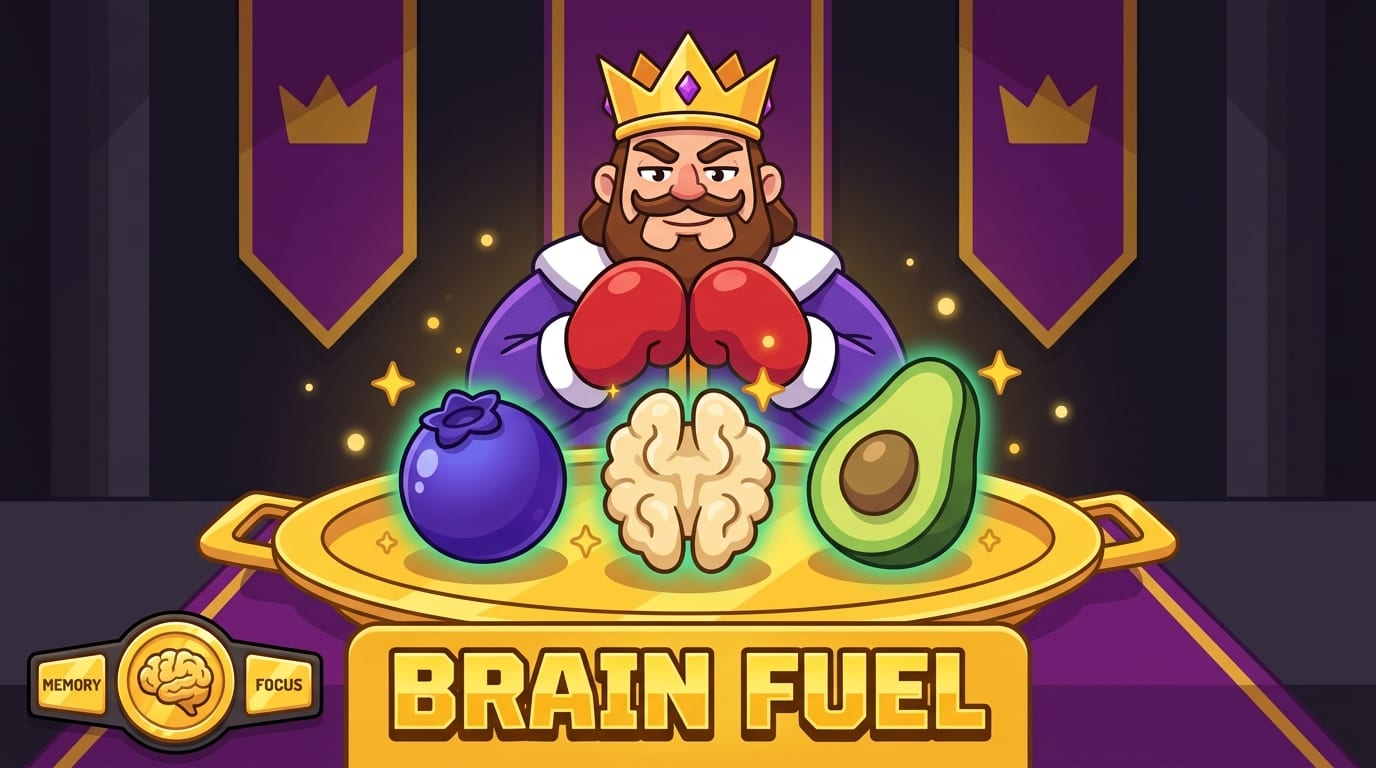
3. Feed the Machine: Nutrition for Memory, Focus, and Less Brain Fog
Your brain uses a lot of energy. Roughly 20% of your body’s energy expenditure goes toward that glorious cranial pudding, even though it is only about 2% of your body weight. So yes, what you eat matters. You cannot run premium software on gas station nachos forever. Eventually, the kingdom rebels.
A brain-friendly diet is not about eating “superfoods” with names that sound like ancient forest spells. It is about consistent basics: enough protein, fiber-rich carbohydrates, healthy fats, hydration, and micronutrients. The Mediterranean-style diet has strong evidence behind it for long-term brain and heart health. The National Institute on Aging has discussed research linking Mediterranean-style eating patterns with slower cognitive decline.
What to eat when you want your brain to stop making dial-up noises
- Fatty fish: Salmon, sardines, trout, and mackerel provide omega-3 fats, especially DHA, important for brain structure and function.
- Eggs: A source of choline, which supports acetylcholine, a neurotransmitter involved in memory and learning.
- Berries: Rich in polyphenols and antioxidants. Also delicious, which is useful because sadness is not a meal plan.
- Leafy greens: Spinach, kale, arugula, and collards bring folate, vitamin K, and other nutrients.
- Nuts and seeds: Great for healthy fats, magnesium, and vitamin E.
- Beans and lentils: Fiber, slow carbs, and plant protein. Extremely unglamorous. Extremely useful.
- Water: Mild dehydration can hurt concentration and mood. Your brain is not a cactus.
For sharper mental clarity, avoid giant sugar crashes. A breakfast of cereal confetti and emotional hope may give you quick energy, then drop you into the Fog Swamp by 10:30 a.m. Try protein plus fiber: Greek yogurt with berries, eggs with whole-grain toast, oatmeal with nuts, or tofu scramble with vegetables.
Also, eat before your deep work if hunger turns you into a distracted cave creature. The best focus strategy in the world will lose to “I wonder if there’s cheese.”
4. Train Attention Like a Muscle, Not a Mood
Focus is not a personality trait reserved for monks, chess prodigies, and people who label their spice jars. It is a trainable skill. But modern life trains the opposite: tab switching, notification checking, instant gratification, and the sacred ritual of opening your phone to check the weather and somehow ending up watching a stranger reorganize a fridge.
To boost your brainpower, you need to protect deep attention. That means giving your brain longer stretches where it can hold one problem, one idea, or one task without being punched in the face by alerts.
The American Psychological Association explains that multitasking often reduces productivity because switching between tasks creates mental costs. Your brain is not actually doing five things at once. It is rapidly juggling them while dropping spoons everywhere.
Try the “single-task throne room” method
- Pick one task. Not seven. One. The crown fits one head at a time.
- Define a finish line. “Write 500 words,” “review 20 flashcards,” or “draft the client email.” Vague tasks breed escape attempts.
- Set a timer for 25–50 minutes. Use Pomodoro-style sessions or longer deep work blocks depending on the task.
- Remove visible distractions. Close extra tabs, silence notifications, put your phone across the room, and stop pretending you are above temptation. You are adorable, but no.
- Take a real break. Stand up, breathe, walk, stretch. Do not “break” by feeding your attention to infinite scroll.
For digital distractions, BlockChamp is basically a tiny bouncer in your browser wearing a crown. You can block specific sites like YouTube or Reddit, turn on category bundles like Social Media or Video & Streaming, or use keyword blocking as a Champion feature. If you try to visit a blocked site, you get The Stare-Down: The King judges you, the site appears on a gold plate, and you are politely roasted back to work. It is focus protection with theater. Productivity, but make it mildly humiliating.
5. Learn Hard Things: Brain Gains Require Resistance
If you want to boost your brainpower, consume less and practice more. Reading about memory techniques is nice. Actually using them is where the magic happens. Watching 19 videos on coding does not make you a developer. It makes you a person with strong recommendations from YouTube.
Your brain adapts when it is challenged at the right level. Not too easy, not impossible. This is called desirable difficulty: effortful learning improves retention. The trick is to move from passive review to active recall and deliberate practice.
Use these study and learning techniques
- Active recall: Close the book and try to retrieve the answer from memory. Flashcards, practice questions, and blank-page summaries work well.
- Spaced repetition: Review information over increasing intervals. Your brain remembers better when it has to retrieve material just before forgetting.
- Interleaving: Mix problem types instead of doing 30 identical examples in a row. It feels harder because it is working.
- Teach it simply: Explain the concept as if teaching a bright 12-year-old or a confused medieval king. If you cannot explain it, you do not own it yet.
- Make mistakes deliberately: Practice reveals gaps. Gaps are not failure; they are treasure maps with rude handwriting.
For students, creators, and professionals, learning hard things often means defending your focus from digital ambushes. If you are studying for exams, writing code, designing a client pitch, or learning a language, block your predictable escape routes before you begin. You already know your villains. Reddit. TikTok. News. Shopping. That one forum about mechanical keyboards. Name them. Block them. Knockout round begins.

6. Manage Stress Before It Turns Your Brain Into Soup
A little stress can sharpen you. Too much stress makes your brain clutch its pearls and hide under the bed. Chronic stress affects attention, memory, decision-making, and emotional regulation. It also makes quick dopamine distractions more appealing, because your brain starts looking for relief anywhere it can find it.
The National Institute of Mental Health explains that long-term stress can affect both physical and mental health. In daily life, that may look like brain fog, irritability, procrastination, poor sleep, and the sudden urge to reorganize your entire desk instead of doing the one important task. Classic stress goblin behavior.
Simple stress resets that actually fit real life
- Physiological sigh: Take a deep inhale, add a second small inhale on top, then exhale slowly. Repeat a few times. It is weirdly effective and makes you look like a thoughtful dragon.
- Write the worry down: Get swirling thoughts out of your head and onto paper. Your brain stops treating them like mysterious smoke monsters.
- Do a five-minute cleanup: Clear the immediate workspace. Not the garage. Not your life. Just the desk, champ.
- Use “next action” thinking: Replace “finish project” with “open document and write the first heading.” Tiny doors beat giant walls.
- Take sunlight breaks: Outdoor light and movement help regulate mood and sleep timing.
If stress causes procrastination, you may also need better habit replacement. Don’t just tell yourself “stop scrolling.” Replace the scroll with something specific: walk, stretch, journal, make tea, review flashcards, or do one tiny task. BlockChamp has a whole post on this idea: don’t quit, replace — the key to changing your habits for good. The brain loves cues and routines. Give it a better script.
7. Build a Brain-Boosting Environment: Willpower Is Not Your Bodyguard
Willpower is useful, but it is not invincible. Treating willpower as your only defense is like guarding a castle with one sleepy pigeon. If your environment is packed with triggers, you will eventually cave. Not because you are weak. Because your brain is efficient and the internet is a casino wearing a hoodie.
Design your environment so the good choice is easier and the bad choice requires effort. This is one of the most practical ways to boost your brainpower because it reduces cognitive load. Every avoided temptation saves mental energy for learning, creating, problem-solving, and remembering where you put your keys.
Make focus the default
- Use a clean browser profile for work. No entertainment bookmarks. No shopping shortcuts. No chaos buffet.
- Turn off nonessential notifications. If it is not urgent, it does not deserve a tiny panic bell.
- Keep your phone out of reach. Across the room beats face-down on the desk. Face-down still whispers.
- Batch shallow tasks. Email, messages, admin, and errands belong in windows, not sprinkled all over your day like productivity termites.
- Pre-block your distraction zones. Do it before you feel tempted. Do not negotiate with your future goblin self.
This is where BlockChamp earns its royal belt. With one Master Focus Toggle, your blocks go “On Guard.” You can block up to three sites and two categories on the free plan, while Champion users get unlimited sites, all eight distraction categories, keyword blocking, recurring schedules, and Hardcore Lockdown. Hardcore Lockdown is especially spicy: if you try to turn focus off, you have to wait through a cooldown or complete The King’s boxing-riddle mini-game. It gives the impulse time to pass. Also, getting outsmarted by cartoon gloves is character-building.
If you want to strengthen self-control more broadly, read these five ways to boost your willpower and self-control. But remember: the smartest champs do not rely on willpower alone. They build guardrails, moats, and occasionally a royal boxer with a judgmental eyebrow.
8. Use Boredom Strategically: Your Brain Needs Empty Space
Here is a spicy truth: boredom is not always the enemy. Constant stimulation can crowd out reflection, creativity, and memory consolidation. If every quiet second becomes a phone check, your brain never gets to wander productively. It just gets dragged from one shiny object to another like a golden retriever at a squirrel convention.
Mind-wandering, when not hijacked by anxiety or infinite scroll, can support creative problem-solving. Many people get their best ideas in the shower, on walks, during chores, or while staring dramatically out a window like a Victorian ghost. That is not laziness. That is background processing.
How to add useful boredom back into your day
- Take device-free walks. No podcast, no music, no lecture. Just you, your thoughts, and possibly a judgmental pigeon.
- Leave gaps between tasks. Two minutes of breathing beats sprinting from Zoom to Slack to email to existential dread.
- Do chores without media sometimes. Folding laundry can become idea time if you stop turning every moment into content soup.
- Carry a small notebook. When ideas surface, catch them. Your brain is a weird little idea fountain. Respect the plumbing.
This does not mean you must live like it is 1840 and churn butter for entertainment. It means your attention deserves quiet pockets. If you block distracting sites during work and study hours, then enjoy entertainment intentionally later, your brain gets both discipline and fun. The crown approves.
9. Create a Daily Brainpower Routine You Can Actually Stick To
The best brainpower routine is not the most impressive one. It is the one you repeat. A 14-step morning ritual involving cold plunges, gratitude chanting, yak butter tea, and journaling by candlelight may look cool online, but if you abandon it by Thursday, congratulations: you created decorative guilt.
Start smaller. Build a routine that supports energy, focus, learning, and recovery without requiring you to become a productivity influencer trapped in a ring light.
A simple brain-boosting day
- Morning: Get light, drink water, eat protein, and identify your top task.
- First focus block: Work on the hardest mental task before your attention gets shredded.
- Movement break: Walk, stretch, or do quick exercise after 60–90 minutes.
- Learning session: Use active recall or deliberate practice for one skill you care about.
- Distraction window: Check messages and social media intentionally, not like a raccoon breaking into a snack cabinet.
- Evening shutdown: Review the day, prep tomorrow, block late-night temptations, and protect sleep.
If motivation is missing, do not wait for lightning from the productivity gods. Motivation often follows action, not the other way around. Start with two minutes. Open the document. Put on shoes. Review one flashcard. Write one sentence. If you are feeling stuck, BlockChamp’s guide on eight proven strategies for when you’re unmotivated can help you get moving without needing a dramatic movie montage.
10. Track Progress, Because the Brain Loves Winning
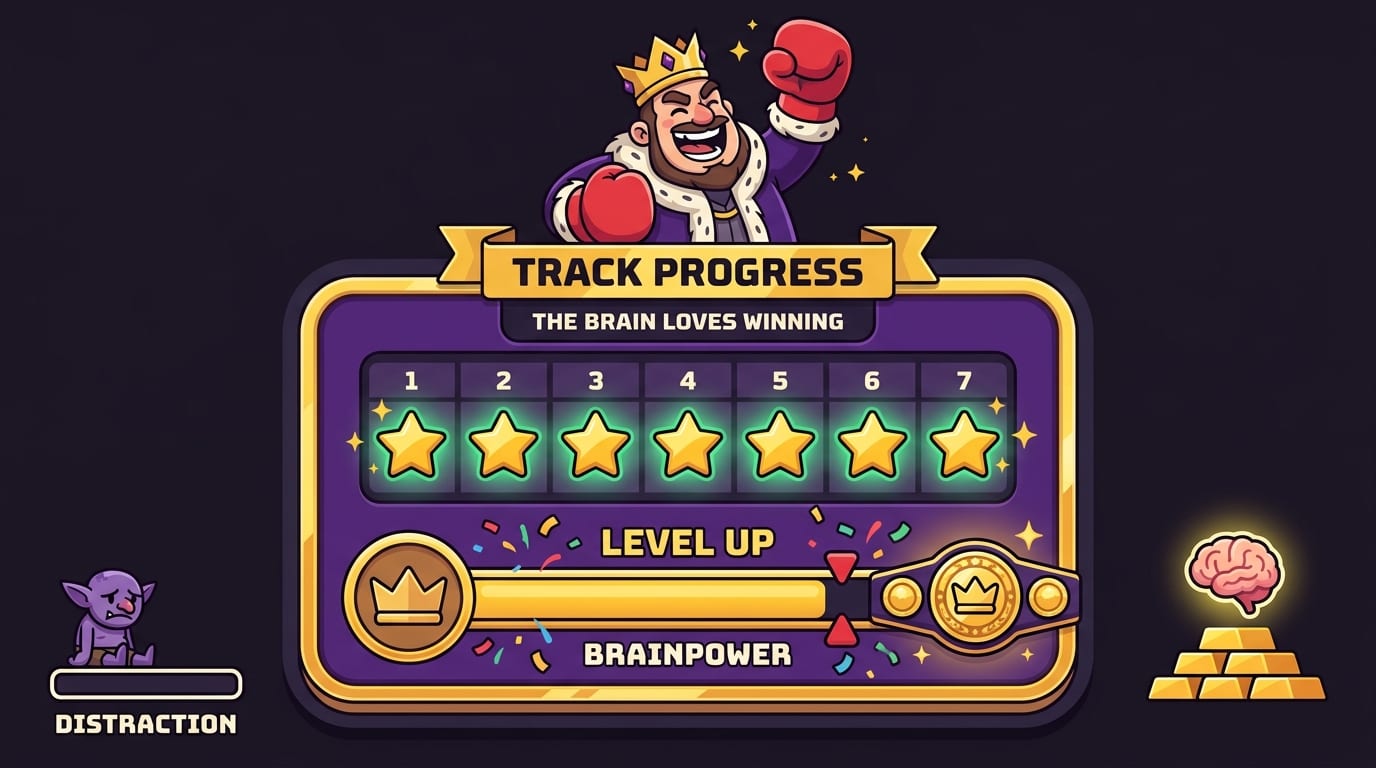
Your brain responds to feedback. That is why games are sticky: points, levels, streaks, badges, progress bars. They turn effort into visible progress. Used wisely, gamification can help you stick with healthy habits long enough for them to matter.
To boost your brainpower, track a few meaningful behaviors rather than obsessing over vague vibes. You do not need a 19-tab spreadsheet named “Cognitive Domination Plan.” Keep it simple.
Useful things to track
- Sleep duration and quality: Notice how your focus changes after better sleep.
- Deep work minutes: Count distraction-free work, not hours spent “near” a laptop.
- Exercise sessions: Track consistency, not perfection.
- Learning reps: Flashcards reviewed, problems solved, pages summarized, practice sessions completed.
- Distractions resisted: Every avoided rabbit hole is a tiny victory. Tiny victories become crowns.
BlockChamp turns focus into a game on purpose. You earn XP for minutes of focus, days with blocks active, and stare-downs survived. You build a reign, unlock badges, climb levels from Peasant of Procrastination to BLOCK CHAMP, and see focus history on a color-coded calendar. It is not just blocking websites. It is making your attention visible, competitive, and weirdly fun. That matters because consistency is easier when progress feels rewarding.
And when you slip? You do not get a boring gray shame screen. You get The King staring into your soul because you tried to open YouTube during deep work. Honestly, fair.
Final Round: Your Brainpower Is Built, Not Summoned
To boost your brainpower, you do not need a miracle. You need better inputs, better recovery, better attention protection, and better repetition. Sleep like it matters. Move your body. Feed your brain real food. Practice hard things. Manage stress. Design your environment so focus is easier than failure. Add boredom. Track progress. Repeat until your brain starts acting like it has a crown on.
The big secret is that mental sharpness is not one habit. It is a system. When your sleep, nutrition, exercise, learning, and focus environment all point in the same direction, your brain gets faster, clearer, and less vulnerable to distraction goblins.
If the internet keeps stealing your best hours, bring in backup. BlockChamp helps you block distracting sites, defend your focus with XP and streaks, and let The King roast you away from bad decisions. It is a website blocker for Chrome, yes. But it is also a tiny royal boxing coach for your attention span.
Protect your sleep. Guard your focus. Crush the scroll. Long live your brainpower, champ.
Related posts

8 Scientifically Proven Ways To Beat Mental Fatigue

How Being Present In Nature Improves Your Focus

How To Stay Focused When You Have Adhd
