
Stop Procrastinating Be Productive

If you searched “stop procrastinating be productive,” congratulations: you have reached the ancient internet temple where we admit the truth. You do not need another 47-tab research spiral about productivity. You need a plan that survives contact with YouTube, TikTok, Reddit, email, snacks, existential dread, and that one “quick” notification that somehow becomes a 38-minute tour of raccoon videos.
Procrastination is not a character flaw. It is usually a messy cocktail of unclear priorities, low energy, too much friction, emotional avoidance, and distraction machines wearing tiny algorithmic crowns. The good news? You can beat it. Not by becoming a joyless productivity robot who meal-preps spreadsheets for breakfast, but by making work easier to start, distractions harder to reach, and progress more satisfying to repeat.
This guide gives you practical steps to stop procrastinating and be productive every day: priority-setting, time-blocking, habit hacks, digital boundaries, and simple routines you can actually keep. And yes, we will talk about tools like BlockChamp, because sometimes the fastest way to stop arguing with your willpower is to put a tiny royal boxer between you and your worst websites. Long live your focus.
Quick Answers
1. First, Understand the Sneaky Little Gremlin Called Procrastination
Procrastination is often misunderstood as laziness. It is not. Laziness says, “I do not care.” Procrastination says, “I care so much that I am going to avoid this until the pressure turns my nervous system into a haunted microwave.” Charming.
Research has repeatedly linked procrastination to emotion regulation, not just time management. In plain English: we delay tasks because they feel unpleasant, boring, confusing, intimidating, or tied to fear of failure. A task does not have to be objectively hard to trigger avoidance. Sometimes “send the email” feels like wrestling a bear in formalwear.
The American Psychological Association has covered procrastination as a self-regulation issue, and you can explore their overview of why people delay through the APA’s discussion of procrastination. The point is simple: if procrastination is emotional, the solution is not just “try harder.” That advice belongs in the bin next to “just be confident” and “have you tried not being tired?”
To stop procrastinating be productive in a way that lasts, you need to address three things:
- Clarity: What exactly needs to happen next?
- Friction: How easy is it to start the right thing and avoid the wrong thing?
- Reward: How do you make progress feel visible, satisfying, and repeatable?
Most productivity systems fail because they obsess over the calendar and ignore the battlefield. Your brain is not a clean whiteboard. It is a raccoon with Wi-Fi. Build accordingly.
2. Pick One Real Priority Before Your Day Becomes Soup
The fastest way to procrastinate is to start the day with 19 “important” tasks and no clear winner. Your brain sees the pile, panics, and chooses the noblest possible response: rearranging your desktop icons. Very strategic. Very royal.
Before you touch email, Slack, social media, or the doom portal formerly known as “checking the news,” choose one main priority for the day. Not five. Not “everything.” One. This is your crown jewel task: the thing that would make the day feel successful even if everything else gets mildly set on fire.
Use this simple priority filter:
- What task has the biggest consequence if I avoid it?
- What task would create the most relief if finished?
- What task moves a meaningful goal forward?
- What task am I suspiciously avoiding because it matters?
Your top task might be writing 800 words, studying one chapter, finishing a client proposal, recording a video, cleaning up a report, or making three uncomfortable calls. The key is specificity. “Work on project” is fog. “Draft the intro and outline sections 1–3” is a target with a tiny bullseye hat.
If you want a deeper look at why delay happens and how to interrupt it quickly, BlockChamp has a related guide on why you procrastinate and six ways to stop procrastinating today. Pair that with today’s priority method and you have a sturdy little anti-chaos sandwich.
The “one task, one win” rule
Write your main priority somewhere visible. Sticky note. Notebook. Whiteboard. Forehead mirror message if you are feeling theatrical. Then define the “done” line. Productivity gets slippery when you do not know where the finish line is.
Bad done line: “Make progress on thesis.”
Better done line: “Write 500 rough words for the literature review.”
Bad done line: “Study chemistry.”
Better done line: “Complete 25 practice questions and review every mistake.”
When the task is concrete, your brain has less room to negotiate like a tiny corrupt diplomat.
3. Shrink the Task Until It Stops Looking Like a Dragon
Huge tasks create huge avoidance. “Build my portfolio” feels like a mountain wearing sunglasses. “Choose three projects to feature” feels doable. “Write a book” is terrifying. “Write a terrible first paragraph” is almost cute.
When you feel resistance, shrink the task. Then shrink it again. Then shrink it until it is slightly embarrassing not to begin.
Try the two-minute entry point:
- Open the document.
- Write the title.
- List three bullet points.
- Read one page.
- Clean one folder.
- Draft one sentence of the email.
This is not a trick because two minutes will magically finish your work. It works because starting changes the emotional texture of the task. Before you start, the task is a monster in the fog. After two minutes, it is just a mildly annoying goblin with a clipboard.
Behavior scientist BJ Fogg popularized the idea of tiny habits, and his work emphasizes making behavior small enough to do consistently. You can read more about this approach through BJ Fogg’s Tiny Habits method. The principle applies perfectly to procrastination: reduce the activation energy until movement begins.
Use “messy first drafts” as a productivity cheat code
Perfectionism is procrastination wearing a monocle. If you keep waiting to do the task elegantly, you may never do it at all. Make the first version ugly on purpose. Call it a “trash draft,” “practice round,” or “peasant version.” The King permits it.
Examples:
- Writers: Draft badly first, edit later.
- Students: Attempt questions before rereading notes for the fourth time.
- Designers: Create three rough layouts before polishing one.
- Developers: Write a simple working version before optimizing.
Productivity loves momentum. Perfection loves delay. Pick your fighter.
4. Time-Block Like a Champion, Not a Calendar Goblin
Time-blocking means assigning tasks to specific blocks of time instead of leaving them floating around your day like anxious balloons. It helps because vague intentions are weak. “I should work out later” loses to the couch. “At 7:30, I put on shoes and walk for 20 minutes” has legs. Literally.
Cal Newport, author of Deep Work, has written extensively about scheduling focused work and protecting attention. His ideas on depth and distraction are explored on Cal Newport’s Deep Work page. The big takeaway: serious work needs protected space. You cannot casually squeeze meaningful progress between 14 notifications and a burrito debate.
Here is a simple time-blocking template:
- Choose your main task: Pick the crown jewel from section two.
- Choose your focus window: 25, 50, or 90 minutes. Match it to your energy.
- Remove obvious distractions: Phone away, distracting tabs closed, website blocker on.
- Define the output: What should exist by the end of the block?
- Take a real break: Stand, walk, hydrate, blink like a human.
A sample student block might look like this:
- 9:00–9:50: Biology practice questions, set 1
- 9:50–10:05: Break, no phone
- 10:05–10:55: Review wrong answers and make flashcards
- 11:00–11:30: Light review or admin tasks
A freelance work block might look like this:
- 8:30–10:00: Draft client proposal
- 10:00–10:15: Walk and coffee
- 10:15–11:00: Revise proposal and send
- 11:00–11:30: Email batch
The trick is not to schedule every minute like a tyrant with a laminated planner. Leave buffers. Life happens. Printers revolt. Meetings multiply. But protect at least one serious focus block per day like it is the royal treasury.
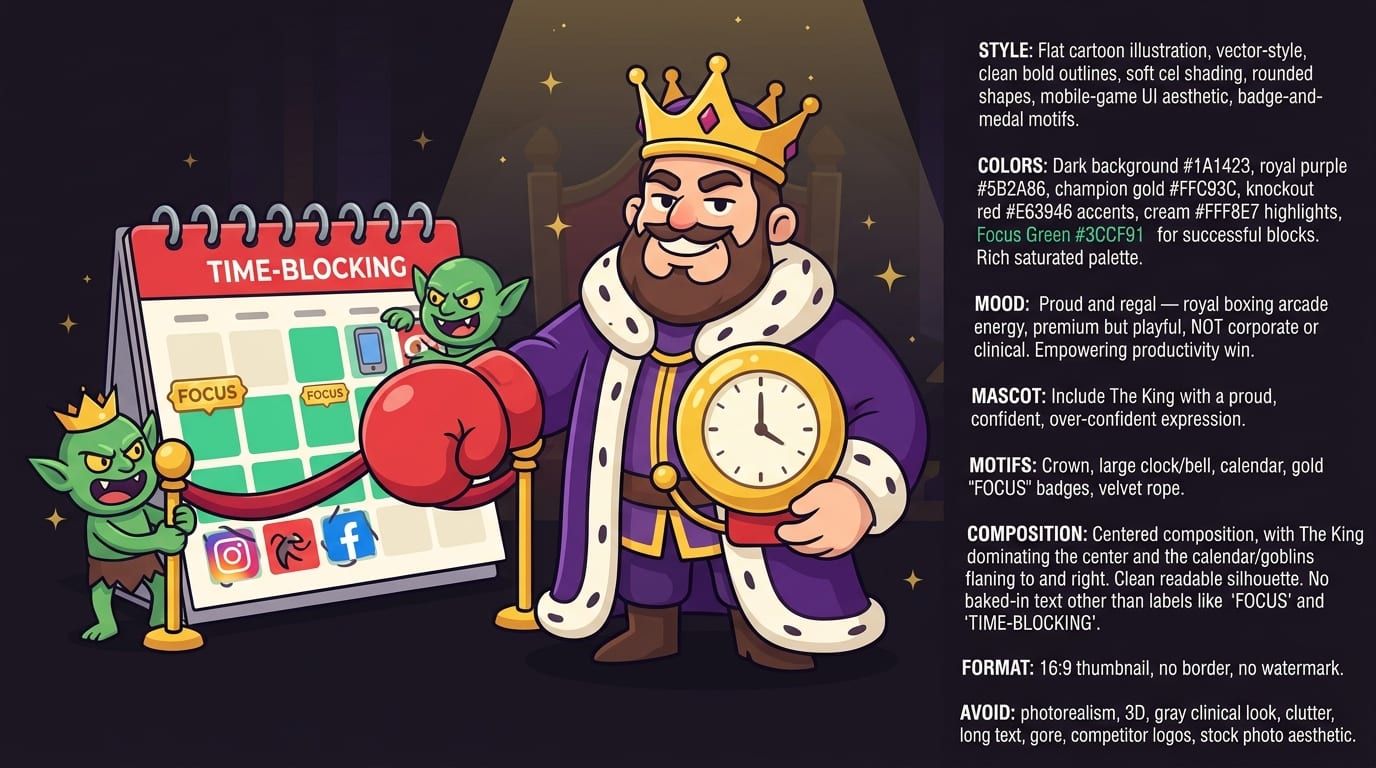
5. Build a Distraction Moat Around Your Focus
You cannot stop procrastinating and be productive if your work environment is basically a casino with a keyboard. Modern apps are built to capture attention. Infinite scroll, autoplay, push notifications, recommendation feeds, trending tabs — these are not neutral features. They are tiny attention traps wearing UX perfume.
The solution is not to rely on “discipline” while every platform waves a sparkly snack in your face. Design your environment so distraction is harder to access than work.
Start with the obvious suspects:
- Put your phone in another room during focus blocks.
- Turn off nonessential notifications.
- Close tabs unrelated to your current task.
- Use full-screen mode when writing, coding, or studying.
- Keep only the tools you need visible.
Then deal with websites. This is where a website blocker becomes less “nice to have” and more “why did I not do this sooner, my poor battered attention span?” BlockChamp is built for this exact problem. It lets you block distracting sites, keywords, or whole categories like Social Media, Video & Streaming, News, Shopping, Gaming, Gambling, Adult, and AI Distractions. One Master Focus Toggle arms your blocks so The King stands guard while you work.
When you try to visit a blocked site, BlockChamp does not show a sad gray warning page that looks like it was designed in a basement by a printer. You get The Stare-Down: a full-screen royal judgment scene where The King catches you, displays the site you tried to enter, and nudges you back to work. Sometimes he even roasts you out loud. Is it ridiculous? Yes. Does ridiculous work better than another guilt chart? Often, yes.
If you are setting up your space for better focus, you may also like BlockChamp’s guide to products for a more productive workspace. Your physical environment and digital environment both matter. A clean desk helps. A blocked Reddit helps more when your brain gets spicy at 2:14 p.m.
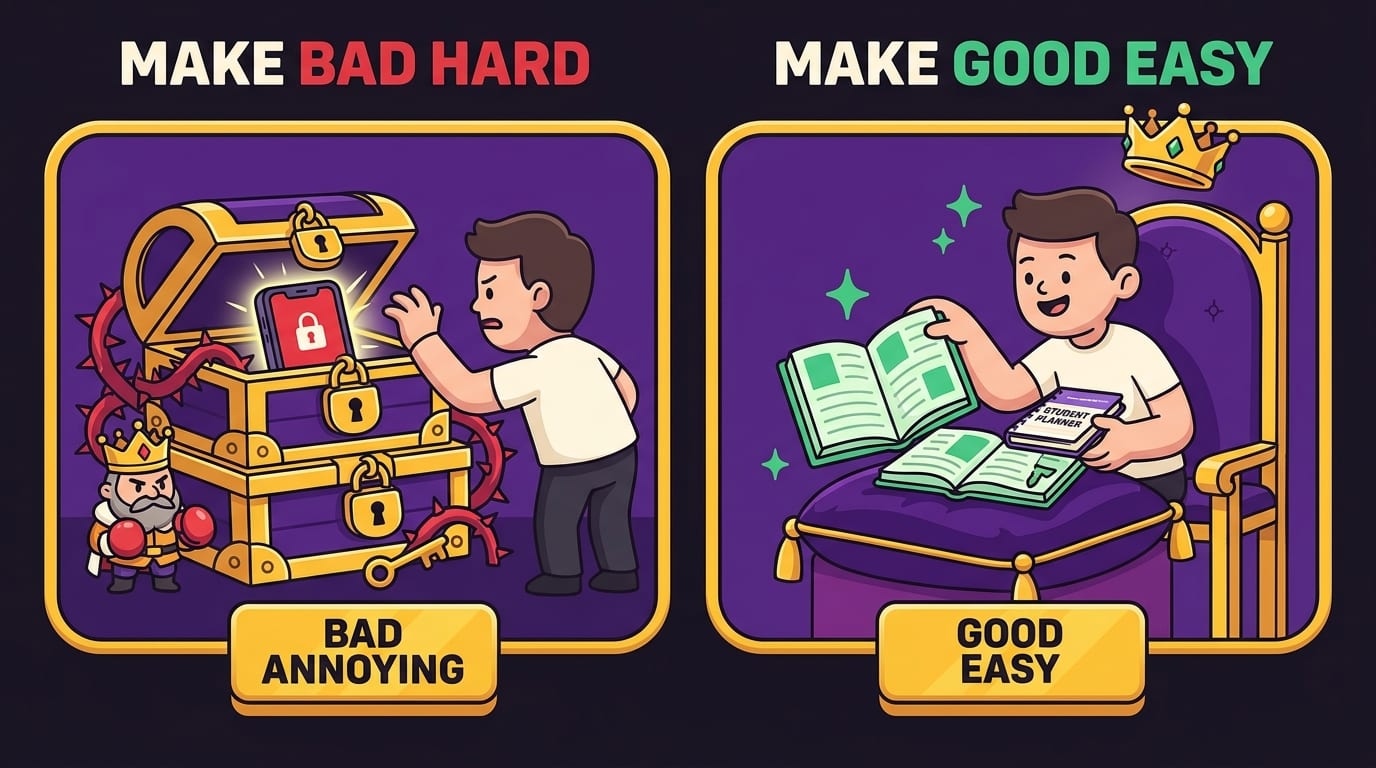
6. Use the “Friction Flip”: Make Good Easy and Bad Annoying
One of the most reliable habit principles is this: make the behavior you want easier and the behavior you want to avoid harder. This is not glamorous, but neither is losing an afternoon to “just checking one thing.”
James Clear popularized this idea in Atomic Habits, and his habit framework emphasizes cues, cravings, responses, and rewards. You can explore his habit-building principles in James Clear’s Atomic Habits resources. For procrastination, friction is your friend when placed in front of distractions and your enemy when placed in front of work.
Reduce friction for productive tasks
Set up tomorrow’s work before you end today. This sounds boring because it is. It is also powerful, like oatmeal with a sword.
- Leave the document open to the exact section you need to edit.
- Put your textbook and notebook on your desk.
- Create a checklist for the first five minutes of work.
- Save research links in one place instead of hunting later.
- Prepare your workspace before your focus block begins.
Your goal is to make starting almost automatic. If you need 12 decisions before you begin, procrastination will stroll in wearing a cape.
Add friction to procrastination
Now do the opposite for distractions:
- Log out of social media on your computer.
- Remove tempting bookmarks from your browser bar.
- Delete apps you compulsively open.
- Use BlockChamp to block your top three distraction sites for free.
- For serious focus, use scheduled blocking so distractions shut down during work hours.
BlockChamp’s Champion plan adds Hardcore Lockdown, which is delightfully unhinged in the best way. If you try to turn focus off, you can require a cooldown timer or a three-round boxing riddle before surrendering. That little delay is powerful because urges rise and fall. Give an impulse 60 seconds to cool down and it often loses its crown.
7. Work With Your Energy, Not Against Your Human Meat Battery
You are not equally productive every hour of the day. Nobody is. Even productivity influencers have low-energy moments; they just film them near expensive lamps.
Pay attention to your natural rhythm. When do you think clearly? When do you slump? When are you best at creative work, admin work, studying, meetings, or errands? If you schedule your hardest work during your worst energy window, procrastination is not mysterious. It is predictable.
Try tracking your energy for three days. Nothing fancy. Just note your energy level from 1–5 every couple of hours and what kind of work felt easiest. After a few days, you may notice patterns:
- Morning: best for writing, studying, coding, planning.
- Early afternoon: decent for meetings, calls, collaboration.
- Late afternoon: better for admin, review, cleanup.
- Evening: good for light learning, creative brainstorming, or not pretending to be a machine.
Once you know your rhythm, place your crown jewel task in your strongest window. Do not spend your prime brain hours formatting footnotes unless footnotes are your destiny. Guard your best energy for your most important work.
This matters especially for students, remote workers, creators, and people with ADHD-like attention challenges. If procrastination feels tied to executive function, environment and timing matter even more. BlockChamp has a dedicated guide on how to stop procrastinating when you have ADHD, which covers practical ways to reduce overwhelm and create structure without turning your life into a spreadsheet dungeon.
8. Stop Treating Breaks Like Contraband
Breaks are not the enemy. Bad breaks are the enemy. A good break restores you. A bad break opens a social app and drops you into a glowing pit of comments, ads, drama, and someone’s 11-part story about airport soup.
Studies on attention and work patterns suggest that breaks can help sustain performance, especially when they involve movement, rest, or a change of scenery. For example, Microsoft’s Human Factors Lab has shared findings about how breaks between meetings can reduce stress buildup, summarized in Microsoft WorkLab’s research on breaks and the brain.
Use breaks deliberately. Here are better break options:
- Take a five-minute walk.
- Stretch your shoulders, neck, and wrists.
- Drink water like a responsible land mammal.
- Look out a window to rest your eyes.
- Do a tiny chore: dishes, laundry, desk reset.
- Breathe slowly for two minutes.
Here are dangerous break options if you are trying to stop procrastinating:
- Opening TikTok “for one minute.” Adorable lie.
- Checking Reddit during a five-minute break. Farewell, brave knight.
- Watching one YouTube video with autoplay on. The algorithm laughs.
- Reading the news when you are already anxious.
If you want entertainment during breaks, schedule it after your focus block, not inside it. The brain likes clean boundaries. Work now, scroll later. Crown now, chaos later.
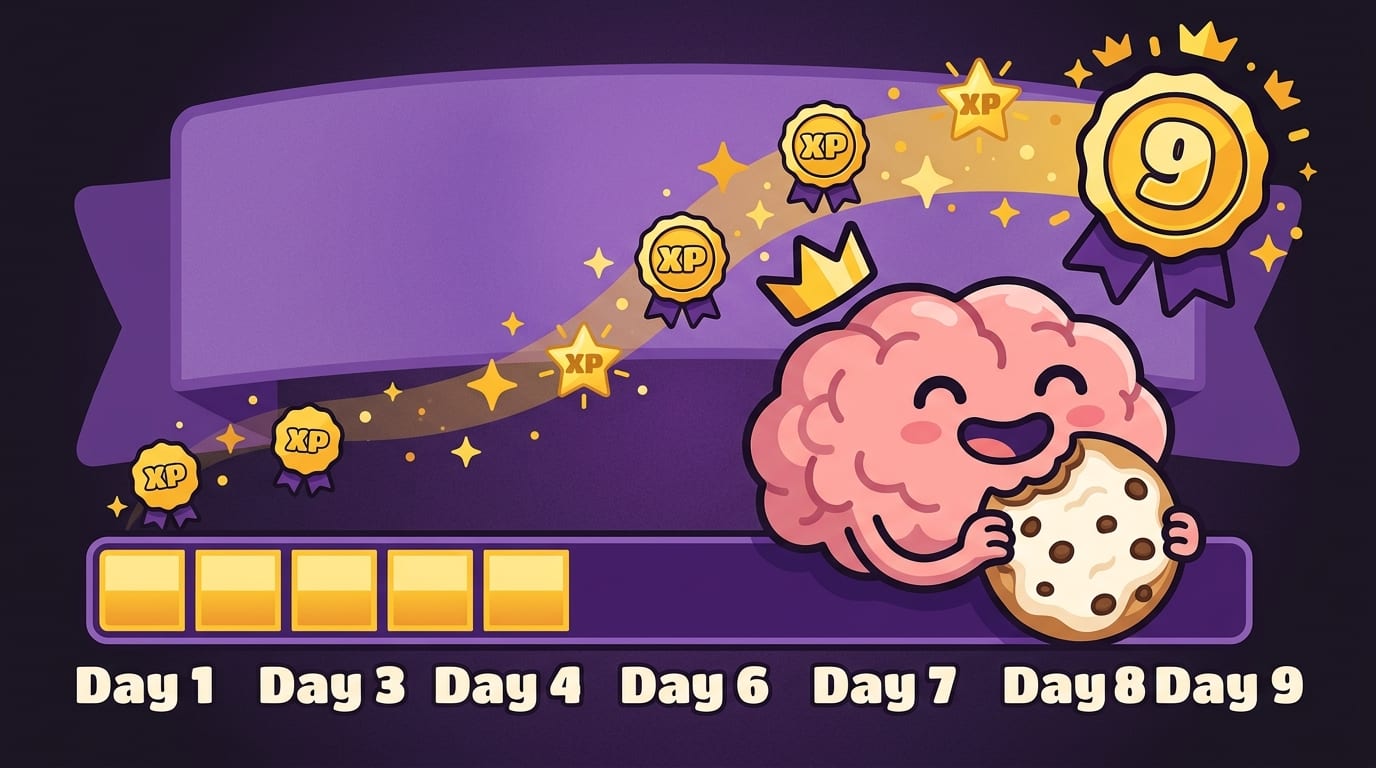
9. Measure Progress So Your Brain Gets a Cookie
One reason games are addictive is that progress is visible. You earn points. Bars fill. Levels unlock. Your character gets a shinier hat and suddenly you would fight a dragon for three more XP. Productivity often lacks that feedback. You work for hours and the reward is… more work. Rude.
To stay productive, make progress visible. Track something simple:
- Minutes of focused work
- Number of completed focus blocks
- Words written
- Problems solved
- Pages read
- Tasks shipped
- Days you protected your focus window
Do not track 20 metrics unless your hobby is becoming your own middle manager. Pick one or two that reinforce the behavior you want.
This is where BlockChamp’s gamification shines. Every focused minute earns XP. Every focused day builds your reign. Surviving a Stare-Down gives you points instead of shame. You can level up from Peasant of Procrastination to Squire of Focus, Knight of the Block, Duke of Discipline, Prince of Productivity, and eventually BLOCK CHAMP — King of Your Time. Is this objectively more fun than a productivity spreadsheet named “Q4 Personal Efficiency Dashboard”? Yes. A thousand times yes.
Gamification works because it gives your brain feedback now, not someday in a vague future where you are “more disciplined.” If you can see your streak, your calendar, your badges, and your rank, focus becomes a game you can win today.
10. Create a Daily Anti-Procrastination Routine You Can Repeat
Now let’s turn all this into a simple daily routine. The goal is not to build the perfect productivity system. Perfect systems are where notebooks go to become museum exhibits. You need a repeatable routine that gets you started and keeps you pointed at the right target.
The 10-minute morning setup
- Write your one main priority.
- Define what “done” looks like.
- Choose your first focus block.
- Remove distractions from your workspace.
- Turn on your website blocker.
This should take less than 10 minutes. If your morning planning takes 45 minutes, you may have invented decorative procrastination. Very fancy. Still procrastination.
The first focus block
Start with your most important task before checking noisy inputs. Email, messages, and notifications are other people placing tiny flags in your brain. Sometimes they matter. Often they can wait.
Use a 25-minute, 50-minute, or 90-minute block depending on your attention span and task type. During the block, your only job is to stay with the task. Not finish your life. Not become a productivity legend. Just stay in the ring.
The midday reset
At lunch or early afternoon, ask:
- What is already done?
- What still matters today?
- What can be dropped, delayed, or reduced?
- What is the next small action?
This prevents one derailed morning from becoming a derailed day. A bad hour does not have to become a bad reign. Adjust. Continue. The crown may wobble, but it need not fall.
The shutdown ritual
End the day by preparing tomorrow’s start:
- Write tomorrow’s top priority.
- Leave your work ready to resume.
- Close unnecessary tabs.
- Review what you completed.
- Celebrate one win, even if small.
Small wins matter. They teach your brain that effort produces reward. That is how you build a productive identity, not just a productive afternoon.
11. What to Do When You Still Procrastinate Anyway
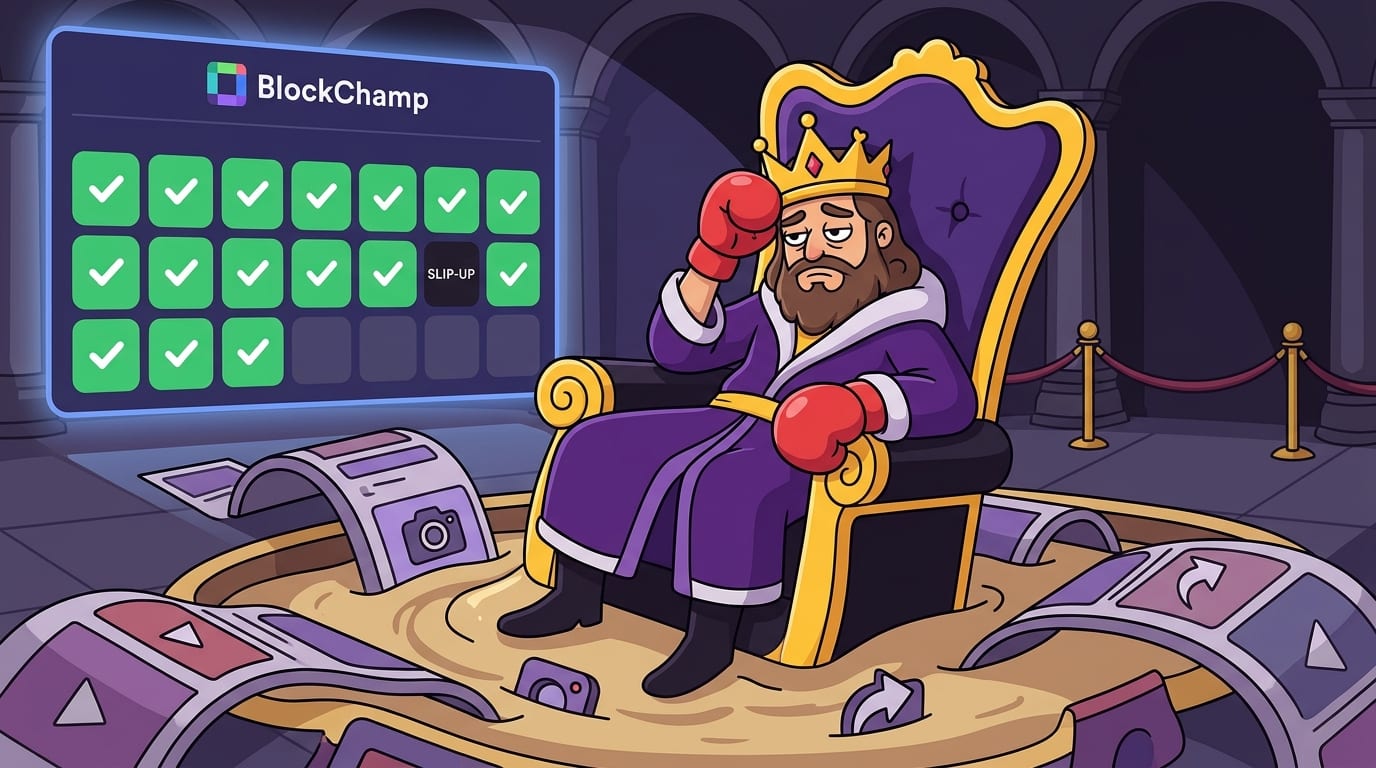
You will still procrastinate sometimes. Welcome to being human. Please collect your complimentary messy emotions at the door.
The key is to respond quickly without turning one slip into a dramatic courtroom scene. Shame is terrible fuel. It burns hot, smells bad, and leaves you tired. Instead, treat procrastination as data.
Ask:
- Was the task unclear?
- Was it too large?
- Was I tired, hungry, stressed, or overstimulated?
- Was my environment too distracting?
- Did I need help, information, or a decision?
- Was I avoiding discomfort, boredom, or fear of doing it badly?
Then apply the smallest fix. Clarify the next action. Shrink the task. Take a break. Block the distraction. Ask for help. Move your body. Change rooms. Set a 10-minute timer and begin again.
If you work remotely or manage your own schedule, procrastination can hide inside “being available.” You answer messages, attend meetings, and shuffle tasks, but deep work never gets a throne. For a broader perspective on productivity and remote work, read BlockChamp’s post on why monitoring remote team activity will not make people more productive. The short version: activity is not the same as meaningful output. Busy is not a crown. It is often a very loud hat.
12. A Practical “Stop Procrastinating Be Productive” Checklist
Here is the whole system in one tidy checklist. Screenshot it. Print it. Tattoo it on your planner. Actually, maybe do not tattoo it. Ink is forever; your task list is not.
- Choose one main priority for the day.
- Define the finish line in concrete terms.
- Break the task into the next tiny action.
- Schedule a focus block for your best energy window.
- Remove phone and notification distractions.
- Block distracting websites before you begin.
- Work for 25, 50, or 90 minutes.
- Take a real break that restores attention.
- Track one simple progress metric.
- Reset quickly after slips instead of spiraling.
- Prepare tomorrow’s first step before ending today.
This checklist works because it attacks procrastination from multiple angles. It reduces overwhelm, protects attention, creates momentum, and rewards consistency. That is the whole game. Not magic. Not monk robes. Just better defaults.
Conclusion: Defend the Throne, Crush the Scroll
To stop procrastinating be productive, you do not need to become a flawless discipline statue. You need a system that makes starting easier, distractions harder, and progress more rewarding. Pick one real priority. Shrink the task. Time-block your best energy. Build a moat around your attention. Take actual breaks. Track your wins. Repeat tomorrow.
And when your brain inevitably whispers, “Just one quick peek at YouTube,” do not negotiate with the tiny chaos goblin. Put your focus on guard. If distracting websites are your biggest procrastination trap, try BlockChamp for Chrome. Block your worst sites, earn XP for staying focused, build your reign, and let The King stare down your bad decisions before they become a two-hour scroll safari.
You do not have to win every moment. You just have to win the next round. Gloves up, champ. Your time is a kingdom. Defend it.
Related posts

How To Stop Playing Video Games

Shopping Addiction Control

Gaming Addiction Use A Website Blocklist To Regain Control
